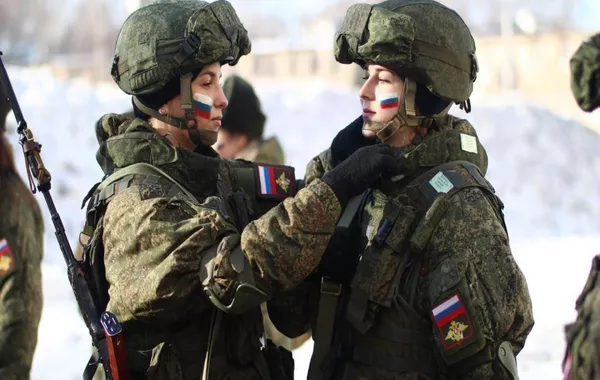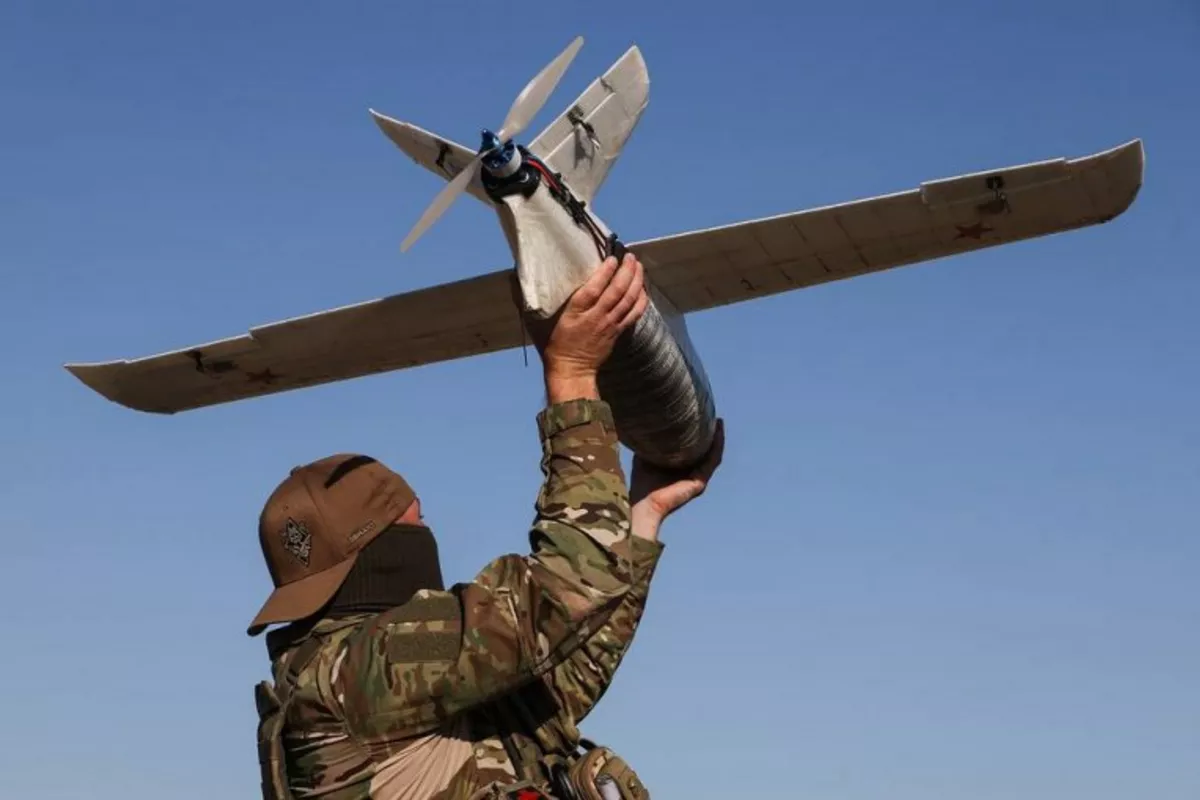
Photo: Russian soldier with the anti-aircraft drone Sokol-I (Defence Express)
Russia has introduced two new interceptor drones, the Sokol-I and Molniya-PVO, aimed at countering Ukraine’s expanding fleet of unmanned aerial vehicles.
According to defense analysts, the drones were developed specifically to target Ukrainian UAVs such as the Leleka, Bulava, and Hornet, which have played an increasingly important role in reconnaissance and strike missions, The Caspian Post reports via RBC-Ukraine.
The Sokol-I features a lightweight foam-plastic airframe, optical and thermal imaging systems for target acquisition, and an operational ceiling of up to 5,000 meters. The drone can destroy targets either through a proximity-fused warhead or by directly colliding with them in flight.
However, military experts have raised questions about the drone’s effectiveness. The Sokol-I has a maximum speed of 150 km/h, matching the cruising speed of Ukraine’s Hornet drone. Since the Hornet can reportedly accelerate to around 200 km/h, analysts suggest the interceptor may struggle to catch its intended targets.
Information about the Molniya-PVO remains limited. The drone appears to be a compact twin-engine interceptor capable of carrying a one-kilogram payload. It can reportedly be launched by hand or from a catapult and is intended to engage larger UAVs and fixed-wing aerial targets.
The unveiling of the new systems highlights the growing importance of drone warfare in the conflict. Analysts note that modern tactical drones are difficult to intercept because they often fly at very low altitudes and use terrain features to avoid radar detection.
While Russia continues to invest heavily in counter-drone technologies, questions remain over whether the new interceptor drones can significantly alter the balance in the increasingly sophisticated aerial battle.
Share on social media