Türkiye’s Corridor Dream Won’t Beat IMEC – But It Could Still Reshape Eurasian Trade
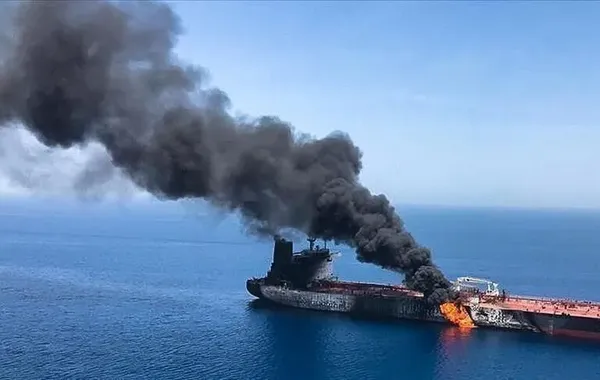
War has a way of redrawing maps - not just political ones, but commercial ones as well. The outbreak of conflict with Iran has disrupted longstanding trade arteries linking Asia to Europe, from Persian Gulf shipping lanes to overland routes through Iranian territory. Into that vacuum, Türkiye has moved forward with a familiar pitch: It is the natural bridge between East and West.
This is not new. What is new is the immediacy - and the competition. Ankara is no longer simply offering itself as an alternative to broken routes. It is positioning its territory as a direct rival to the India-Middle East-Europe Economic Corridor (IMEC), the US- and Gulf-backed plan that aims to connect India to Europe via the Arabian Peninsula and Israel, The Caspian Post reports via Foundation For Defense of Democracies.
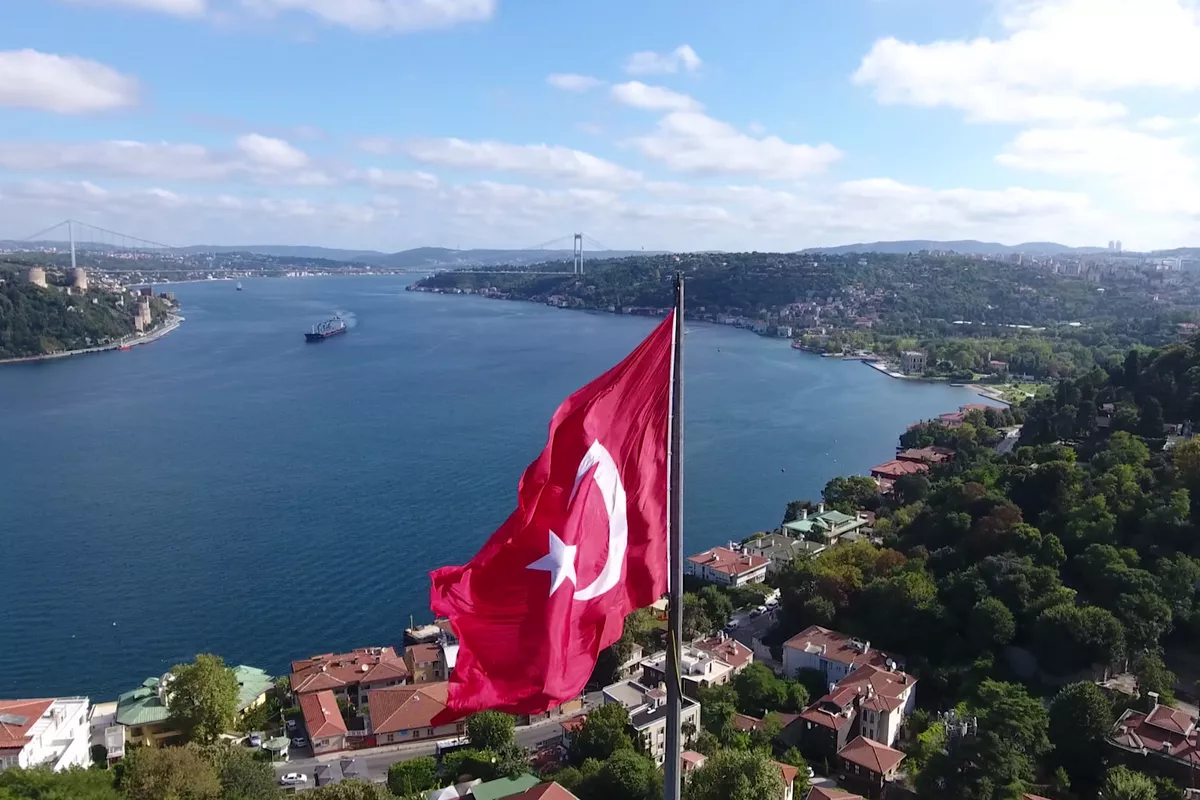
At the heart of Türkiye’s strategy is the so-called “Middle Corridor,” a trans-Caspian route linking China and Central Asia to Europe through the Caucasus and Anatolia. Ankara is pairing this with a second component: the Iraq-Türkiye “Development Road,” which would connect the Persian Gulf to Turkish rail and port infrastructure via Iraq. Together, these corridors are meant to do more than move goods. They are designed to reposition Türkiye as the indispensable node in Eurasian trade - and, ultimately, finance.
Türkiye’s argument is simple. First, geography favors Ankara. Sitting at the crossroads of Europe and Asia, Türkiye offers the shortest land bridge between the two. Second, politics favors Türkiye - at least for now.
Unlike IMEC, which depends on Israel as a major transit point, Türkiye’s routes avoid one of the most politically volatile chokepoints in the region. In a moment defined by war in Gaza and wider territorial turmoil, that is no small advantage. Third, Türkiye can integrate multiple routes into a single system: Central Asian freight via the Caspian, Gulf-linked trade via Iraq, and direct access to European markets through its existing customs union.
These are not trivial strengths. As supply chains fragment under geopolitical pressure, redundancy and alternatives are valuable. European decision-makers in particular are keen to diversify away from routes that pass through Russia or conflict zones. Türkiye is offering itself as the “least bad” option in a deteriorating strategic environment.
But Ankara’s ambitions run into a hard reality: It is not competing in a vacuum. IMEC is not simply another trade corridor. It is a geopolitical project backed by the United States, the EU, India, Saudi Arabia, and the United Arab Emirates. Congress has now tabled legislation, titled “Eastern Mediterranean Gateway Act,” that could breathe actual life into IMEC, which is a major advantage for its proponents over Turkish alternatives. It is tied to India’s rise as a manufacturing powerhouse and supported by Gulf capital that can finance large-scale infrastructure and logistics networks.
Türkiye’s model, by contrast, is more constrained. The Middle Corridor exists, but only partially. Freight volumes have grown in recent years, particularly after Russia’s invasion of Ukraine made northern routes less attractive. Yet the corridor still suffers from setbacks: limited rail capacity, cumbersome customs procedures, and reliance on ferry crossings across the Caspian Sea. These are solvable problems, but they demand ongoing investment and coordination among multiple states with varying interests.
The Iraq Development Road faces even steeper hurdles. It is strategically compelling but politically fragile. Iraq’s internal instability, the presence of Iranian-backed militias, and the risk of conflict spillover all complicate the country’s viability. Financing is still uncertain.
Compared to IMEC’s backers - flush with capital and in line with US strategic priorities - the Turkish option looks less like a finished product and more like a work in progress. Where Ankara’s ambitions become even more tenuous is in finance. Turkish officials have been explicit: They do not just want to move goods; they want to capture the financial flows that accompany them. If trade passes through Türkiye, then insurance, trade finance, currency clearing, and investment activity can be anchored in Istanbul. Over time, this could elevate the city as a competitor to Gulf hubs like Dubai and Abu Dhabi.
This is where the strategy is strained by naivety. Logistics can be redirected relatively quickly in response to political shocks. Capital is far less mobile when it comes to trust. Gulf financial centers offer stable currencies, predictable regulatory settings, and deep pools of liquidity. Türkiye offers none of these in sufficient measure. Chronic inflation, currency volatility, and the visible absence of the rule of law continue to deter long-term investment. Geography alone cannot compensate for institutional efficacy.
The more realistic outcome is that Türkiye succeeds - but only partially. It is likely to become a more important transit state while companies seek alternatives to disturbed routes. The Middle Corridor, in particular, will remain relevant as a supplementary route linking Asia and Europe. But Türkiye is unlikely to displace IMEC as the primary axis of a new East-West trade architecture. Nor is it set to supplant the Gulf as the region’s financial center.
That does not mean Ankara’s efforts are inconsequential. On the contrary, they show a greater shift toward a more fragmented, competitive global trading system. Instead of a single dominant route, we are likely to see a network of overlapping corridors - each determined by politics as much as economics. In that world, Türkiye does not need to win outright. It simply needs to stay indispensable.
And in an era of war and uncertainty, that may be enough.
By Sinan Ciddi