Georgian Dream Faces Backlash Over Costly Russian Gas Deal
Eurasianet highlights that Georgia’s ruling party, Georgian Dream, is facing criticism after revelations that Tbilisi is paying a premium for Russian gas. The costly deal has sparked public debate over government transparency and energy policy, putting the party under intense scrutiny.
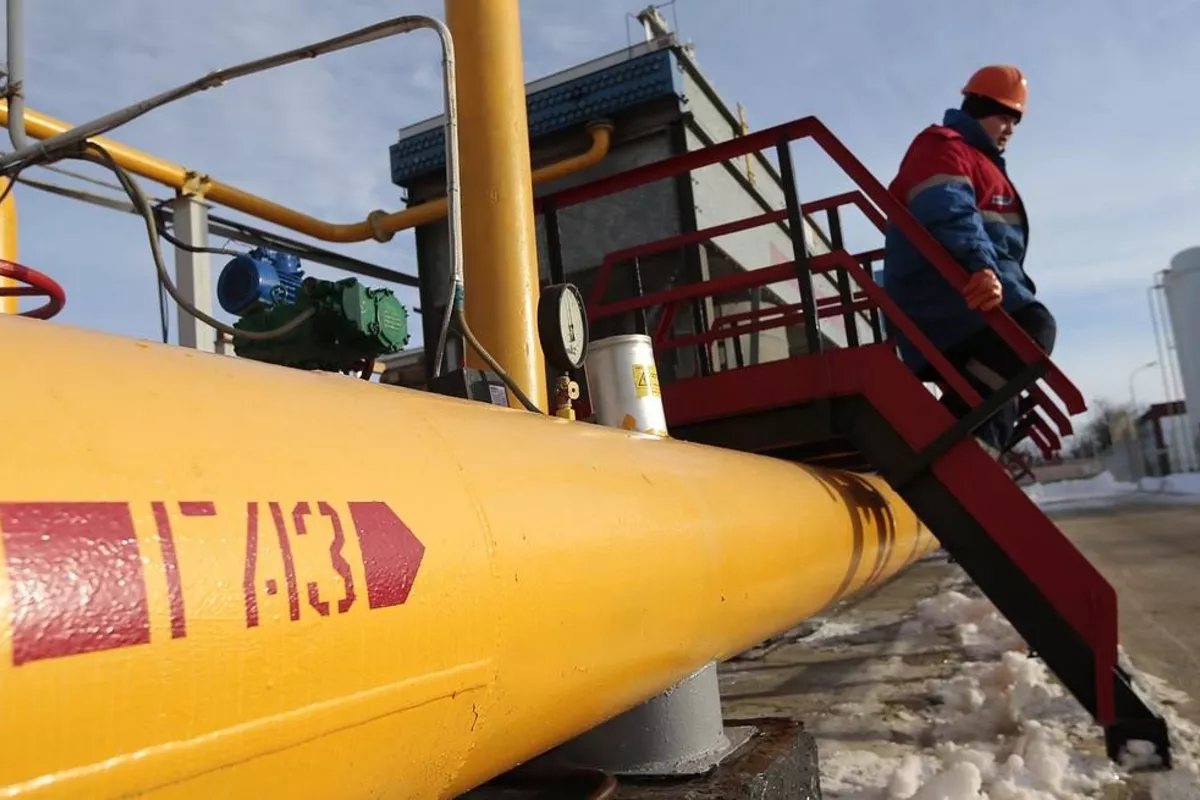
Officials are in damage-control mode in Georgia after the supposed unauthorized publication of a late 2025 state decree showing that the government’s reliance on Russian natural gas imports is growing and Tbilisi is now paying more for Russian imports than it has in the past, The Caspian Post reports via Eurasianet.
Earlier in January, Russia’s state-owned Gazprom announced it supplied 40.4 percent more gas to Georgia in 2025 than in the previous year. This surge can be seen within a broader Russian strategy to increase energy exports southward to partially offset the loss of the EU market due to sanctions. Gazprom also reported increases of over 20 percent in gas deliveries to Kazakhstan, Uzbekistan, and Kyrgyzstan.
But the increase in import volume is only part of the story in Georgia: the revelation that Georgia is paying a premium for Russian gas has dealt a serious PR blow to Georgian Dream leaders.
On January 13, the Georgian Government Administration published a decree, dated December 25, 2025, detailing the cost of gas purchased from Gazprom, although it was formally classified as a commercial secret. According to a local media outlet, Georgian Business Media (BMG), the contract specifies that Georgia pays $215 per thousand cubic meters (tcm) for the first 250 million cubic meters of Russian gas. Any imports above that volume cost $185/tcm. Previously, the country paid a flat rate of $185/tcm.
“From 2025, the cost of imported Russian gas has therefore increased,” a BMG report noted, even as Georgia continues buying larger volumes each year.
For Georgia, the growth in Russian imports marks a stunning turnaround that coincides with the Georgian Dream’s geopolitical pivot away from the EU and United States. For much of the past two decades, following its brief war in 2008 with Russia, Georgia worked to wean itself off Russian energy and instead secure gas from Azerbaijan.
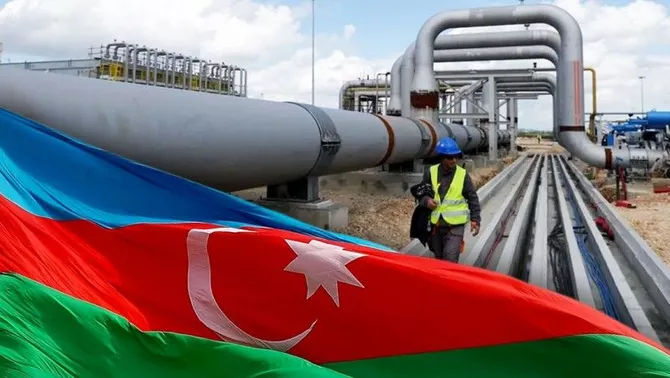
photo: Azernews
Azerbaijan presently is Georgia’s main supplier, with Azerbaijani gas imports planned to account for 87 percent of the overall total for 2026. But imports from Baku are declining as the share of Gazprom’s more expensive imports steadily climbs.
Russia’s rising share is raising questions about the government’s motives. Critics argue that moving away from internationally protected gas supplies to “old, unreliable infrastructure” exposes Georgia to both political blackmail and graft.
“We are effectively being tied to Gazprom. This is not just a political alignment issue, but also a matter of corruption, as all agreements with Gazprom are confidential and involve private interests,” former MP and economist Roman Gotsiridze said.
Curiously, even though the pricing decree was published by a government-connected entity, top Georgian Dream officials are treating the disclosure as an unauthorized and potentially illegal leak.
Georgia’s State Security Service has launched an investigation into alleged sabotage and “unauthorized access to a government computer system.”
A statement issued by the State Security Service added: “the basis for the investigation was information received from the Georgian Government Administration that an alleged cyberattack and certain manipulations were carried out on the administration’s website, which aimed to damage the state interests of Georgia by spreading incorrect information in the public space, including causing political and economic consequences harmful to the country.”