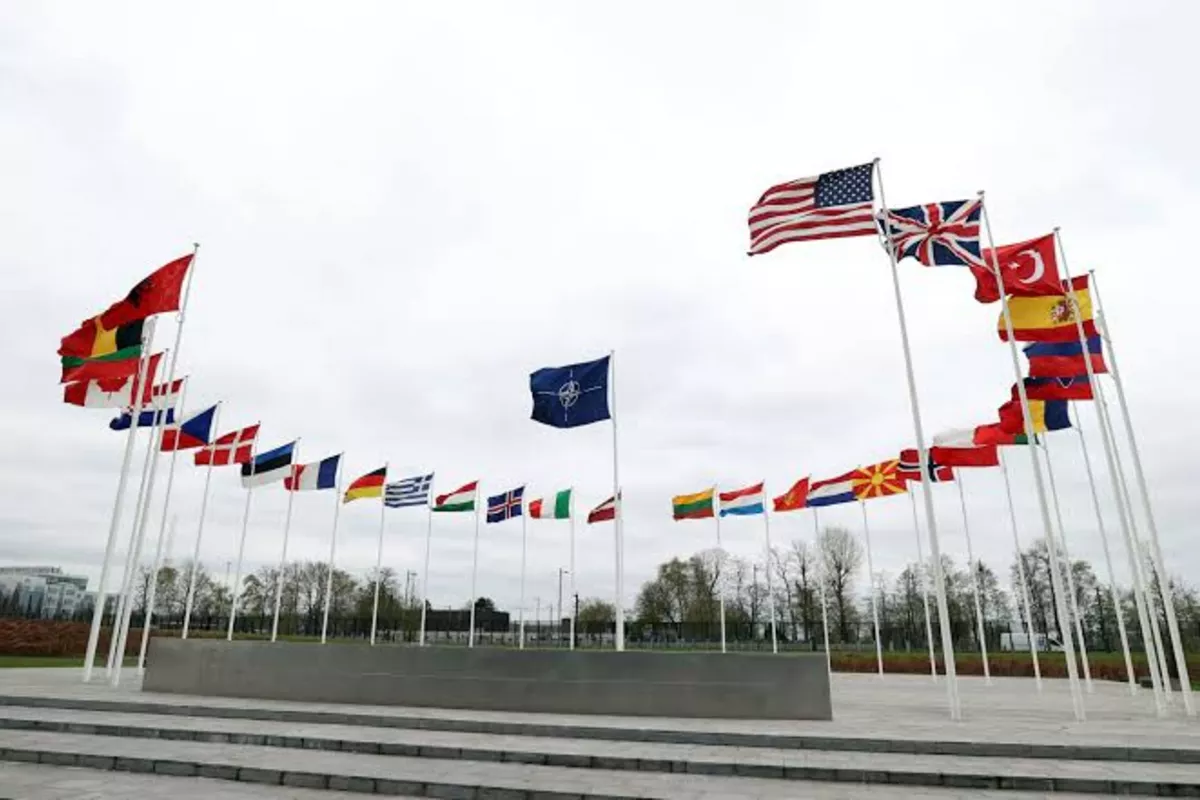
NATO's ongoing transformation - often described as "NATO 3.0" - extends well beyond adapting to the Russia-Ukraine war. It reflects the alliance's broader effort to respond to an increasingly interconnected security environment shaped by great-power competition, technological rivalry, cyber threats, and the growing convergence of Euro-Atlantic and Indo-Pacific security.
While much of the discussion surrounding NATO 3.0 has focused on its implications for Europe and the transatlantic alliance, an equally important question is how these developments are interpreted in Beijing. China's assessment of NATO's evolution, rather than the alliance's stated intentions alone, will influence Beijing's future strategic calculations and, by extension, the evolving international security landscape.
Beijing's perspective on NATO 3.0
From Beijing's perspective, NATO 3.0 represents not simply a stronger military alliance but an increasingly interconnected security network whose political and strategic influence extends beyond the North Atlantic.
Chinese officials have consistently maintained that NATO should remain focused on its traditional geographical area and have expressed reservations about the alliance's growing engagement with the Indo-Pacific. Consequently, NATO's expanding partnerships with Japan, South Korea, Australia, and New Zealand have attracted increasing attention in Beijing.
Although these countries are not NATO members, their participation in alliance summits and cooperation on cybersecurity, emerging technologies, maritime security, resilience, and defense-industrial issues have reinforced the perception among many Chinese analysts that the Euro-Atlantic and Indo-Pacific security environments are becoming more closely linked.
Even so, Beijing does not necessarily interpret NATO 3.0 as the emergence of an "Asian NATO."
Chinese scholars generally acknowledge that European countries maintain diverse strategic priorities and that many remain cautious about becoming directly involved in regional security disputes in the Indo-Pacific.
Nevertheless, many in Beijing view the gradual expansion of institutional cooperation across multiple domains as strategically significant. Intelligence exchanges, technological cooperation, resilience initiatives, supply-chain security, export controls on sensitive technologies, and coordination on critical infrastructure are increasingly seen as elements of a broader security architecture.
Although NATO characterizes these initiatives as responses to shared transnational challenges, many Chinese analysts interpret them as part of a long-term strategic balancing process in which China is an increasingly important factor.
2 differing views on global security
This divergence in interpretation illustrates one of the central challenges facing contemporary international security.
From NATO's perspective, cooperation with Indo-Pacific partners is intended to strengthen resilience against common challenges, including cyberattacks, disinformation, critical infrastructure vulnerabilities, and disruptions to global supply chains.
Beijing, however, tends to assess these developments within the broader context of intensifying strategic competition between China and the US.
As Washington expands security cooperation with allies in both Europe and Asia, many Chinese observers increasingly perceive NATO's transformation as reinforcing a wider strategic environment that places growing pressure on China's external security and technological development. Whether this amounts to containment remains a matter of perspective, but the perception itself is likely to influence Chinese policymaking.
At the same time, NATO 3.0 presents Beijing with a more nuanced strategic landscape than a simple narrative of confrontation would suggest. A stronger and more capable European defense architecture could generate both challenges and opportunities for China.
On the one hand, increased European investment in defense capabilities, technological resilience, and economic security may contribute to closer coordination on issues such as critical technologies, investment screening, cybersecurity, and the protection of strategic infrastructure. Enhanced European capabilities could also enable greater political and diplomatic engagement with developments in the Indo-Pacific.
On the other hand, greater European defense capacity does not necessarily imply diminished strategic autonomy. Beijing has long expressed support for a Europe capable of pursuing an independent foreign policy, arguing that strategic autonomy could create greater space for pragmatic cooperation on trade, investment, climate change, and global governance.
If NATO 3.0 ultimately produces a Europe that is both militarily stronger and strategically more self-confident, China may continue seeking constructive engagement with European partners while carefully managing areas of strategic disagreement.
From Beijing's perspective, therefore, NATO's transformation is not viewed exclusively through the lens of confrontation but also as a development whose long-term implications remain open to interpretation.
How will China push back?
China's response is therefore likely to extend beyond military modernization alone.
Beijing can be expected to continue strengthening partnerships across the Global South, expanding economic engagement with Europe where mutual interests exist, promoting multilateral institutions in which it plays a leading role, and advocating an international order that it characterizes as more inclusive and multipolar.
At the same time, Chinese diplomacy will likely continue emphasizing that security in the Asia-Pacific should be based on dialogue, regional ownership, and inclusive cooperation rather than the extension of military alliance structures into the region.
In sum, Beijing's principal concern is not NATO's territorial expansion but the gradual emergence of an increasingly integrated transregional security architecture linking North America, Europe, and key Indo-Pacific partners.
From the Chinese perspective, the cumulative effect of deeper defense cooperation, technological coordination, intelligence sharing, and political consultation creates new strategic constraints that will require careful policy responses.
Whether NATO 3.0 ultimately contributes to greater international stability or accelerates geopolitical fragmentation will depend not only on the alliance's future evolution but also on how China and NATO manage their growing strategic interaction.
If stronger deterrence is accompanied by sustained dialogue and mechanisms for crisis management, NATO's transformation could contribute to a more stable balance of power. If mutual distrust continues to deepen, however, competing security architectures may reinforce geopolitical polarization, making long-term stability more difficult to achieve.
Find the original article here