The Karabakh conflict left Azerbaijan facing many challenges. Among the most serious are the issues of landmines and missing persons. While technological solutions exist to tackle landmines, allowing the problem to be addressed, albeit gradually, information is crucial to locating missing persons. At the very least, approximate information about the sites where civilians were massacred during the First Karabakh War is needed to guide the search for those who disappeared.
Before the Second Karabakh War, no such information was available because Azerbaijan had no access to the territories under Armenian control. Following the liberation of those territories, however, demining operations, road construction and the restoration of settlements began to uncover horrifying discoveries.
The land has gradually been yielding the remains of those who were tortured, killed during the First Karabakh War and buried in unmarked graves.
Clarifying the fate of missing persons remains one of the key tasks facing Azerbaijan, President Ilham Aliyev said in his address to participants at the international conference, "Joining Forces and Strengthening Cooperation to Address the Issue of Missing Persons", held in Baku in October last year. In his address, the head of state noted that examinations of remains discovered in mass graves after the war showed that the victims had been subjected to horrific torture. "This is an extremely grim picture. The mass killing of people through torture, inhumane burial and the concealment of evidence of the crime constitute serious violations of international law," Aliyev said.
Source: APA
International law governing missing persons during armed conflicts is based on both international humanitarian law and international human rights law. The principal legal instruments include the 1949 Geneva Conventions and their 1977 Additional Protocols, the 2006 International Convention for the Protection of All Persons from Enforced Disappearance, and the International Commission on Missing Persons (ICMP), a specialised intergovernmental organisation that assists governments in locating and identifying people missing as a result of armed conflicts, human rights violations and natural disasters.
Under international law, each party to a conflict is obliged to take all possible measures to search for missing persons as soon as circumstances permit and immediately after the end of active hostilities. Families have the right to know the fate of their missing relatives and to receive information about them. The parties are also required to record information about the dead, ensure dignified burials and search for human remains.
The Armenian side failed to fulfil these obligations. It did not cooperate with Azerbaijan by providing information about the locations of mass graves. More specific coordinates were supplied only by some Armenian defendants standing trial in criminal proceedings in Baku. This led to the discovery of a large burial site near the walls of Askeran Fortress, where the remains of Khojaly residents who had attempted to escape the massacre but were captured by Armenian militants were found.
Although the discovery of mass graves has enabled some names to be removed from the list of missing persons, the problem is still far from resolved. Whether it can ever be fully resolved remains uncertain. According to Azerbaijani information, thousands of Azerbaijanis were taken to Armenia during the First Karabakh War, and it has proved impossible to establish what happened to them.
According to Azerbaijani authorities, captured servicemen and civilians were used as forced labour, subjected to violence and even inhumane medical experiments. Any trace of these people has long since been erased by the Armenian side. Their fate might have been established in the 1990s had international organisations, particularly the International Committee of the Red Cross (ICRC), which had access to the issue, made greater efforts. However, Azerbaijan's appeals went unanswered.
Today, the situation has changed. International organisations are demonstrating a genuine willingness to assist both sides in searching for missing persons. Armenia also says it has citizens in this category, although these are exclusively servicemen killed during the two Karabakh wars.
At the international conference in Baku, "Modern Approaches and Strengthening Cooperation in Addressing the Issue of Missing Persons", ICMP Director-General Kathryne Bomberger said that a large number of missing persons cases remain unresolved.
"We hope that, as a result of the support we are providing to Azerbaijan and Armenia, the families of the missing will finally learn the truth, and that their rights to justice, compensation and access to the truth will be ensured."
According to Bomberger, the conference's main objective was to strengthen Azerbaijan's capacity to use advanced information systems in the search for and identification of missing persons. The ICMP specialises in DNA-based identification methods and the extraction of DNA from post-mortem samples. This is particularly important for Azerbaijan because many of the disappearances occurred decades ago, making DNA extraction from skeletal remains especially challenging. Bomberger also spoke positively about the capabilities of Azerbaijan's forensic and forensic genetics specialists.
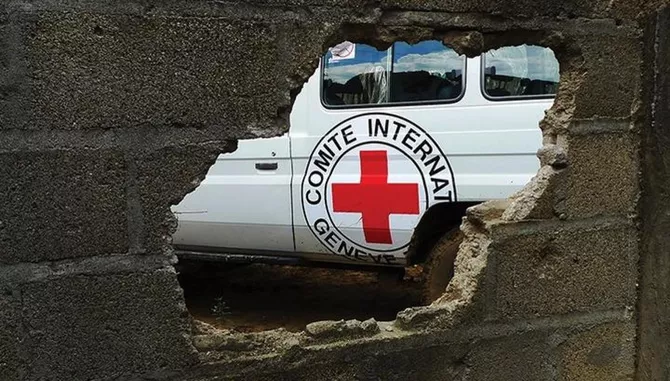
During the years of the conflict, the search for missing persons was coordinated by the ICRC. Under the framework agreement "On the Collection and Centralised Management of Ante Mortem Data on Missing Persons", signed in 2008 between Azerbaijan's State Commission on Prisoners of War, Hostages and Missing Persons and the ICRC delegation in Azerbaijan, the collection of biological samples from close relatives of missing Azerbaijani citizens began in 2014. Since 2023, these biological samples have been collected by the Genetic Research Centre, established under the Main Military Medical Department of the State Security Service on the instructions of the president.
As part of the Ante Mortem programme, data were collected by volunteers from the Azerbaijan Red Crescent Society. This was a demanding task, and the database was compiled largely on paper. The integrated data management system introduced with the assistance of the ICMP will enable the digitisation of records and modernise the entire process. In the future, all information will also be stored electronically.
In addition, as the peace process advances, Armenia has expressed its readiness to cooperate on the issue of missing persons.
Source: ICRC
Before the Second Karabakh War, the situation prevented Azerbaijan and Armenia from communicating directly on issues relating to missing persons. The ICRC acted as an intermediary. Now, as the peace agenda progresses, relations between Baku and Yerevan are reaching a qualitatively new stage, creating an opportunity for more active and productive cooperation in this area.
The digitalisation of the process, supported by the International Commission on Missing Persons, provides access to all available information. An anonymous reporting system will allow people on both sides to provide information about the locations of burial sites anonymously. A similar system was introduced in the former Yugoslavia after the Balkan wars and proved effective. It protects informants and shields them from any form of liability.
According to figures presented at the conference by Lieutenant General Sharafat Hasanov, Deputy Head of the State Security Service, as of 30 June 2026 the State Commission had registered 4,010 people as missing as a result of Armenia's military aggression against Azerbaijan. Of these, 4,004 disappeared during the First Karabakh War, while six went missing during the 44-day Second Karabakh War. Of the total, 3,228 are servicemen and 782 are civilians. Among the civilians are 71 children, 288 women and 319 elderly people.
Biological samples from 11,542 donors have been collected and systematised. DNA profiles extracted from these samples are being processed and archived by the Genetic Research Centre of the Main Military Medical Department of the State Security Service, Hasanov said.
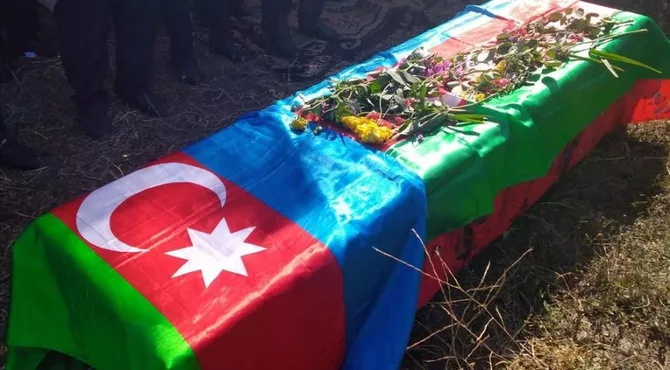
Intensive searches for missing persons began in February 2021. To date, remains believed to belong to 893 missing persons have been discovered. Thirty-two mass graves have been identified in the liberated territories. From these sites, the remains believed to belong to 253 individuals have been recovered and exhumed with the participation of the investigative authorities.
As a result of forensic molecular genetic examinations, the identities of 327 people who disappeared during the First Karabakh War have been established. Information relating to 226 of them has been made public and provided to their families, and their remains have been buried in accordance with legal requirements and national and religious traditions. Of those buried, 181 are servicemen and 45 are civilians.
These are horrifying statistics, yet they also offer a measure of hope. Thousands of families in Azerbaijan may finally have the opportunity to bury their loved ones after more than 30 years of waiting, visit their graves and preserve their memory for future generations.
Today, few still hope that the missing will return alive.
By Tural Heybatov