Kazakhstan’s growing engagement with Pakistan signals more than a routine diplomatic exchange - it reflects a broader recalibration of Central Asia’s external economic and strategic orientation. In an article published on Eurasianet, independent and freelance researcher Saima Afzal argues that Astana’s outreach to Islamabad underscores a deliberate southward turn, as Central Asian states seek new trade corridors, diversified partnerships, and access to warm-water routes amid shifting regional and global dynamics.
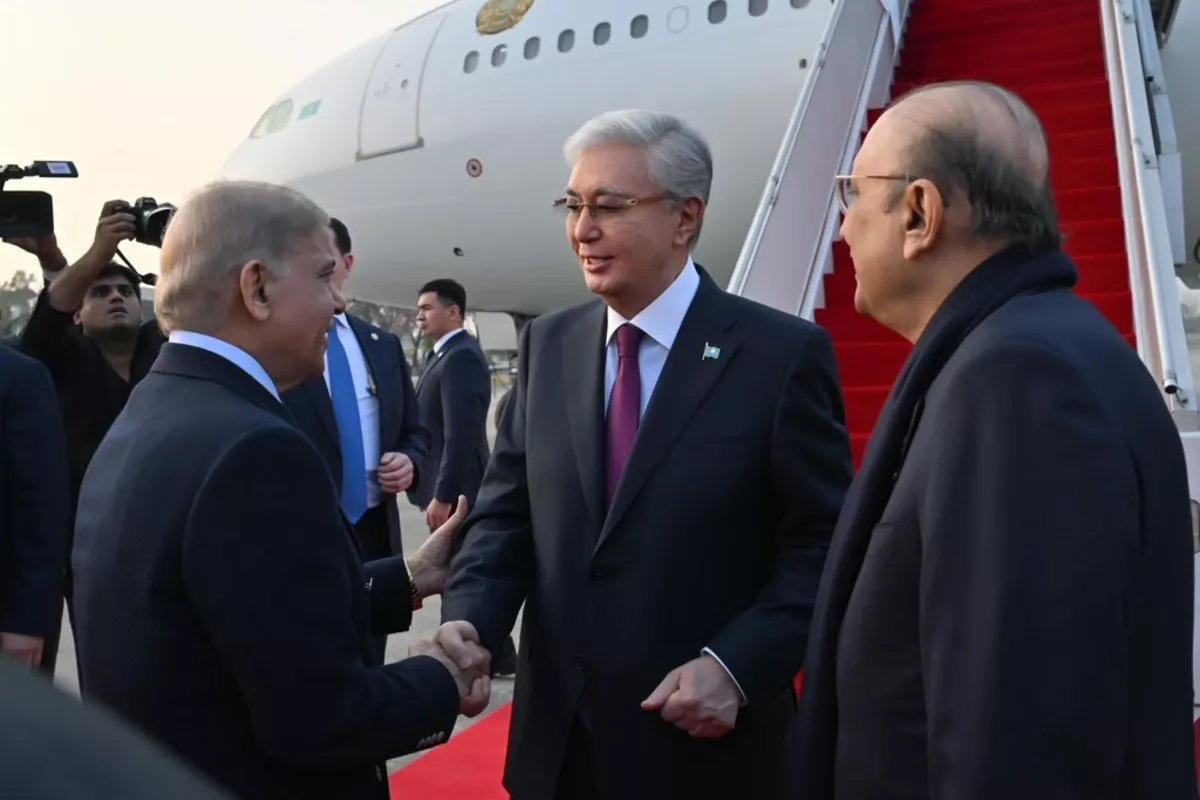
Kazakh President Kassym-Jomart Tokayev’s state visit to Pakistan, which concluded February 4, reflects a quiet but consequential shift in Central Asia’s geo-economic outlook, one in which Pakistan is increasingly seen as a viable southern gateway for regional trade, The Caspian Post republishes the article.
The visit produced trade deals, but officials emphasized the strategic importance of Tokayev’s first official mission to Islamabad. A commentary published February 3 by the official Qazinform news agency stated that the two countries had been for decades only “distant partners,” but were now shifting into “project-oriented mode, with concrete routes, contracts, market access, logistics, and transit.”
“For Kazakhstan, Pakistan is not just a market in South Asia but also access to the ports of the Arabian Sea and, consequently, alternative export corridors at a time when it is becoming increasingly difficult for the world to rely on one or two routes,” the commentary continued.
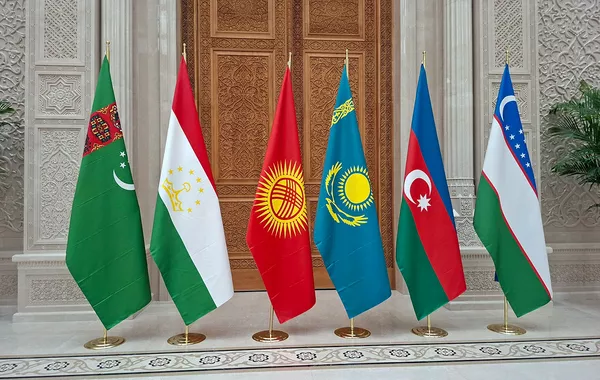
Kazakhstan is not alone in Central Asia in recognizing Pakistan’s importance as a trade outlet. A February 3 session of the Pakistan-Uzbekistan Intergovernmental Commission yielded a commitment to expand bilateral cooperation, setting a target of over four-fold growth in trade turnover to $2 billion annually within two years.
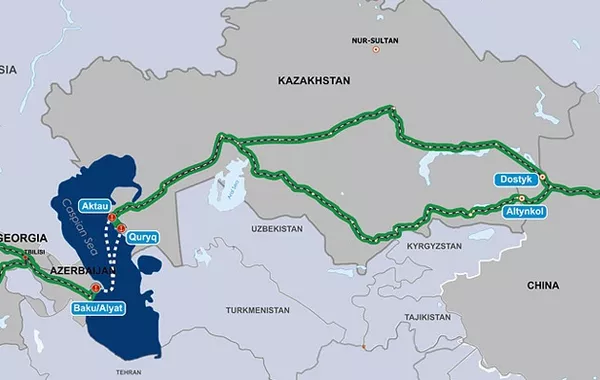
What has distinguished Tokayev’s visit is its timing and intent. It comes amid disruptions to traditional Eurasian supply chains caused by Russia’s unprovoked attack on Ukraine. That conflict, in turn, has spurred competition over alternative transit corridors, and a renewed focus among middle powers on economic resilience rather than political symbolism.
Kazakhstan, along with other Central Asian states, has long grappled with the constraint of geography; the region is landlocked. Diversifying access to maritime trade is therefore a strategic necessity rather than a commercial preference. Pakistan, for its part, has spent the past decade articulating a geo-economic vision that strives to leverage its coastline, ports, and location at the crossroads of South, Central, and West Asia. Tokayev’s visit confirms that this vision is now being taken seriously by Central Asian leaders.
At the center of Tokayev’s visit is a proposed Pakistan-Kazakhstan rail connectivity agreement, reportedly valued at around $7 billion and designed to link Kazakhstan to Pakistani ports via Afghanistan and Turkmenistan. If implemented, the project would mark one of the most ambitious connectivity initiatives in the region, extending through Chaman and integrating into Pakistan’s broader transport network.
This rail corridor is not merely an infrastructure project. It represents an attempt to rewire trade flows connecting Central Asian producers directly to the Arabian Sea, reducing transit times and costs, and lowering dependence on a limited set of traditional routes. For Kazakhstan, access to the port at Karachi, as well as the Chinese-controlled port at Gwadar, offers entry to global markets.
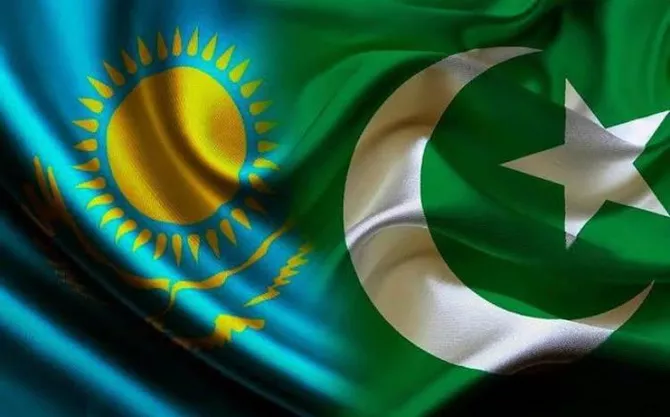
photo: kazislam.kz
Both countries have already tested the feasibility of overland trade. Under the TIR convention, road consignments have successfully moved between Pakistan and Kazakhstan through Afghanistan, demonstrating that connectivity, while complex, is not hypothetical. The proposed rail link seeks to institutionalize and scale this experience.
Despite warming political ties, economic engagement between the two countries has remained modest, with Kazakhstan’s primary export to Pakistan being crude oil. Officials on both sides now speak openly of raising trade turnover to $1 billion annually in the near term. Whether that target is achieved will depend less on declarations and more on practical reforms: simplifying visa regimes, strengthening banking channels, digitizing customs procedures, and addressing logistical bottlenecks that continue to discourage private sector engagement.
Beyond existing oil trade, both countries have expressed interest in renewable energy, green technology, and industrial power trade, sectors capable of attracting long-term global investment. Kazakhstan also is interested in boosting commerce in other spheres.
“When growth is driven by a single commodity, it can just as easily decline if supplies turn out to be one-time or irregular,” the Qazinform commentary noted.
More broadly, the relationship is shifting toward institutionalization. Regular joint working groups, sector-specific dialogues, and structured action plans are gradually replacing episodic engagement. This matters because Eurasian connectivity projects are inherently long-term and politically sensitive; they require continuity across administrations and insulation from short-term shocks.
For all the strategic ambition, one weakness remains - a low level of people-to-people ties. While a growing number of Pakistani students - particularly in medicine - are studying in Kazakhstan, the flow remains largely one-directional. Tourism, academic exchange, and cultural cooperation lag behind economic rhetoric. Direct flights, university partnerships, and scholarship programs may lack the visibility of railways and ports, but they are essential for building constituencies that sustain long-term cooperation.
Tokayev’s visit has been widely described as a “win-win.” That may be true, but only if intent is matched by execution. Eurasia is littered with connectivity projects announced with fanfare and stalled by politics, security concerns or financing gaps. Afghanistan’s role as a transit state remains the largest variable, though regional actors increasingly treat Afghan instability as a risk to manage rather than an insurmountable obstacle.
If even a portion of the agreements discussed and signed during Tokayev’s visit translate into functioning infrastructure, trade facilitation, and institutional cooperation, the impact will extend beyond bilateral ties. It will signal that middle powers in Central and South Asia are capable of shaping their economic destiny on their own, despite global turbulence.