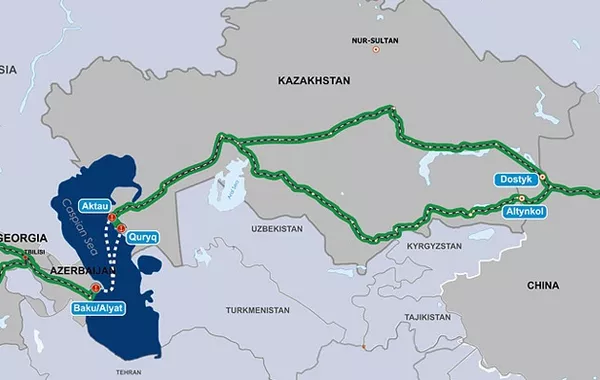
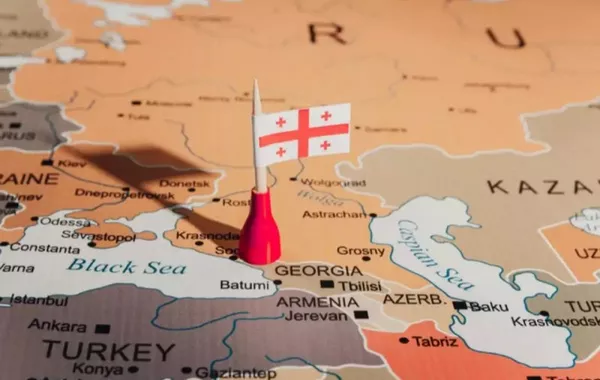
China’s growing footprint in Central Asia’s nuclear energy sector is quietly reshaping a landscape long dominated by Moscow. In an article published by Central Asia - Caucasus Analyst, Karachi-based analyst at Wikistrat Syed Fazl-e-Haider examines how Beijing is leveraging financing, technology, and strategic partnerships to redraw the region’s nuclear power map-signaling a gradual but meaningful shift in Central Asia’s geopolitical and energy balance.
China is reshaping Central Asia’s nuclear energy sector, challenging Russia’s long-standing dominance in the region. In September 2025, Uzbekistan explored a contingency agreement with China National Nuclear Corporation (CNNC), amid concerns that the contract signed in June with Russia’s state-owned nuclear monopoly, Rosatom, for the construction of nuclear power units might face delays. While Rosatom leads the consortium responsible for building Kazakhstan’s first nuclear power plant, CNNC has emerged as the principal alternative competitor. Under current plans, CNNC would assume a leading role in the construction of Kazakhstan’s second and third nuclear power plants, The Caspian Post republishes the article.
BACKGROUND: Nuclear energy has been a central instrument through which Russia has sustained its presence in Central Asia. Experts argue that nuclear power projects tend to create long-term dependencies for host states, particularly when nuclear energy constitutes a significant share of national electricity generation. Such projects also entail security risks, including the potential for sabotage. A 2023 study on Russian nuclear energy diplomacy published by the Norwegian Institute of International Affairs notes that “Central Asia has a special place in Russian nuclear energy diplomacy because of the post-Soviet heritage, meaning that Rosatom’s operations in the region are easier and smoother than elsewhere.”
Moscow’s invasion of Ukraine in February 2022 intensified Russia’s diplomatic isolation, undermining its dominance in Central Asia’s nuclear energy sector. As a sanctioned and increasingly isolated Russia gradually loses its influence in the region’s nuclear landscape, Beijing is capitalizing on the opportunity to secure new clients for its nuclear reactor technology.
During a visit to Uzbekistan in 2018, Russian President Vladimir Putin signed an agreement with Tashkent for the construction of a 2.4-gigawatt nuclear power plant, valued at approximately US$ 11 billion. However, the project failed to progress as planned and was revised in 2024, when the two sides concluded a new agreement for a facility comprising six small reactors, each with a capacity of 55 megawatts (MW).
In June 2024, Russia concluded an agreement with Uzatom to carry out a feasibility study on constructing a nuclear power plant comprising two to four VVER-1000 reactors in Uzbekistan. In 2023, Kyrgyzstan held discussions with Rosatom on a small nuclear power plant with a capacity of 110 MW. However, the talks failed to progress after Bishkek lost interest.
In June 2025, Kazakhstan announced the selection of Rosatom to lead the construction of the country’s first nuclear power plant. In a separate statement, however, Astana also confirmed that CNNC would head the development of the country’s second nuclear facility. In August 2025, Kazakhstan’s First Deputy Prime Minister Roman Sklyar further stated that CNNC would also lead the construction of the country’s third nuclear power plant. In September 2025, Uzbekistan’s nuclear agency, Uzatom, unveiled an upgrade plan for its two small nuclear reactors (RITM-200N), scheduled for completion by 2030, and for two large nuclear units (VVER-1000) by the mid-2030s. By pursuing a multi-vector diplomatic strategy, Uzbekistan has signed nuclear energy agreements with both Russia and China.
China’s nuclear energy cooperation in Central Asia is expanding rapidly. In September 2025, Beijing-Tashkent nuclear cooperation featured prominently in a meeting between Uzbek President Shavkat Mirziyoyev and Shen Yanfeng, Chairman of CNNC, held on the sidelines of a Shanghai Cooperation Organization (SCO) summit in China. Following the Mirziyoyev-Yanfeng meeting, new mining agreements valued at US$ 5 billion, including a uranium mining deal, were announced.
IMPLICATIONS: Energy-constrained Central Asian states, such as Kyrgyzstan and Uzbekistan, have looked to Rosatom, the world’s leading constructor and exporter of nuclear reactors. International sanctions imposed on Russia over its war in Ukraine have cast uncertainty over Rosatom’s future. As a result, Russia’s clients in Central Asia are increasingly turning to China as an alternative partner for nuclear energy cooperation. It was against this backdrop that Tashkent, in September 2025, discussed a contingency agreement with China for the construction of nuclear power plants, supplementing a deal signed with Rosatom in June 2025. While Kazakhstan’s first nuclear power plant is being built by Russia, China is set to lead the construction of the country’s second and third nuclear facilities.
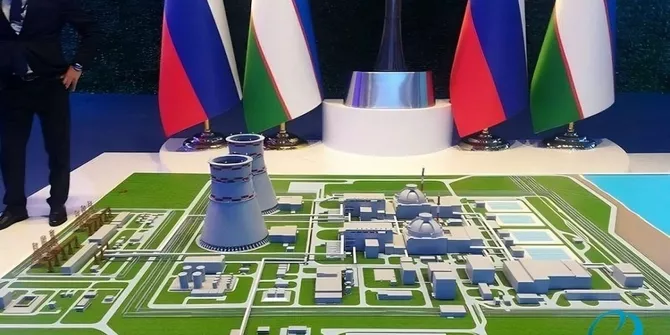
photo: Eurasianet
China’s growing involvement in the nuclear energy sector is significantly eroding Russia’s long-standing dominance in the region. CNNC has emerged as a strong competitor to Russia’s Rosatom in nuclear projects in Uzbekistan and Kazakhstan, as both Central Asian states expand their nuclear energy programs.
CNNC is posing strong competition to Russia’s Rosatom on cost considerations in nuclear energy projects. For Kazakhstan’s first nuclear power plant, CNNC sought to attract Kazakh authorities by proposing the construction of two nuclear units with a combined capacity of 2.4 gigawatts at a cost of US$ 5.47 billion, a significantly lower bid. The comparatively lower cost of Chinese nuclear reactors gives China a competitive advantage over Russia in Central Asia, where affordability is a critical factor in ensuring the financial sustainability of host countries.
China’s policy of sharing nuclear technology and granting host countries full control over the nuclear fuel cycle emphasizes energy independence in states developing nuclear power projects. This approach is particularly attractive to Central Asian countries and gives China a competitive advantage over Russia. In Kazakhstan, for example, this policy aligns with Astana’s long-term objective of reducing dependence on external powers in the nuclear energy sector, and CNNC has offered technology transfer along with full control of the fuel cycle. By contrast, Russia follows a model that retains control over fuel supply and requires the repatriation of spent fuel for the duration of a plant’s operation in non-nuclear states.
Faster delivery timelines are another factor that make China more attractive to Central Asian countries than Russia in nuclear energy projects. Chinese companies typically complete nuclear power projects in seven years or less, whereas Rosatom generally requires between six and nine years to construct nuclear reactors.
Despite China’s competitive advantages in cost and delivery speed, Chinese nuclear projects involve technical and environmental risks. China does not provide Central Asian states with a long-term, reliable solution for radioactive waste management. Consequently, in the absence of advanced and transparent safety protocols, safety concerns remain a major obstacle to China’s nuclear ambitions in the region.
In September 2025, Almassadam Satkaliyev, Chairman of Kazakhstan’s Atomic Energy Agency, emphasized the importance of ensuring safe operations at nuclear facilities. He stated that Kazakhstan would continue to develop the nuclear fuel cycle, from uranium mining and nuclear fuel production to electricity generation at nuclear power plants, while strictly adhering to the country’s international obligations regarding the peaceful use of nuclear energy.
CONCLUSIONS: Despite international sanctions imposed in response to the war in Ukraine, Russia is making concerted efforts to maintain its influence over nuclear energy projects in Central Asia. However, sanctions have increasingly eroded Russia’s primary source of leverage, nuclear cooperation, allowing China to challenge Moscow’s long-standing dominance in the region’s nuclear energy sector.
China’s nuclear power initiatives are poised to solidify its long-term strategic influence in Central Asia. These projects necessitate decades of engagement through fuel supply chains, technology transfer, and sustained operational oversight.
China is reshaping Central Asia's nuclear landscape by leveraging cost competitiveness, technology transfer, and expedited project timelines to erode Russia's traditional dominance in energy cooperation. However, despite these advantages, concerns persist regarding China’s comparatively lax safety standards.