While Western countries struggle to curb migration flows, Russia appears determined to manufacture a migration crisis of its own.
In recent months, Russian officials have begun openly discussing a labor shortage. The implication is curious: in a country of 140 million people, supposedly everyone is already employed, unemployment has fallen to near zero, and Russia now desperately needs foreign workers. There is, we are told, no one left to work on construction sites, sweep streets, or clear snow.
This narrative would be more convincing if it were not so detached from reality.
Migrant labor has always been a structural feature of Russia’s economy. In Soviet times, workers from the Soviet Union's periphery staffed major construction projects and industrial sites. This was not called “labor migration” then; it was simply how the system functioned. After the collapse of the USSR, however, Russia proved unable, or unwilling, to meet its labor needs internally. Despite being the largest and most populous successor state, it once again turned outward for manpower.
For decades, migrants from Central Asia and the Caucasus filled this role. What changed was not their importance, but how they were perceived. Public attitudes hardened. “Foreigners” became a convenient scapegoat.
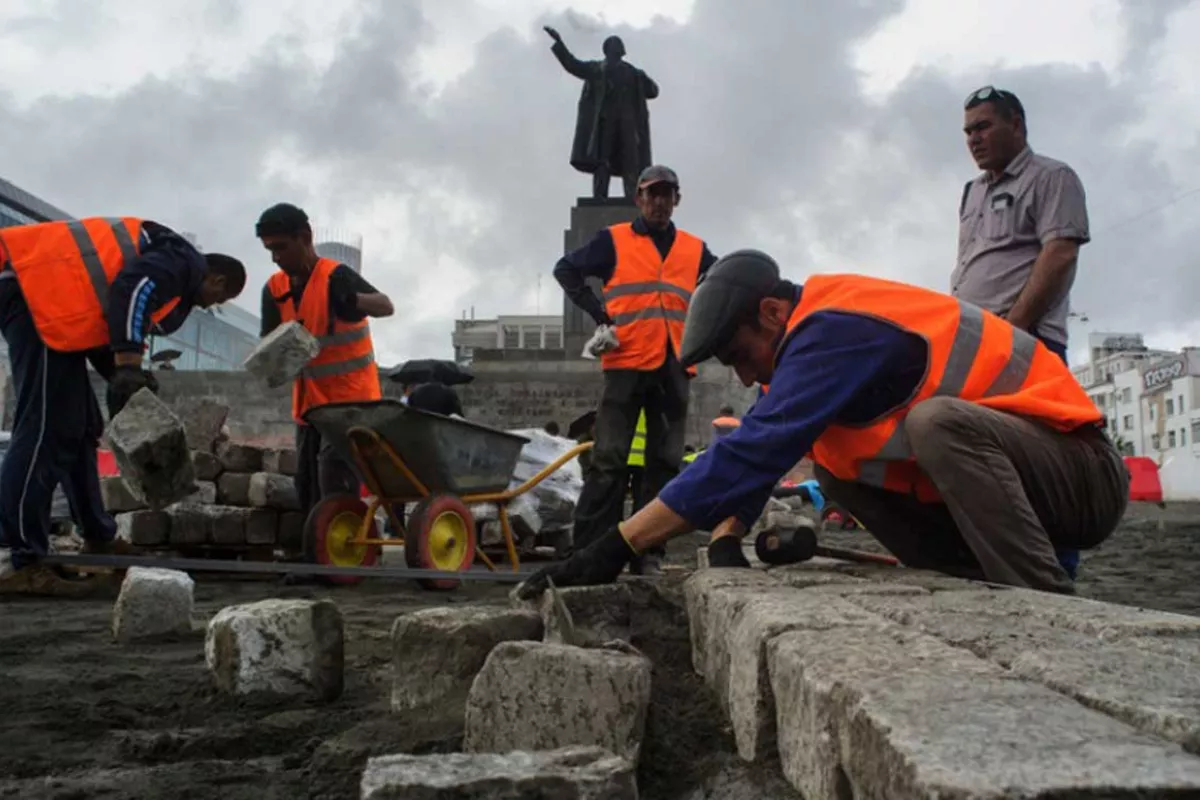
Official unemployment figures, hovering around two percent, mask a very different reality. They exclude unregistered jobless citizens in rural areas, peripheral regions, and impoverished provinces, where social despair is often managed with alcohol rather than employment. Even in major cities, there is no shortage of Russians who need work. But Russians have grown accustomed to a division of labor in which Tajiks sweep streets, Kyrgyz clean courtyards, Armenians and Azerbaijanis trade at markets, and locals look the other way.
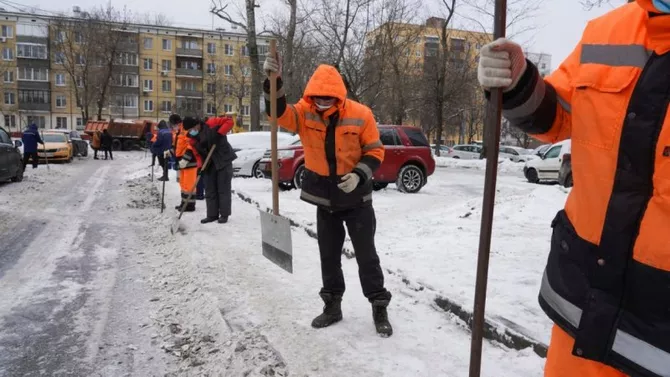
Photo: Getty Images
When “Azerbaijani markets” were shut down, tomatoes suddenly stopped appearing. When Tajik migrants were driven out, cities grew dirty. Cause and effect proved stubbornly resistant to ideology.
At some point, Moscow decided, at the official level, that migrants from Central Asia had to go. A campaign followed, fueled by nationalist rhetoric, neo-Nazi groups, and a segment of the population. New rules were imposed: stricter language and history tests, bureaucratic hurdles bordering on the absurd, and open discrimination. Predictably, people left.
Then came the “Indian solution.”
As Russia’s relations with India warmed, Moscow convinced itself that Indian workers would be an ideal replacement for Central Asian migrants: hard-working, compliant, and, crucially, not Muslim. Within weeks of Vladimir Putin’s visit to New Delhi, planes carrying Indian labor migrants began landing in Russia. At first, the public reaction was enthusiastic. Russians, still influenced by cultural stereotypes shaped by Bollywood films like Disco Dancer, welcomed the newcomers with optimism.
Reality intruded quickly.
Russian social media is now flooded with videos complaining about Indian migrants - their refusal to perform physically demanding work, their lack of discipline, poor hygiene, and unwillingness to adapt. The turning point came during a heavy snowfall in Moscow. The city was paralyzed. There was no one to clear the streets. Indian workers, unaccustomed to the cold and uninterested in manual labor, simply refused. Tajiks and Uzbeks had already been expelled. Local residents, for their part, considered shovels beneath their dignity.
The outrage was loud. The consequences were minimal.
According to India’s ambassador to Russia, Vinay Kumar, some 70-80,000 Indian citizens are currently working in the country. Agreements signed during Putin’s December visit to India have further simplified their employment. Russian officials now openly state that by 2026, at least another 40,000 Indian migrants may arrive.
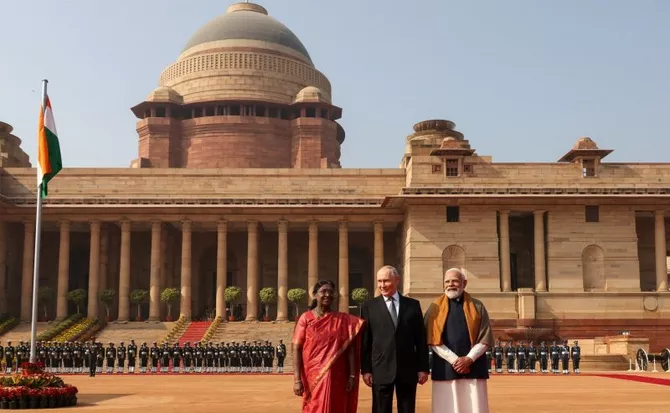
An official welcoming ceremony for Vladimir Putin, hosted by President of India Droupadi Murmu and Prime Minister Narendra Modi. Photo: President of Russia
What is striking, even to Russians themselves, is what is not required of these workers. Indians are not expected to speak Russian. They are not tested on Russian history. Their children are not barred from schools. They are not subjected to humiliating raids. They are not pressured to fight in Ukraine as a condition for residency. These requirements were introduced for Central Asian migrants precisely to drive them out.
Indians are spared all of this. Many employers, according to media reports, are already quietly terminating their contracts.
And yet, the most interesting chapter may still lie ahead.
Russia is now preparing to welcome Afghan labor migrants.
Russian media report that Moscow and Kabul are discussing the recruitment of Afghan workers for Russia’s “labor-deficient” sectors. Afghan officials speak confidently about sending “qualified professionals” abroad. According to Russia’s own classification, shortages exist in manufacturing, transport and logistics, construction, retail and services, IT, telecommunications, and healthcare.
The Taliban’s ambassador in Moscow, Mawlawi Gul Hassan, told TASS that negotiations have already taken place and that there are grounds for optimism. Afghanistan, he explained, has a young population, and the government is “making efforts to send skilled and professional personnel to countries where labor is needed.”
Perhaps Afghan migrants will indeed be more hardworking. Perhaps they will integrate more smoothly than expected. But there is a question Russians have yet to answer honestly.
Will they tolerate from Afghans what they refused to tolerate from Tajiks? Their faith? Their traditions? Strict religious observance? Will Afghan women be pressured to uncover their faces, as Central Asian women were? Will there be protests over Afghan children in classrooms? Will Russian language exams and tests on Peter the Great’s military campaigns suddenly regain importance?
Russia made its first mistake by harassing and expelling people who had lived alongside it for decades in a shared state and were, culturally and mentally, far closer. Its second mistake was importing Indian workers under the illusion that they would obediently fill the gap. Now it is preparing to make a third, inviting a workforce that is culturally, socially, and mentally even more distant.
But perhaps that no longer matters.
After all, there should be enough shovels to go around.
By Samir Muradov