The relationship between religion and the state is one of the most complex and debated issues in modern geopolitics. In regions like Central Asia and the South Caucasus, the intertwining of Islam, secularism, and political stability takes on unique dimensions, shaped by historical legacies, ethnic diversity, and geopolitical considerations. While Islam has a deep cultural and historical influence in these regions, the states of Central Asia and the South Caucasus have taken varied approaches to managing religion within their political systems.
The delicate balance between secularism and Islam is often pivotal to ensuring internal stability, promoting social harmony, and maintaining control over potentially destabilizing forces. This article explores how these regions, particularly Azerbaijan, navigate the relationship between religion and statehood and how this influences their political stability.
Historical Background: Islam’s Influence in Eurasia
Both Central Asia and the South Caucasus have long histories of Islamic influence. Islam spread into the region during the Arab conquests in the 7th and 8th centuries and eventually became the dominant religion across the vast expanse of Eurasia. Central Asia was historically part of the Muslim world, particularly under the rule of various empires such as the Timurids and the Khanates. The South Caucasus, though more diverse, saw Islam spread primarily through the influence of the Persian Empire, the Ottoman Empire, and later the Russian Empire.
Despite this rich Islamic heritage, both regions have undergone significant transformations under Soviet rule. The Soviet Union imposed an official state policy of atheism, severely curtailing religious practices and promoting secularism. In Central Asia, this involved the suppression of Islamic institutions, the closure of mosques, and the prohibition of religious education. In the South Caucasus, religion was similarly repressed, although with more variation depending on the region's ethnic makeup and the strategic importance of Islam to Soviet authorities.
After the collapse of the Soviet Union in 1991, these newly independent states faced the challenge of reconciling their Islamic heritage with the demands of modern statehood. Some countries sought to maintain a strict secularism inherited from the Soviet model, while others sought a more inclusive approach to religion, incorporating Islam into their national identity.
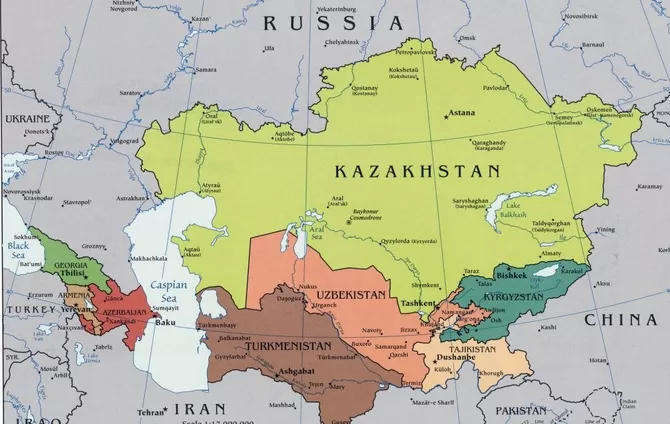
Photo: Aze.media
The Role of Secularism in Central Asia and the South Caucasus
Secularism in Central Asia and the South Caucasus is a product of the Soviet legacy, and the political elites of these states have largely maintained secular governance as a means of consolidating power and avoiding potential sectarian conflict. Secularism in this context is not necessarily synonymous with a separation of religion and politics but rather a state-led effort to control and regulate religion in ways that align with the political and social priorities of the state.
Central Asia: Secularism and Islam in Balance
In Central Asia, the five post-Soviet republics-Kazakhstan, Kyrgyzstan, Tajikistan, Turkmenistan, and Uzbekistan-have each approached the issue of religion in ways that reflect their unique political and social realities. However, all share a commitment to maintaining secularism while allowing Islam to play a prominent role in public life.
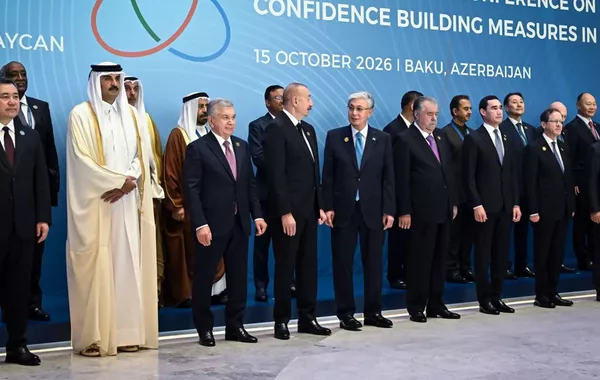
Kazakhstan: Kazakhstan, with its diverse population and large Russian-speaking minority, has taken a pragmatic approach to secularism. The government, led by President Kassym-Jomart Tokayev, promotes a "modern" and "progressive" Islam that is compatible with the state's secular governance. The Kazakh government actively controls religious institutions, including the appointment of religious leaders, and ensures that Islam is portrayed in a way that supports national unity and stability. The state also emphasizes the importance of "traditional" values, including respect for Islam as part of Kazakh cultural heritage, but keeps a firm grasp on religious practices and public expression.
Uzbekistan: Uzbekistan has adopted a similar approach, balancing secularism with Islam. Under the leadership of Shavkat Mirziyoyev, who took office in 2016, Uzbekistan has undergone reforms that allow for greater religious freedom, but the government still seeks to limit the influence of Islamic movements that it perceives as a threat to stability. Uzbekistan has a majority Muslim population, and the government sponsors religious activities that promote moderate, state-approved Islam. At the same time, it controls the clergy and restricts the activities of religious groups that might challenge state authority, such as Islamist movements.
Tajikistan: Tajikistan’s approach to Islam has been notably more restrictive. The government of President Emomali Rahmon has been particularly vigilant against the rise of radical Islamist groups. Tajikistan has implemented strict regulations on religious education and religious practices, including prohibiting the wearing of hijabs and limiting the activities of unregistered religious organizations. The state's secularism is actively enforced to prevent the growth of political Islam, which the government fears could destabilize the country.
Kyrgyzstan and Turkmenistan: Kyrgyzstan, with its history of more pluralistic policies, has a relatively open environment for religious expression. However, the state still promotes secularism and works to manage Islam's role in the public sphere, particularly in terms of political activity. Turkmenistan, on the other hand, presents a more authoritarian model of governance, with secularism used as a tool to restrict and control religious activity, including the practice of Islam.
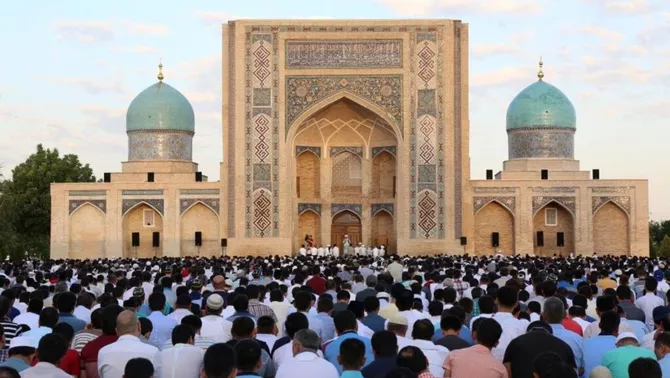
Photo: Wikimedia Commons
The South Caucasus: Multiculturalism and Peaceful Coexistence
In the South Caucasus, the dynamics of religion and politics are shaped not only by Islam but also by the region’s significant Christian populations, particularly in Armenia and Georgia. Azerbaijan, however, stands out for its unique approach to managing religion in a multicultural, multiethnic society.
Azerbaijan’s official state policy is one of secularism, with the government emphasizing a model of multiculturalism that allows for the peaceful coexistence of various religious and ethnic groups. The majority of Azerbaijan’s population is Muslim (predominantly Shia), but the country has a substantial Christian minority, as well as a significant number of secular individuals.
Azerbaijan’s Multiculturalism: A Model for Stability
Azerbaijan is often heralded as an example of a country where religious and ethnic diversity is managed in a way that ensures political stability. Azerbaijani President Ilham Aliyev has emphasized the importance of interfaith dialogue, tolerance, and the protection of religious freedoms. Azerbaijan’s secularism is a key component of its national identity, but this secularism is framed in such a way that it does not preclude the recognition of Islam as an integral part of the country’s cultural and historical heritage.
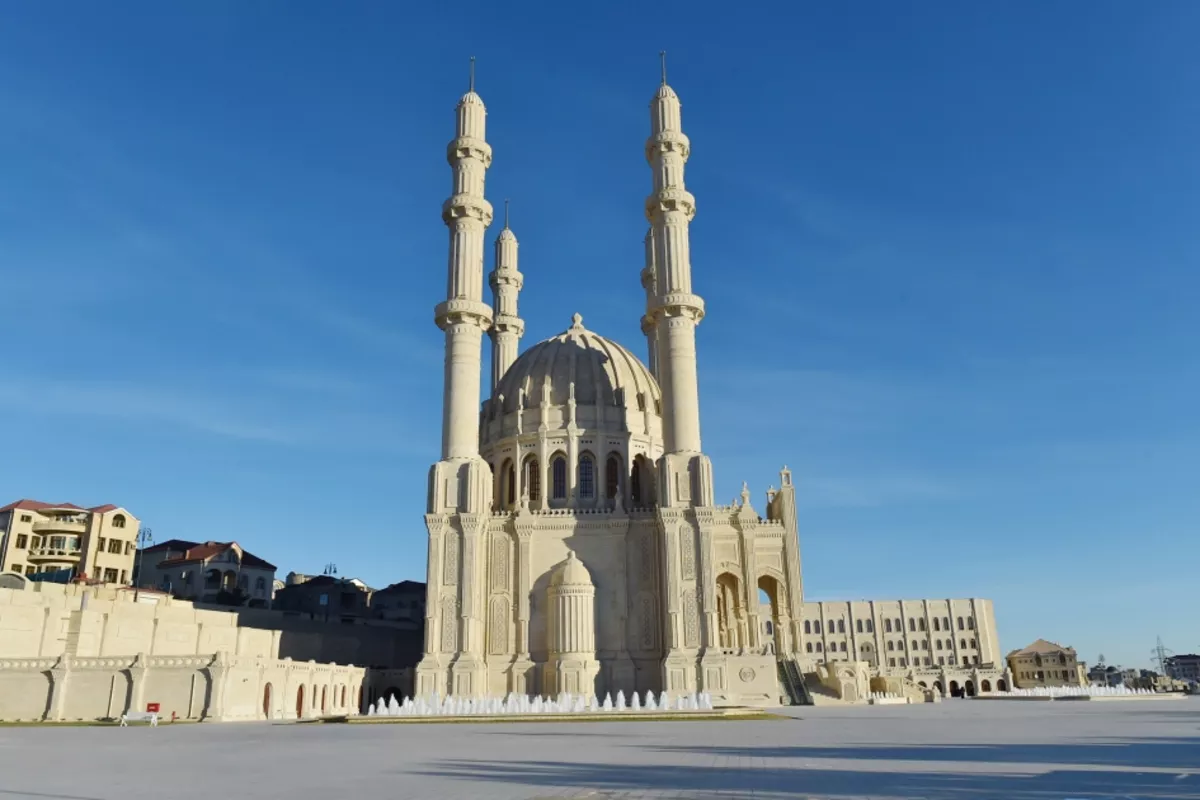
Azerbaijan’s approach to religion is characterized by its commitment to maintaining religious tolerance. The state sponsors dialogue between different religious groups, promotes interfaith initiatives, and has invested in building religious infrastructure that accommodates both Muslims and Christians. For example, Azerbaijan has built new churches, synagogues, and mosques, often in close proximity to one another, as symbols of the country’s commitment to peaceful coexistence. The government also supports religious freedom by allowing religious institutions to operate without heavy state interference.
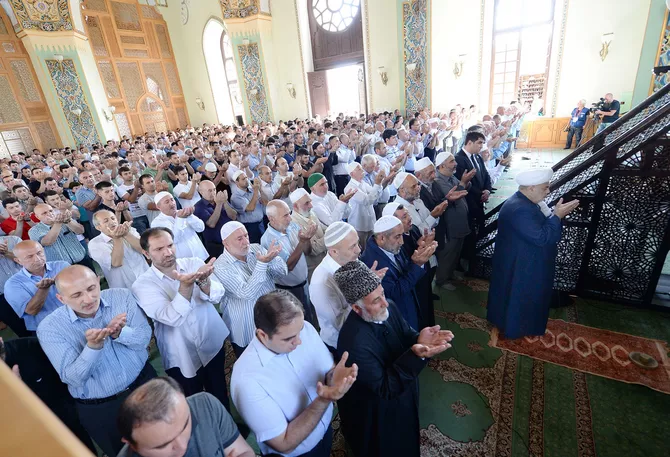
Photo: AZERTAC
Islam, Secularism, and the Threat of Radicalization
While Central Asia and the South Caucasus have largely managed to maintain stability by promoting a form of secularism that accommodates Islam, the threat of radicalization remains a challenge. The rise of global Islamist movements, including groups like ISIS, has had ripple effects across the region. In Central Asia, where Islamic extremism has occasionally been a destabilizing force, governments are wary of the potential for radical ideologies to spread.
The South Caucasus is similarly affected by the broader geopolitical context, particularly as Islamist movements continue to influence conflicts in the Middle East. Azerbaijan’s government, while promoting religious tolerance, is also vigilant against any attempts to radicalize the Muslim population. Given the country’s proximity to Iran and the historical influence of the Persian Shia tradition, Azerbaijan faces unique challenges in managing religious extremism. However, the country’s commitment to secularism, along with its active measures to promote moderate Islam, has so far managed to contain the threat of radicalization.
Conclusion
In conclusion, the states of Central Asia and the South Caucasus demonstrate that the relationship between Islam, secularism, and political stability is far from straightforward. These regions have developed various models of governance that balance the state’s control over religion with the recognition of Islam as a key component of national identity. The secular traditions inherited from the Soviet era remain a dominant force, but governments in these regions are increasingly adopting policies that promote religious tolerance, interfaith dialogue, and peaceful coexistence.
Azerbaijan, in particular, stands out as a model of multiculturalism and religious harmony, where Islam coexists with Christianity and secularism in a way that promotes national unity and stability. However, the challenge of managing religious extremism remains, particularly in the context of global Islamist movements. As Central Asia and the South Caucasus continue to navigate the complexities of religion and statehood, their ability to maintain political stability will depend on their success in managing this delicate balance.