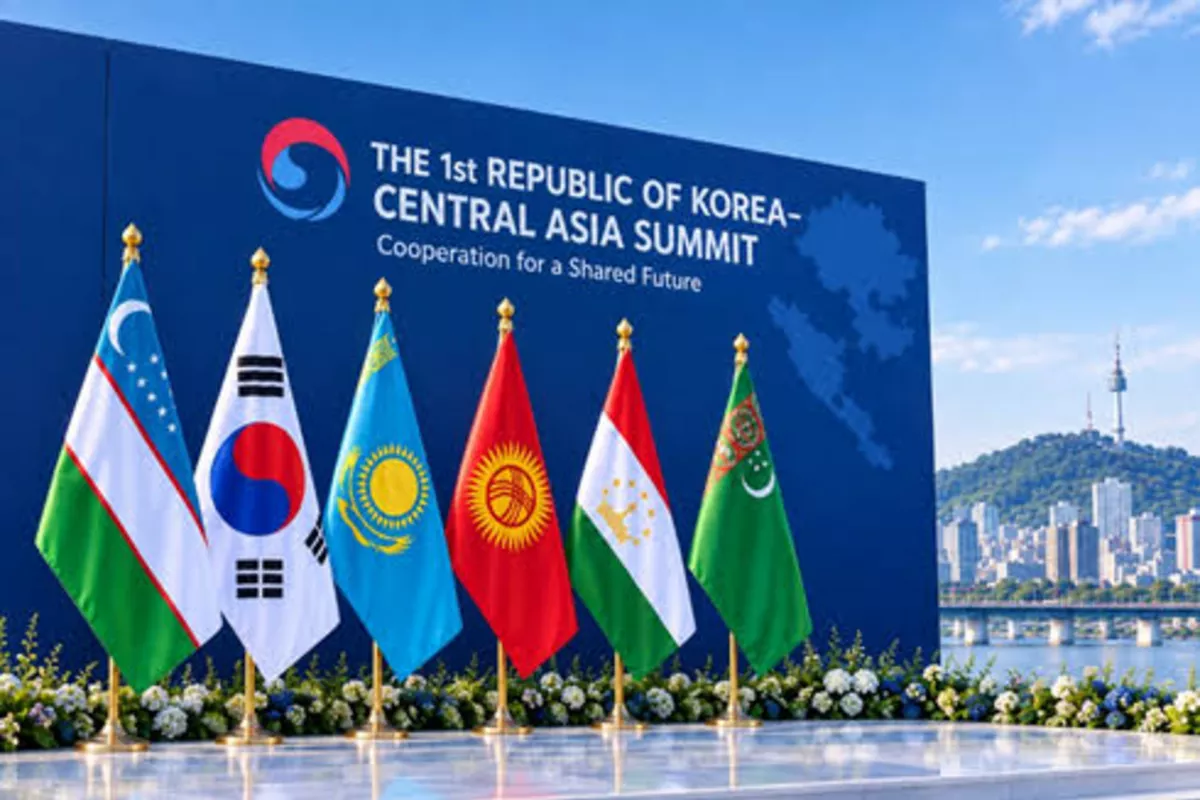
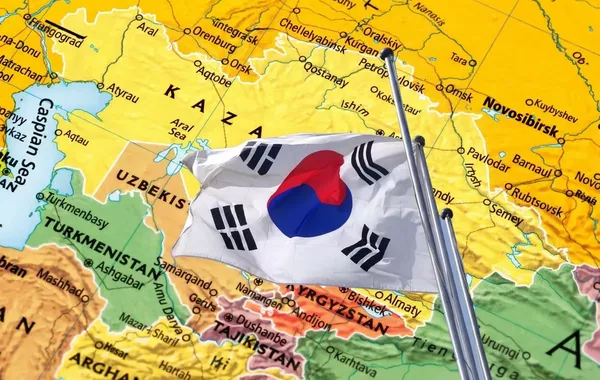
The first Korea-Central Asia Summit at the level of heads of state will take place in Seoul on September 16-17. South Korean President Lee Jae Myung will host the leaders of Kazakhstan, Kyrgyzstan, Tajikistan, Turkmenistan, and Uzbekistan.
Ahead of the joint meeting, the South Korean leader is expected to hold separate talks with each of his Central Asian counterparts between September 14 and 16. These bilateral meetings will provide an opportunity to discuss country-specific projects before the six leaders turn to the broader regional agenda.
The upcoming summit is significant not merely as a diplomatic event. Seoul is seeking to transform its relations with Central Asia from a collection of bilateral contacts into a systematic regional partnership. Trade, investment, energy, critical minerals, industrial cooperation, transport connectivity, and the resilience of global supply chains are expected to dominate the agenda.
For Central Asia, the meeting offers another opportunity to attract technology and investment while diversifying its international partnerships. For South Korea, it provides access to a strategically located and resource-rich region whose importance is growing amid geopolitical tensions and the restructuring of global supply chains.
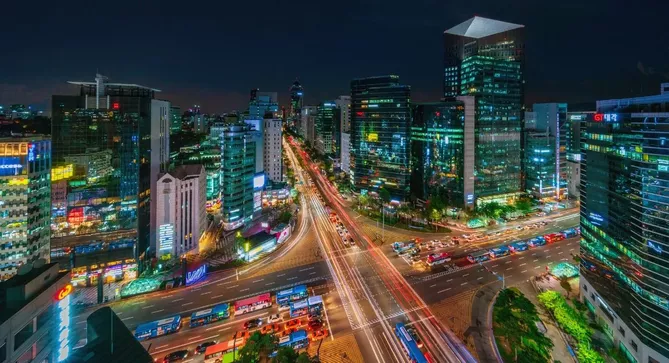
photo: getty images
Why South Korea Needs Central Asia
South Korea has one of the world’s most technologically advanced economies, but it remains highly dependent on imported energy resources and industrial raw materials. Its semiconductor, battery, electric vehicle, electronics, and advanced manufacturing industries require reliable supplies of uranium, copper, lithium, rare-earth elements, and other strategically important resources.
Excessive dependence on a limited number of suppliers has become not only an economic risk for Seoul but also a matter of national security. South Korea has identified 17 minerals as critical to its economic and technological resilience and is supporting overseas mining and processing projects in an effort to diversify supply chains.
Central Asia is therefore emerging as a natural partner.
Kazakhstan possesses major reserves of uranium, chromium, copper, zinc, and rare metals. It is also the world’s leading uranium producer and has significant potential in the processing of strategic minerals.
Uzbekistan is a major producer of gold and uranium and has substantial copper reserves. The country is also expanding its industrial base and seeking foreign investment in value-added manufacturing.
Turkmenistan holds some of the world’s largest natural gas reserves, while Kyrgyzstan and Tajikistan have deposits of precious, non-ferrous, and rare-earth metals, as well as considerable hydropower potential.
Seoul is interested not only in purchasing these resources. South Korean companies could participate in geological exploration, extraction, processing, logistics, and the development of new production facilities. From Seoul’s perspective, cooperation with Central Asia could reduce exposure to disruptions in existing supply chains and provide new sources of raw materials for Korean industry.
Trade Nears $10 Billion
The economic foundation of cooperation is already substantial. According to the Korea International Trade Association, South Korea exported approximately $8.6 billion worth of goods to the five Central Asian countries in 2025, while its imports from the region amounted to around $1.3 billion.
Total trade therefore reached nearly $9.9 billion. The cumulative volume of South Korean investment in Central Asia stood at approximately $6.4 billion by the end of 2025.
Trade, however, remains highly unbalanced. Almost 87 percent of the total consists of South Korean exports, giving Seoul a trade surplus of approximately $7.3 billion.
South Korea primarily supplies the region with automobiles, auto parts, electronics, industrial equipment, chemicals, cosmetics, and pharmaceuticals. Central Asia, in turn, exports uranium, ferroalloys, non-ferrous metals, petroleum products, and other raw materials.
This structure demonstrates both the strength and the weakness of the relationship. Central Asia has become an important market for Korean industry, but the region still exports relatively little to South Korea.
One practical objective of the summit should therefore be not only to increase the overall volume of trade but also to make it more balanced and diversified. This could be achieved by expanding South Korean imports of processed raw materials, agricultural products, textiles, chemicals, and goods manufactured by joint ventures in Central Asia.
Kazakhstan and Uzbekistan Lead the Partnership
Kazakhstan remains Seoul’s largest economic partner in the region. Trade between the two countries reached approximately $3.1 billion in 2024, placing South Korea among Kazakhstan’s ten largest trading partners.
Their cooperation already covers automobile manufacturing, energy, uranium mining and processing, rare metals, healthcare, pharmaceuticals, transport, and digital technologies. Kazakhstan’s vast mineral resources and South Korea’s industrial capabilities create considerable potential for projects extending beyond the traditional export of raw materials.
Uzbekistan is another central pillar of Seoul’s regional policy. Bilateral trade between Uzbekistan and South Korea amounted to approximately $1.8 billion in 2025.
The two countries are considering the resumption of negotiations on a free trade agreement after Uzbekistan joins the World Trade Organization. Seoul and Tashkent are also discussing cooperation in the digital transformation of manufacturing, the use of artificial intelligence in industry, the standardization of manufacturing data, and professional training.
A considerable number of South Korean companies already operate in Uzbekistan. One of the most notable recent projects is Hyundai Rotem’s contract worth approximately $196 million to supply high-speed trains. The agreement demonstrates that bilateral cooperation is gradually moving beyond consumer goods and automobile sales toward technologically advanced infrastructure.
Kyrgyzstan, meanwhile, has emerged as a major market for South Korean vehicles. In 2025, the country imported more than 139,000 cars from South Korea. Some of these vehicles are subsequently re-exported to other regional markets, meaning that trade figures do not always reflect the actual level of domestic consumption in Kyrgyzstan.
Tajikistan is interested in attracting Korean investment in mining, critical minerals, hydropower, agriculture, textiles, and digital infrastructure. In August 2026, officials from the two countries discussed industrial projects connected with the upcoming summit, paying particular attention to cooperation in critical minerals.
Turkmenistan’s enormous natural gas reserves, meanwhile, make it an important potential energy partner. South Korean companies can also offer technologies and engineering services for gas processing, petrochemicals, power generation, and infrastructure construction.
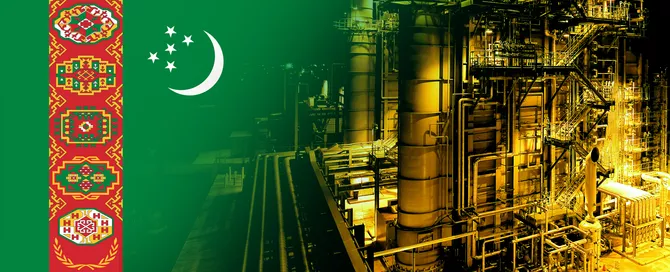
photo: IEF
More Than a Source of Raw Materials
Central Asian countries do not want to remain exporters of unprocessed resources. Their main interest lies in attracting South Korean capital and technology to establish processing and manufacturing facilities inside the region.
This is where the interests of both sides can converge.
Central Asia offers natural resources, growing markets, a relatively young population, and a strategically important geographical position between East Asia, Europe, Russia, the Middle East, and South Asia. South Korea possesses advanced technology, investment resources, industrial expertise, and corporations capable of delivering complex infrastructure projects.
The most promising areas include the processing of critical minerals, the production of components for batteries and electric vehicles, renewable energy, modern power plants, pharmaceuticals, medical services, digital government, smart cities, agricultural processing, and transport modernization.
For Central Asian governments, it is essential that a new wave of Korean investment be accompanied by technology transfer, professional training, local employment, and the creation of regional value chains.
Only under these conditions can mineral cooperation become a foundation for industrial development rather than another mechanism for exporting raw materials.
The Human Dimension
Economic relations are reinforced by strong historical and cultural ties. According to South Korean data, approximately 312,000 ethnic Koreans live in Central Asia.
Uzbekistan is home to around 172,000 ethnic Koreans, Kazakhstan to approximately 120,000, and Kyrgyzstan to about 18,000. Smaller Korean communities, numbering roughly 700 people each, live in Tajikistan and Turkmenistan.
These communities form a cultural bridge that South Korea does not possess in many other parts of the world. Korean education, healthcare, entertainment, electronics, automobiles, and consumer brands are also widely recognized across the region.
The summit is expected to give additional momentum to cultural and educational cooperation. Among the initiatives being discussed are the establishment of a cultural center, the institutionalization of youth exchanges, and new training programs for future specialists.
This human dimension may become one of the most durable elements of the partnership, particularly as Central Asian countries seek to modernize their education systems and prepare specialists for new technology-driven industries.
From Diplomatic Forum to Leaders’ Summit
The summit is not being created from scratch. The Korea-Central Asia Cooperation Forum has operated since 2007, providing a platform for regular consultations led primarily by deputy foreign ministers.
In July 2017, a permanent secretariat of the forum was established under the Korea Foundation to coordinate multilateral projects and strengthen institutional cooperation.
Since diplomatic relations were established in 1992, South Korea has held 16 bilateral summits with Uzbekistan, 14 with Kazakhstan, five with Turkmenistan, three with Tajikistan, and two with Kyrgyzstan.
However, the September meeting will mark the first time that the leaders of all five Central Asian states meet the South Korean president within a single dedicated multilateral format.
This transition from ministerial consultations and bilateral summits to a leaders’ meeting demonstrates that Seoul increasingly views Central Asia as a distinct and strategically important region rather than merely as five separate markets.
Growing Competition for Central Asia
The Seoul summit is taking place amid intensifying international interest in Central Asia. China, the United States, the European Union, Russia, Japan, Türkiye, and the Gulf states are all developing their own regional formats with the five Central Asian countries.
South Korea cannot compete with China in terms of trade volumes or with Russia in the depth of historical, political, and security ties. Seoul nevertheless has its own advantages.
South Korea is primarily perceived as a technological and economic partner that does not impose strict geopolitical conditions. It has no colonial legacy in Central Asia and no territorial or military ambitions in the region.
Korean companies also have extensive experience in sectors that Central Asian states have identified as development priorities: transport, electronics, digitalization, medicine, automotive manufacturing, energy, construction, and industrial modernization.
For the Central Asian states, closer ties with Seoul fit naturally into their multi-vector foreign policies. Cooperation with South Korea does not require them to distance themselves from China, Russia, the West, or other partners. Instead, it gives them additional room for maneuver and strengthens their negotiating position.
The Transport Challenge
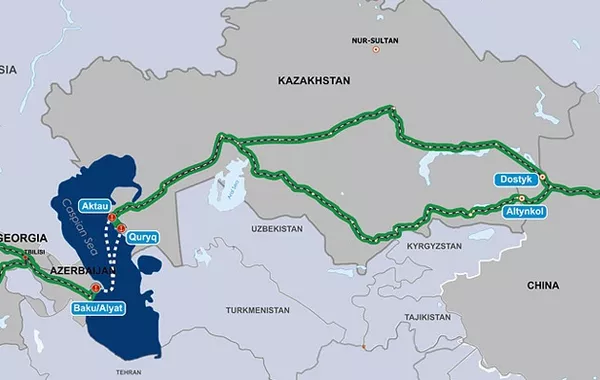
The potential of the partnership is constrained by Central Asia’s landlocked geography. Delivering resources and manufactured goods to South Korea requires routes through China, Russia, or the Caspian Sea and the South Caucasus.
Energy, critical minerals, and transportation must therefore be viewed as parts of a single strategic discussion. Large mineral reserves have limited commercial value if they cannot be processed locally and transported efficiently to international markets.
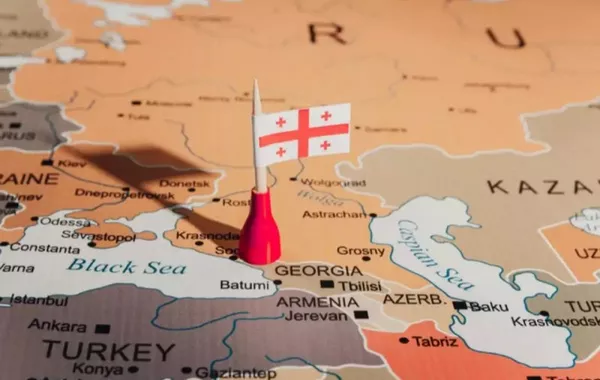
The development of the Middle Corridor through Kazakhstan, the Caspian Sea, Azerbaijan, Georgia, and Türkiye provides Central Asian countries with another opportunity to diversify their logistics.
Although this route does not lead directly to South Korea, it strengthens the overall transport resilience of Central Asia and makes the region more attractive to foreign investors.
South Korea can provide railway equipment, port technologies, smart logistics systems, digital cargo-management platforms, and expertise in building transport hubs. Successful projects, however, will require coordination among all five Central Asian states.
This is one reason why a regional summit may prove more effective than separate bilateral negotiations. Cross-border transport, supply chains, water management, energy networks, and customs procedures cannot be addressed by one country alone.
photo: getty images
The Real Test Will Come After the Summit
The Seoul meeting is expected to produce a joint political declaration, sectoral agreements, and a list of proposed projects. The participants may also strengthen the institutional structure of their cooperation through regular ministerial meetings, business platforms, cultural programs, and youth initiatives.
The summit’s success, however, should not be measured by the number of memoranda signed. Its real significance will depend on whether the participants launch industrial, energy, mining, and transport projects with clear deadlines, identified sources of financing, and effective implementation mechanisms.
Four indicators will be particularly important:
· whether bilateral trade rises above its current level of approximately $9.9 billion;
· whether Central Asian exports to South Korea increase;
· whether new joint ventures involving local processing and production are established;
· whether the signed agreements are supported by financing and clear implementation schedules.
With Central Asia’s population exceeding 80 million, current economic ties remain below their full potential. The imbalance in trade also shows that the relationship still benefits South Korean exporters more than Central Asian producers.
The region’s governments will therefore be seeking more than increased sales of Korean automobiles, electronics, and industrial equipment. Their priority is to attract investment that generates local value, creates jobs, transfers technology, and supports long-term industrial development.
For Seoul, the summit will test whether its Central Asia policy can be transformed into a practical economic strategy. For the five Central Asian states, it represents an opportunity to attract another major partner without abandoning their multi-vector diplomacy.
The first Korea-Central Asia Summit also reflects the broader transformation of the region. Central Asia is gradually ceasing to be viewed merely as a peripheral space between major powers and is increasingly acting as an independent participant in international affairs.
If the six countries can move beyond trade in raw materials and finished products toward joint manufacturing, technology transfer, and integrated value chains, the Seoul summit may indeed open a new chapter in their relations.
For now, it represents a serious strategic ambition. Its real value will be determined by the agreements reached on September 16-17 - and, more importantly, by how many of them are ultimately implemented.
By Tural Aliyev