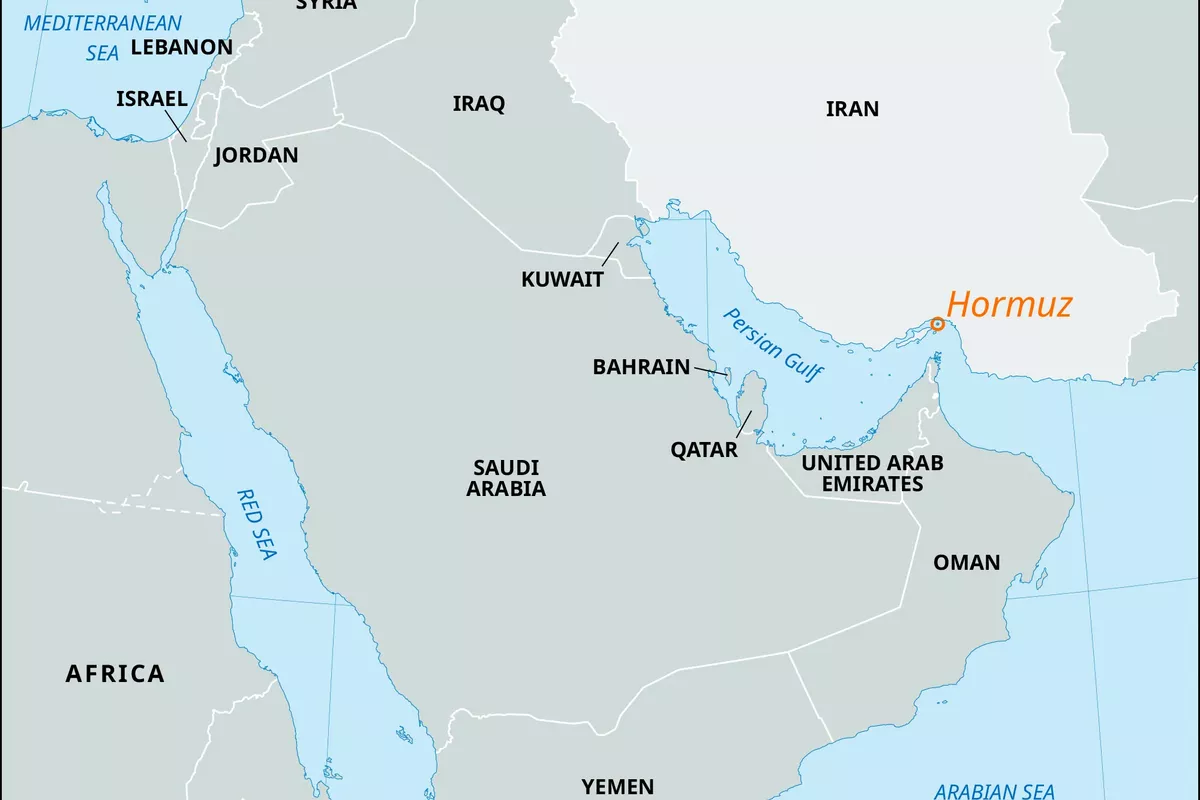
French President Emmanuel Macron said on Monday, 29 June, that he had agreed with Sultan Haitham bin Tariq Al Said of Oman to cooperate on demining the Strait of Hormuz.
“We have decided to cooperate, in coordination with our partners, on demining the strait in order to ensure the security of maritime routes and guarantee free and unhindered passage through the Strait of Hormuz,” Macron wrote on X.
Macron’s statement triggered a sharp reaction in Tehran. Iran’s Deputy Foreign Minister Kazem Gharibabadi responded forcefully on X, saying that any such arrangements made without coordination with Iran were unacceptable and that Paris’ actions would only increase tensions.
“Macron stated that he is cooperating with his partners on demining the Strait of Hormuz. According to the Islamabad Memorandum of Understanding, demining is to be carried out exclusively by Iran and no one else, and we fundamentally do not allow anything of this kind,” Gharibabadi wrote, advising France not to further complicate an already difficult situation in the region.
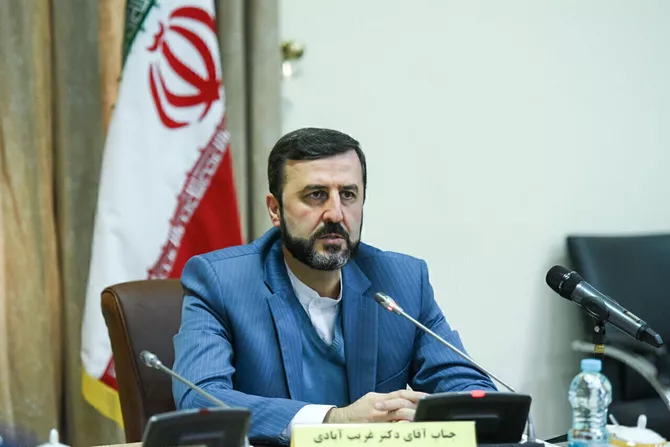
Iran’s Deputy Foreign Minister Kazem Gharibabadi. Source: Tehran Times
It should be recalled that, on the same day, the first meeting of the Joint Committee established by Oman and Iran to manage navigation in the Strait of Hormuz was taking place in Muscat. The two littoral states were discussing among themselves how to resolve the existing issues when the French president appeared and declared that he had reached some kind of agreement with Oman without informing Iran. It is therefore hardly surprising that Tehran’s reaction was so tough.
What was Emmanuel Macron thinking when he negotiated the demining of the strait without Iran’s participation? The French president spoke about Paris working with its allies on maritime security and demining while ignoring the fact that the main actor in the Strait of Hormuz is Tehran - and Tehran is not one of France’s allies. The issue of demining the strait cannot be resolved without Iran, if only because it was the IRGC that mined this vital waterway.
The situation in the Persian Gulf region is indeed extremely sensitive and complex, and every extra-regional player must think carefully about how its actions may affect the fragile stability that has emerged in recent days. Unfortunately, Paris is not accustomed to such thinking. France regularly interferes in the affairs of states that have absolutely nothing to do with it, attempting to dictate terms to regions that have no connection to France. It seems the country is still living according to old notions rooted in the colonial era.
Everyone remembers how much damage France’s interference caused in the South Caucasus after the Second Karabakh War. French parliamentarians, politicians, officials and President Macron himself provided Armenia with external support, allowing it to violate the 10 November 2020 agreements. For some reason, Paris decided that it had the right to dictate the rules to Azerbaijan. It decided that it knew better what kind of peace the South Caucasus needed. This was supposed to be a peace based on Armenian interests while ignoring the results of the 44-day war.
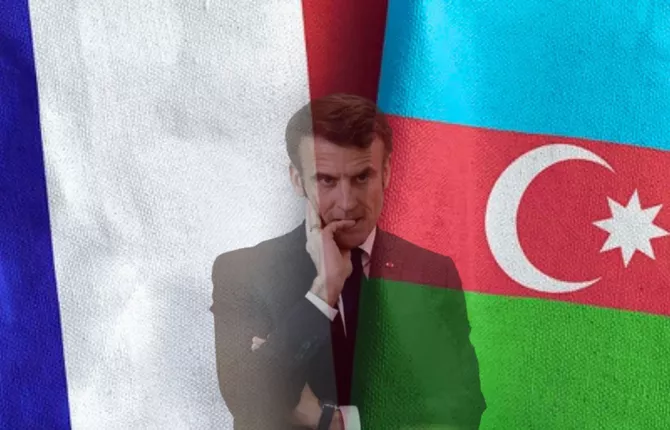
Source: AzerNews
Paris failed to understand that no steps in the South Caucasus were possible without taking into account the interests and participation of the main actor - Azerbaijan. Paris is making the same mistake now by trying to meddle in Middle Eastern affairs while bypassing Iran. And once again, it will be put in its place, just as it was by Azerbaijan. Baku literally showed France the door during the negotiation process, and only after that did a genuine peace process finally begin.
Moreover, Baku made a counter-move. By creating the Baku Initiative Group, it not only forced Paris to stop interfering in affairs that were none of its business, but also benefited many countries and territories suffering from French neocolonialism.
Paris still refuses to accept reality and rid itself of the mindset of a former colonial empire. International relations have undergone profound transformations, and it is no longer possible to build ties with former colonies using old methods. It is impossible to preserve influence in former colonies and overseas territories through force and intimidation. Completely different methods are needed, even if France despises island peoples and continues to regard them as slaves.
The consequences have not been long in coming. Recently, Burkina Faso severed diplomatic relations with Paris. This is not the result of Chinese or Russian intrigues, as French analysts claim, but the outcome of Paris’ own misguided policy. African countries accuse France of supporting terrorist groups, which it allegedly needs in order to preserve its military presence in the Sahel region. For more than 10 years, France pretended to be saving its former colonies from terrorists while keeping its troops stationed there all that time.
France’s departure, of course, will not automatically mean liberation from radical groups, because the situation has become far too entrenched. But perhaps the removal of external interference will help countries suffering from terrorism solve the problem on their own.
Returning to the Strait of Hormuz, it should be noted that the mine problem there is real and serious. The IRGC has done a great deal to complicate navigation through the strait and is in no hurry to correct the situation because the conflict has not been resolved and the mines remain one of its bargaining chips. According to experts, even if a peace agreement is reached, demining will take several months, and full navigation will not be restored any time soon. According to the Financial Times, up to 80 naval mines may still remain in the waters of the Strait of Hormuz today.
The United States also knows where the mines have been laid. Earlier, CNN, citing an unnamed US administration official, reported that Washington has full information about exactly where the Strait of Hormuz has been mined. “We now know where all the mines are, and we can help with demining,” the source told the broadcaster.
In other words, Washington knows where the mines are and can help with demining, but it is not trying to run ahead of events as France is doing. A zone of military conflict is not a public courtyard. One cannot simply barge in uninvited, kicking down the door, especially when the situation is as sensitive as it is in the Middle East.
France will not be able to prove its influence or strength here. Iran’s Foreign Ministry has already slapped Paris down for its amateur initiative. And how will Paris respond?
Under the current circumstances, there is no place for extra-regional players and countries that have nothing to do with the conflict. This is especially true of France, which has a very poor record of “peacekeeping” in its own overseas territories, in the South Caucasus and in other conflicts. The best thing France can do is deal with its own problems. Perhaps, at least there, it may achieve something.
By Tural Heybatov