Vance in the Caucasus: What the U.S. Really Wants From Baku and Yerevan
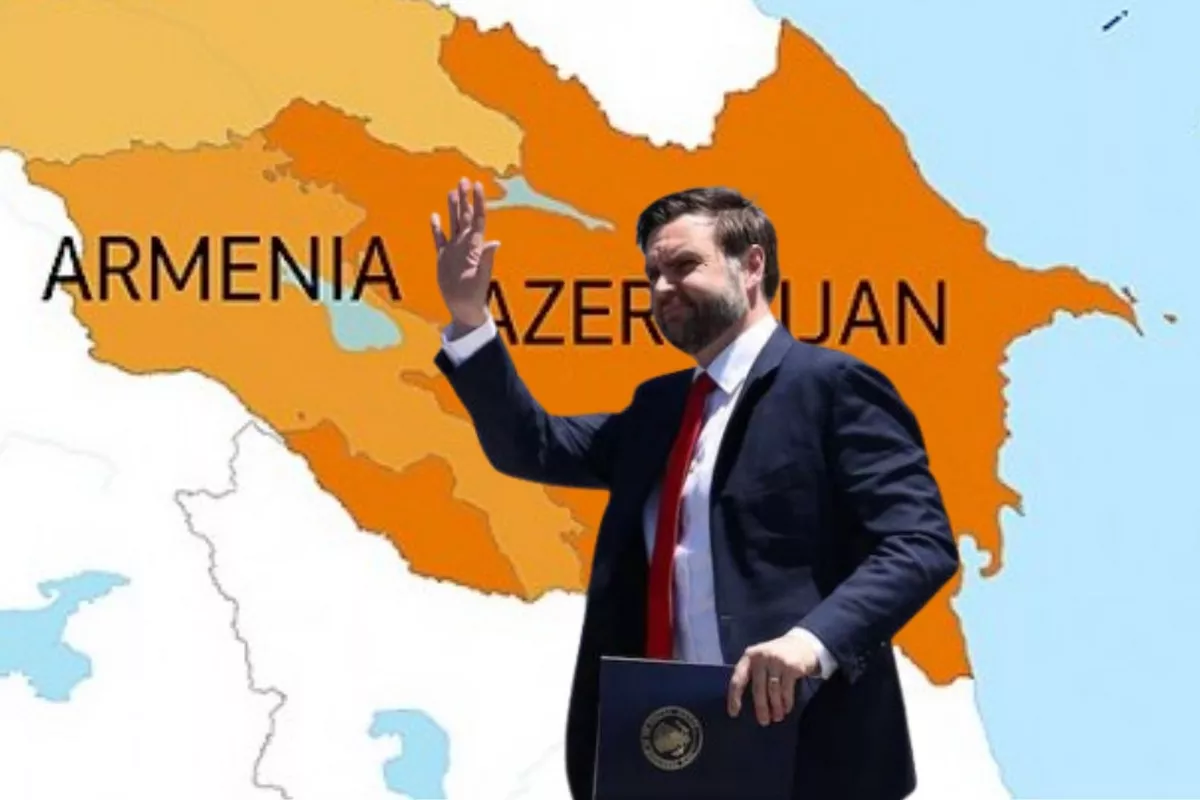
The visit of U.S. Vice President J.D. Vance to the South Caucasus is neither a protocol formality nor a routine stop. According to reports, he will visit Armenia on February 9-10 and Azerbaijan on February 10-11. This is the first visit by such a high-ranking U.S. official to the region in 14 years. It is particularly significant for Armenia, which has not received senior-level U.S. visitors throughout its entire post-Soviet history. Analysts view the visit as a signal that the U.S. is engaging in the South Caucasus seriously and for the long term.
Officially, the objectives of the visit are described as supporting President Donald Trump’s peace efforts and promoting the Trump Route to International Peace and Prosperity (TRIPP) initiative.
However, observers believe the agenda is far more layered.
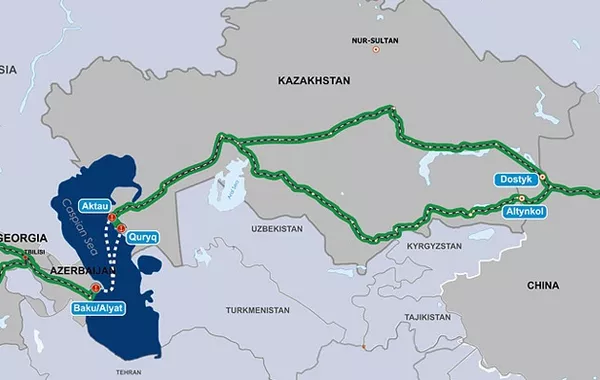
The TRIPP project envisions the construction of a 43-kilometer road and railway route through southern Armenia that would connect Azerbaijan with the Nakhchivan Autonomous Republic and integrate into an East-West corridor bypassing Russia and Iran. The U.S. has never hidden its desire to “bypass” regional players and position itself as the main architect of regional logistics, even if Russia and Iran remain present. Recognizing the importance of this corridor, Washington is seeking to place it under its full control. There is little doubt that TRIPP is not merely a transport project - it is an instrument of U.S. geoeconomic presence in Armenia and, through it, in the region as a whole.
In Yerevan, Armenian media report that Vance is expected to discuss trade, investment, high technology, and, notably, nuclear energy. The signing of an agreement on cooperation in the peaceful use of nuclear energy is anticipated, along with contracts with U.S. semiconductor manufacturers.
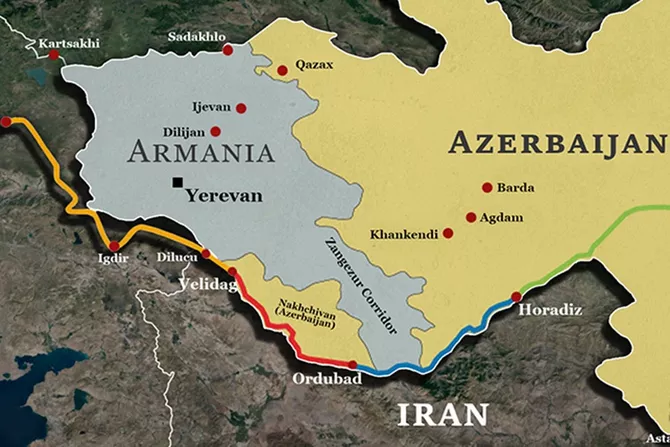
Photo credit: APA
Ahead of the visit, Armenian authorities have indicated that they are leaning toward selecting an American company to build a new nuclear reactor to replace the aging Metsamor Nuclear Power Plant. The focus is on modular nuclear reactors, a technology in which U.S. companies are considered global leaders. Until now, Russia has maintained a monopoly in Armenia’s nuclear energy sector, making it unsurprising that pro-Russian opposition forces emphasize the strategic importance of the Metsamor plant in both energy and political terms. Additional complexity arises from the fact that not only the U.S. but also Russia, France, and China have expressed interest in building modular plants in Armenia.
How realistic is U.S. entry into Armenia’s nuclear energy sector? Experts believe this is more of a political signal, since without signing a so-called “123 Agreement,” which grants access to U.S. nuclear technologies, discussions about building an American reactor will remain theoretical.
The U.S. has also shown, albeit not very actively, interest in Armenia’s mineral resources, a significant portion of which are concentrated in the south of the country, within the future “Trump Route” zone. It is worth recalling that on February 4, Vance presented an initiative to create a preferential trade bloc for critical minerals. Armenia, Azerbaijan, and Kazakhstan were among the 55 participating countries in this new U.S. initiative.
Still, despite all the speculation, TRIPP appears set to be the central theme of the Armenia visit, as it is precisely this project that would allow the U.S. to enter the South Caucasus openly and on the basis of formal agreements with Yerevan.
Observers believe that Vance’s agenda in Baku will be less publicized but no less important. It is possible that discussions will include the supply of U.S. weapons to Azerbaijan, ranging from body armor to patrol boats. The White House has already suspended the application of Section 907, and a proposal for its full repeal has been submitted to Congress. As a result, Washington may engage Baku on arms-related issues. The sanctions imposed in 1992 have effectively lost their force with Donald Trump’s return to power, and bilateral relations are now reaching a qualitatively new level.
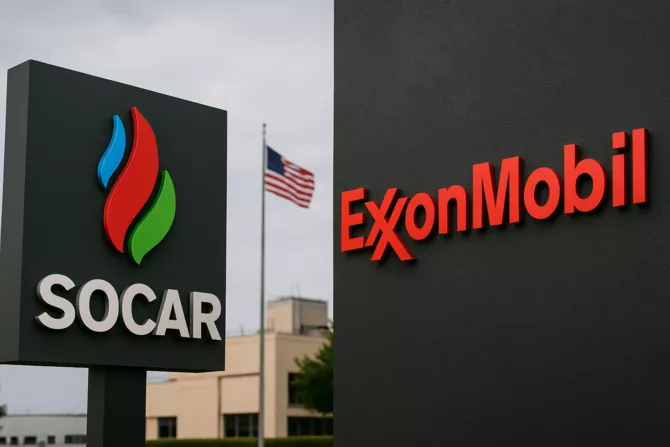
Photo credit: SOCAR
Azerbaijan and the U.S. also cooperate in the energy sector. Vance’s visit could give additional momentum to economic ties. In August, a memorandum was signed in Washington between SOCAR and ExxonMobil, and it would be logical to expect it to evolve into a full-fledged contract. Against this backdrop, the continued absence of a U.S.-Azerbaijan Strategic Cooperation Charter appears more a matter of time than a fundamental disagreement. Discussions on the charter are ongoing, and such a document would be signed between Baku and Washington for the first time. The bilateral agenda is broad, as the U.S. has, for the first time, developed concrete interests in the South Caucasus, and realizing them is only possible through partnership with Azerbaijan.
Since the meeting in Washington on August 8 last year, Trump has not concealed that he views the Armenian-Azerbaijani settlement as a potential success story of his foreign policy. Some experts believe that if the Trump-initiated Peace Council fails to achieve progress in the Middle East, the South Caucasus could become the arena where the U.S. demonstrates the effectiveness of its mediation.
At the same time, it should not be forgotten that the success of the peace process in the South Caucasus has been determined primarily by the political will of the leaders of Azerbaijan and Armenia. Without this, no external efforts would have a chance of success. However, Washington has proven more astute than others in successfully filling the window of opportunity that has opened.
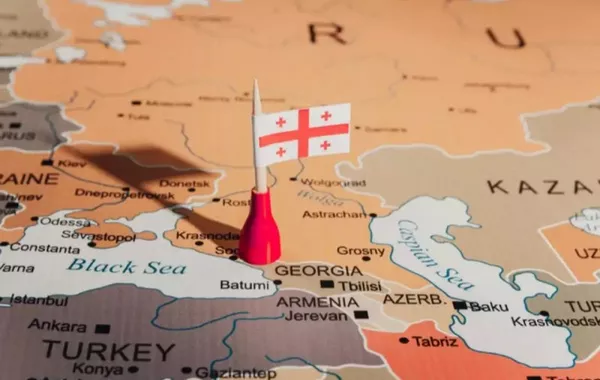
In essence, Vance’s visit is primarily aimed at consolidating the U.S. presence in a strategically sensitive region. For the U.S., the South Caucasus is a gateway to Iran, a tool for influencing the post-Soviet space, and a platform for demonstrating a new, more pragmatic foreign policy model - one that Russia, despite its seemingly entrenched positions in the region, ultimately failed to develop.
It can be assumed that the countries of the region will seek to extract maximum benefit for themselves from this new balance of power.
By Tural Heybatov