On June 22, with the participation of the presidents of Azerbaijan and Turkmenistan, Ilham Aliyev and Serdar Berdimuhamedov, an online ceremony was held to officially transfer the oil tanker Dostlug as a gift to Ashgabat.
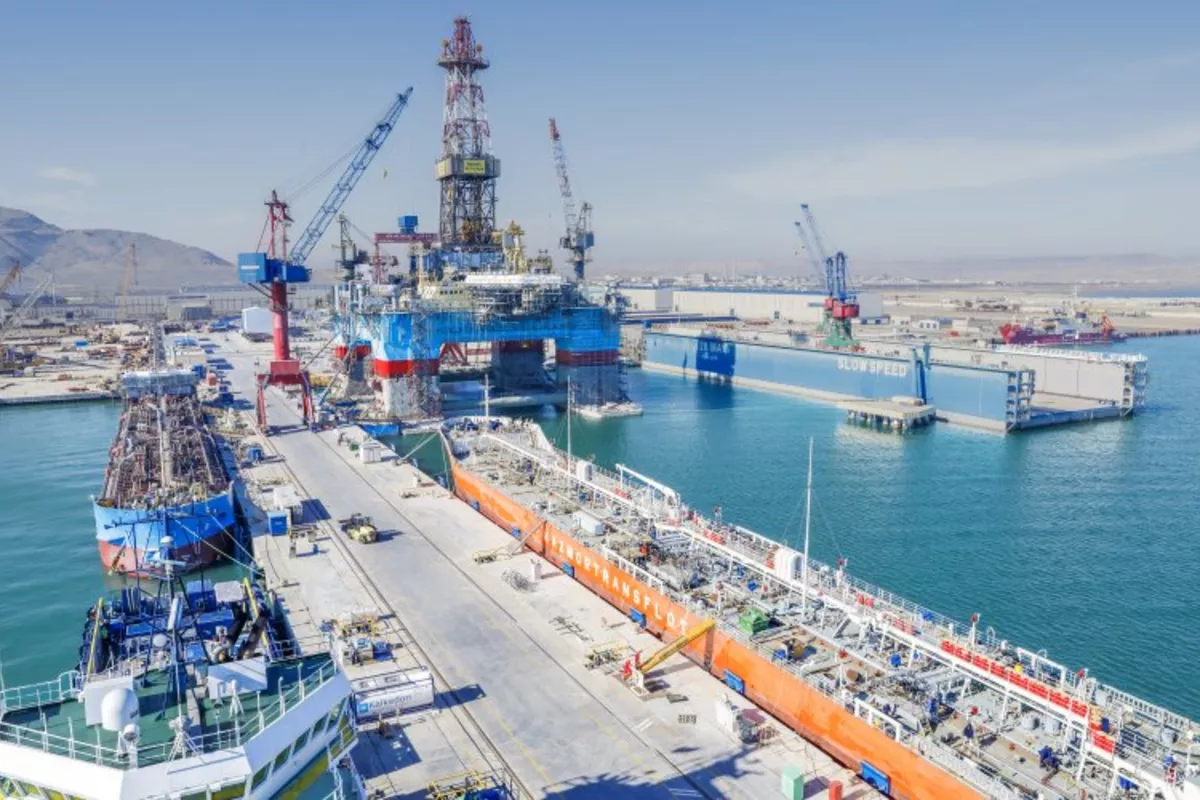
The oil tanker was built at the Baku Shipyard. Its specifications include a length of 141 meters, a width of 16.9 meters, a draft of 4.54 meters, and a deadweight capacity of 7,875 tons.
Azerbaijan’s plans to present the tanker to Turkmenistan became known last year when Deputy Economy Minister Sahib Alakbarov announced the initiative during the Turkmen Investment Forum (TIF 2025) held in the Avaza tourist zone in September. The decision to donate such a substantial vessel to a Caspian neighbor is an exceptional gesture, demonstrating Baku’s willingness to take significant and symbolic steps toward strengthening partnerships. It also highlights the capabilities of Azerbaijan’s shipbuilding industry. Although Dostlug is not among the largest vessels used in international cargo transportation, it represents a highly capable medium-sized tanker by Caspian Sea standards.
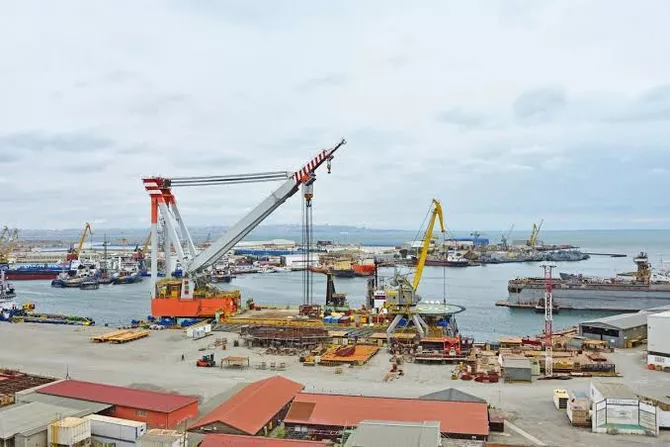
To date, the Baku Shipyard has completed 14 shipbuilding projects and more than 170 vessel repair projects. Of the 17 ships currently in its order portfolio, 11 are under construction and six are in the design phase. The yard’s annual production capacity allows it to manufacture up to 25,000 tons of ship steel structures. With its existing facilities, the shipyard can build four 15,000-ton tankers annually or alternatively two Caspian Max-class tankers with a carrying capacity of 60,000-70,000 tons. It is also capable of constructing four different vessels simultaneously, according to Baku Shipyard Chairman Ruslan Talibov, who spoke to journalists earlier this month.
Baku Shipyard
It is worth recalling that in 2022, the Ro-Pax ferry Azerbaijan, built at Baku Shipyard, was included among the world’s 50 best ships in the Significant Ship 2021 ranking compiled by the Royal Institution of Naval Architects.
On June 3 this year, Baku Shipyard hosted the keel-laying ceremony for the first of two 780-TEU container ships intended for operation on the Caspian Sea. The project is being implemented within the framework of strategic cooperation between Azerbaijan and the United Arab Emirates and is being built for AD Ports Group.
The vessels feature impressive specifications: each ship will be 149.5 meters long, 21 meters wide, have a deadweight capacity of 9,404 tons, and cargo hold capacity of 16,722 cubic meters. They will be equipped with hybrid propulsion systems supplied by Wärtsilä and Schottel to improve fuel efficiency and reduce emissions. Designed specifically for the shallow waters of the Caspian Sea, these container ships represent the first international order in the shipyard’s history, making the project strategically significant and reflecting the strong confidence UAE partners have placed in Azerbaijani shipbuilders.
The vessels are expected to enter service in 2028. Their deployment will help optimize container transportation along the Middle Corridor and enhance the competitiveness of this key logistics route. Currently, the Caspian Sea faces a severe shortage of container vessels, and growing cargo volumes have increased pressure on the existing fleet. According to industry forecasts, container traffic along the Trans-Caspian International Transport Route is expected to reach 865,000 TEU by 2040. Consequently, there is a strong need for larger and more modern container ships in the region.
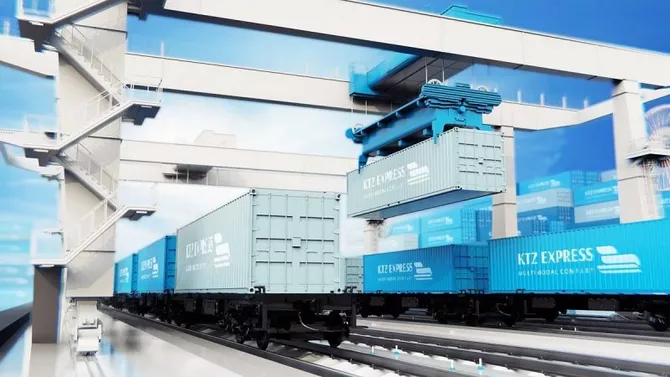
In April 2026, KTZ Express Shipping, a subsidiary of KTZ Express, signed contracts for the construction of six universal dry cargo container vessels. Two of these ships will be built at Baku Shipyard. The river-sea class vessels will have a deadweight capacity of up to 9,900 tons and be able to transport up to 537 TEU. Kazakhstan plans to use them on both the Caspian and Black Seas. For Azerbaijan, the project further demonstrates the technological capabilities of its shipbuilding industry and strengthens its reputation as the leading shipbuilder in the Caspian region.
KTZ Express Shipping
With Kazakhstan’s order, the number of foreign projects currently being implemented at the Baku shipyard has reached four.
Baku Shipyard continues to diversify its production. In April 2025, it launched the country's first domestically built dredging vessel, Engineer Soltan Kazimov.
Meanwhile, construction is nearing completion on Azerbaijan’s third domestically built Ro-Pax ferry. Ro-Pax vessels combine the functions of a vehicle and railway ferry with those of a passenger ship. The new ferry will feature several technical improvements compared to its predecessors while maintaining a capacity of up to 100 passengers and either 56 railway tank cars or 50 trucks.
The first Ro-Pax ferry, Azerbaijan, entered service in 2021, while the second vessel, Zarifa Aliyeva, was delivered in April 2022.
As for tankers, Baku Shipyard has already built four vessels: Lachin and Kalbajar, designed for transporting oil and petroleum products, as well as Academician Khoshbakht Yusifzadeh and Zangilan, which can transport both oil and chemical cargo.
Three additional tankers are currently under construction.
Russian media are therefore not mistaken in reporting that the Baku shipyard’s order book is effectively full.
Speaking of Russia, for the second consecutive year Russian media outlets have reported plans by the United Shipbuilding Corporation to place an order for five tankers at Baku Shipyard. However, some experts note that the shipyard is already booked through late 2027 or early 2028, suggesting that such reports may be aimed at creating a favorable information and negotiation environment.
Indeed, Baku Shipyard is operating at near-full capacity. Demand for modern high-capacity vessels continues to rise, and the facility remains the largest and most advanced shipbuilding enterprise in the Caspian basin.
The latest conflict in the Middle East has underscored the strategic importance of the Trans-Caspian route. As instability affects alternative transportation corridors, the route has become increasingly indispensable. Freight volumes and transportation rates along the Middle Corridor continue to grow. Since the corridor is a multimodal route in which maritime transport plays a crucial role, expanding shipping capacity has become essential.
Furthermore, as European interest in Central Asian energy resources increases, tanker fleets are becoming increasingly important. In the absence of undersea pipeline infrastructure, maritime transport remains the primary means of delivering oil to European partners.
All of these factors require regional countries to expand both their container and tanker fleets. As a result, Baku’s shipbuilders are likely to remain busy for many years to come.
By Tural Heybatov