Why the Araz Corridor Is Moving Ahead as Rasht–Astara Lags Behind
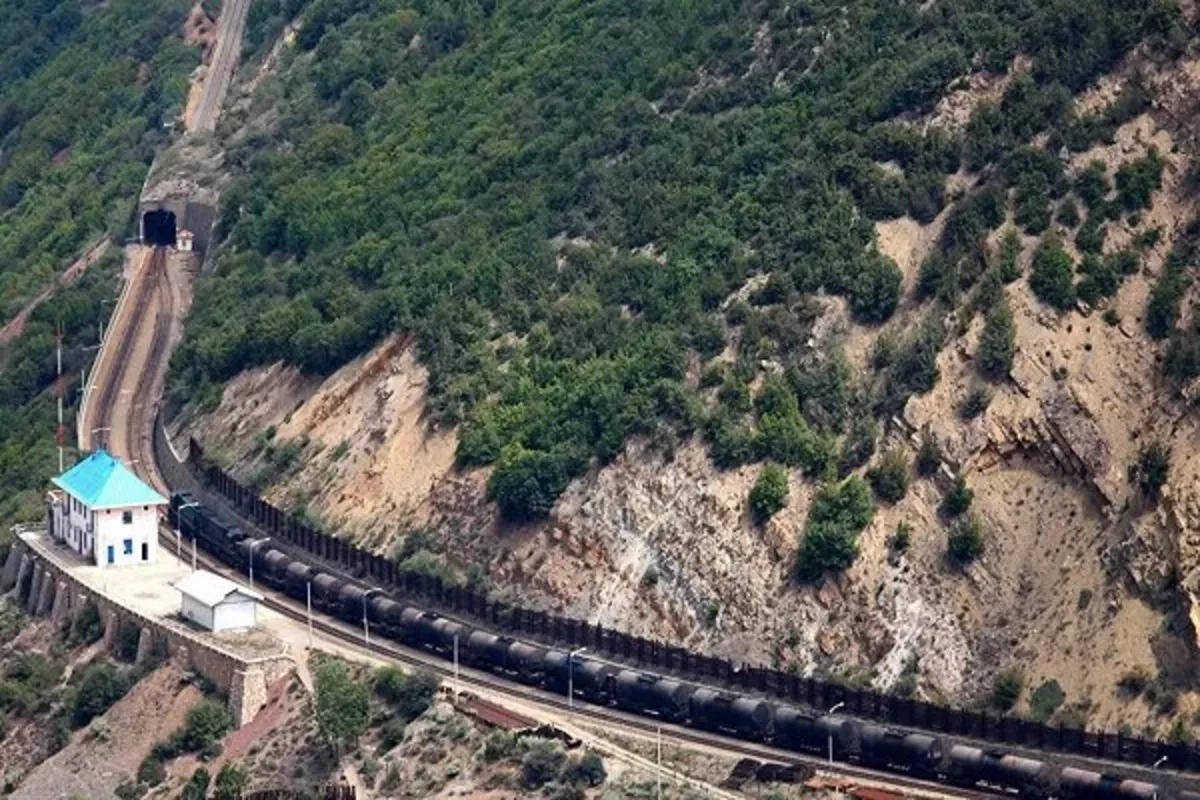
Amid the stabilisation of the situation around Iran and a significant decline in the risk of renewed war, the Rasht-Astara railway has returned to the agenda. The line is expected to connect with Azerbaijan’s railway network, after which the International North-South Transport Corridor (INSTC) will provide a seamless route to the Persian Gulf.
Late last week, the heads of the railway authorities of Azerbaijan, Russia and Iran met in Moscow. Following the talks, they signed a trilateral protocol and announced measures to strengthen the commercial attractiveness of the route.
Under previous agreements, Russian specialists were due to begin work on the Rasht-Astara project back in April, but the war disrupted those plans. Now, as the region returns to normal, Russian media report that specialists have resumed work at the project site. Russian Foreign Ministry spokeswoman Maria Zakharova said engineering surveys along the Rasht-Astara railway route in Iran had resumed. According to her, the credit line financing the project had not been frozen. Moscow now expects the executive contract to be signed and several remaining technical issues to be resolved so that construction can begin as soon as possible.
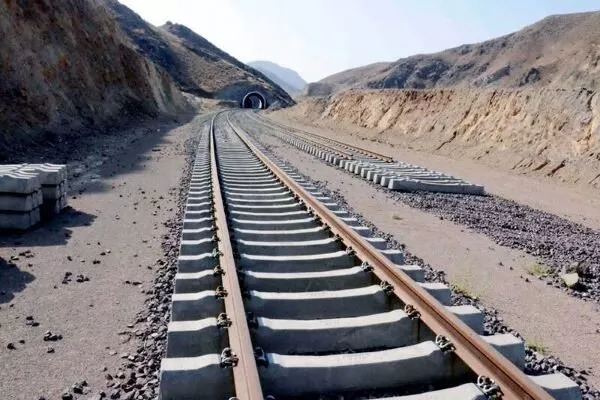
Source: Mehr News Agency
It should be recalled that the 162-kilometre Rasht-Astara railway is intended to provide uninterrupted rail traffic along the western branch of the International North-South Transport Corridor, which passes through Azerbaijan. The project remained stalled for many years until May 2023, when Russia and the Islamic Republic of Iran signed an agreement under which Russia undertook to provide $1.3 billion of the required $1.6 billion in the form of a loan. The executive construction contract, as already noted, was due to be signed on 1 April 2026, but the war forced a change of plans.
During the period of deteriorating relations between Baku and Moscow, some Russian experts argued that Russia no longer needed the western branch of the North-South Corridor - the route passing through Azerbaijan - and would instead concentrate on developing the eastern branch through Central Asia. However, Azerbaijan's transit route has retained its importance. Moreover, this year's figures indicate that its significance is continuing to grow.
At the meeting of the three countries' railway authorities in Moscow, it was noted that 555 containers were transported through Astara in June, 3.5 per cent more than in the same month of 2025. Total cargo volume reached 47,500 tonnes, an increase of 50 per cent. Between January and June, 65,000 tonnes of grain were transported from Russia to Iran via Azerbaijan - more than four times the volume recorded during the same period last year.
However, the Russian expert community is increasingly discussing not the Rasht-Astara railway, but the importance of the Araz Corridor for the International North-South Transport Corridor.
The Araz Corridor refers to a transport route linking Azerbaijan's western regions with the Nakhchivan Autonomous Republic through Iranian territory. On 11 March 2022, during the 15th meeting of the Azerbaijan-Iran State Commission on Cooperation in the Economic, Trade and Humanitarian Spheres, held in Baku, the governments of the two countries signed a Memorandum of Understanding on the creation of new transport links between the East Zangezur Economic Region and the Nakhchivan Autonomous Republic via Iran.
The document provides for the construction, approximately five kilometres south of the Armenian-Iranian border, of a railway line, a multi-lane motorway, power transmission lines, digital communications infrastructure and other facilities. Although the project shares certain objectives with the proposed "Trump Route", the route through Iran is not an alternative to the one through Armenia. Each project serves its own distinct purpose.
The full Aghband-Kalaleh-Julfa route is estimated to be around 107 kilometres long, with less than half of it passing through Iranian territory. Experts argue that, despite optimistic projections for future cargo volumes, the Rasht-Astara railway still exists only on paper and is likely to remain so for some time. For the North-South Corridor to become a transport route comparable to the Trans-Siberian Railway, Iran's railway infrastructure would require extensive modernisation - an expensive undertaking. By contrast, they argue, it would be far more practical to incorporate the Araz Corridor, which is already under active construction, into the North-South route. The completion of the Aghband-Kalaleh border bridge in February demonstrates that this project is progressing beyond the planning stage.
Since its inception, the Araz Corridor has generally been regarded as part of the East-West transport corridor. However, history suggests a broader role. If political considerations are set aside and only the route's practical function is examined, the argument for incorporating the future Araz Corridor into the International North-South Transport Corridor appears well founded.
During the Soviet period, access to Iran was provided through Julfa in Nakhchivan. In the 1970s and 1980s, cargo traffic through the Julfa transport hub exceeded 1.5 million tonnes annually. The border marshalling yard still exists, and there are also opportunities to restore the wheelset-changing facilities. Compared with constructing the 162-kilometre Rasht-Astara railway across difficult terrain, building the approximately 55-kilometre section of the Araz Corridor on Iranian territory is a considerably less demanding task.
The 2026 figures show that the western route of the International North-South Transport Corridor continues to grow in importance for both Russian exports and cargo destined for Russia. It currently accounts for around 70 per cent of freight transported along the corridor, or approximately 8-9 million tonnes annually. Driven by the development of Azerbaijan's economy, the western route primarily handles container traffic, grain shipments and construction materials transported by both rail and road. However, Russian experts note that most freight is carried between Azerbaijan and Russia, while comparatively little reaches Iran. For that reason, they argue that Russia should prioritise the Araz Corridor over the Rasht-Astara railway.

Source: president.az
It should also be recalled that on 24 June, Azerbaijani President Ilham Aliyev received a delegation led by Mohammad Baqer Qalibaf, Speaker of Iran's Islamic Consultative Assembly. During the meeting, the parties also discussed the Araz Corridor. It was noted that construction of the Aghband-Kalaleh bridge had already been completed and that the new corridor would expand transport opportunities across the region.
In February, construction of the border bridge linking Azerbaijan's Aghband with Iran's Kalaleh was completed. Border and customs infrastructure is now being developed on both sides. The commissioning of the Araz transit corridor and the Kalaleh border terminal is expected to create new opportunities for export growth and strengthen economic activity across the region.