36 Years On: Remembering the Black January Tragedy
Thirty-six years have passed since the events of January 20, 1990, which are remembered in Azerbaijani history as the tragedy of 'Black January.'
The so-called Nagorno-Karabakh problem, which re-emerged in late 1987, was aimed at violating the territorial integrity of Azerbaijan, occupying its lands, and expelling hundreds of thousands of Azerbaijanis living in Armenia and Nagorno-Karabakh.
The direct or indirect support of the USSR leadership to the territorial claims of the Armenian SSR, separatism instigated by radical Armenian nationalists, and mass violence against Azerbaijanis, as well as the criminal indecision of the then leaders of Azerbaijan and steps contrary to national interests, pushed the Azerbaijani people to stand up for the protection of the territorial integrity of their country. Thus, a broad-spectrum social movement emerged in Azerbaijan, and the course of the process laid the foundation for its gradual transformation into a national liberation movement.
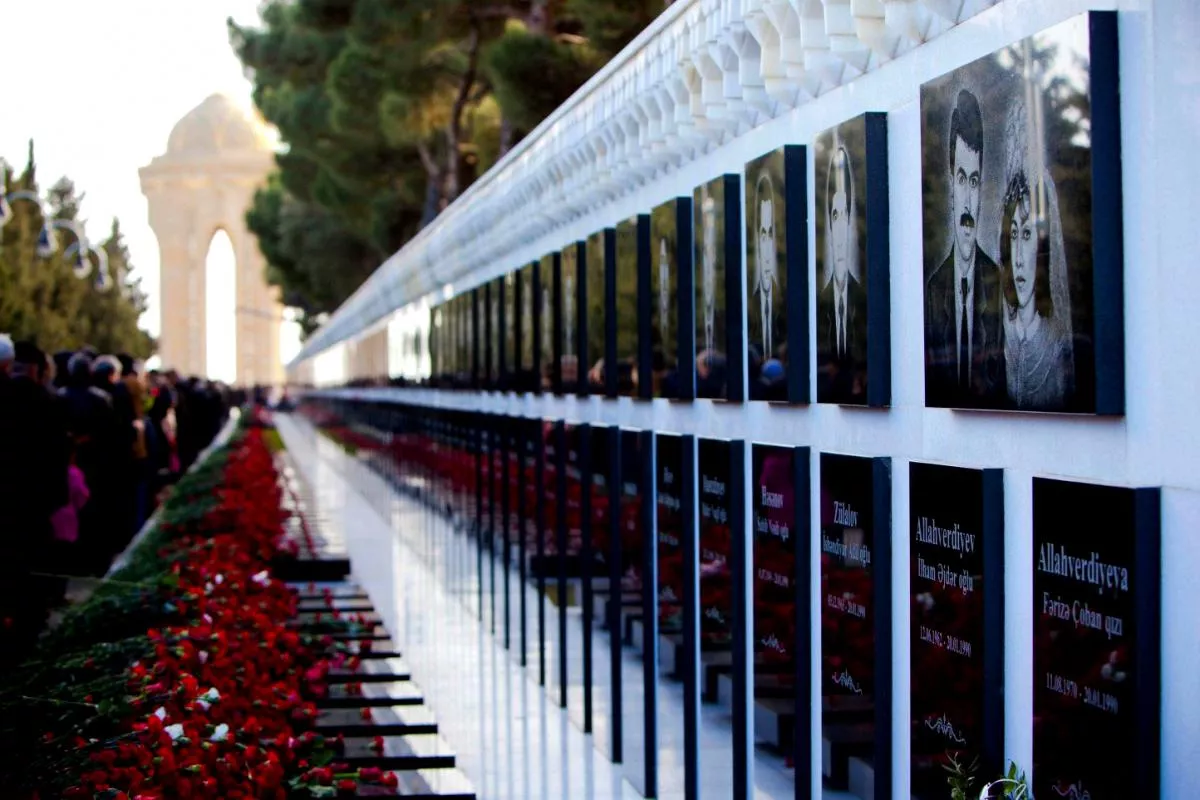
On the night of January 19-20, 1990, under the direct orders of the General Secretary of the Central Committee of the Communist Party of the Soviet Union, Mikhail Gorbachev, troops of the Ministry of Defense, the State Security Committee, and the Ministry of Internal Affairs of the USSR entered Baku and several districts of Azerbaijan. Mass killings were carried out by firing from heavy equipment and various types of weapons. The occupation of Baku by special forces of the Soviet army and a large contingent of internal troops was accompanied by special cruelty and unprecedented brutality. Until the state of emergency was announced to the population, military personnel mercilessly killed 82 people and fatally wounded 20. After the declaration of a state of emergency, 21 people were killed in Baku within a few days. Eight more people were killed in districts and cities where the state of emergency was not declared-on January 25 in Neftchala and on January 26 in Lankaran.
Thus, 147 people were killed and 744 were injured in Baku and its surrounding regions due to the illegal actions of the troops.
Among the dead were women, children, and the elderly, as well as emergency workers and militiamen. The illegal deployment of troops was also accompanied by mass arrests of civilians. During the operations, 841 people were illegally arrested in the capital Baku and other cities and districts of the republic, and 112 of them were sent to prisons in various cities of the USSR. Military personnel fired at 200 houses, 80 cars, including ambulances, and a large amount of state and private property was destroyed as a result of fires caused by incendiary bullets.
The actions of the Soviet troops showed all the signs that were condemned in the international tribunal held in 1945-1946 and went down in history as the Nuremberg trials. In total, there are 150 martyrs of January 20 in Azerbaijan.
The next day after the massacre, on January 21, the great son of the Azerbaijani people, Heydar Aliyev, headed to the Permanent Mission of Azerbaijan in Moscow and issued a statement strongly condemning the USSR government and the incompetent leadership of Azerbaijan, which committed a massacre in Baku. The world's progressive forces also strongly condemned this terrible and ruthless terror inflicted on the Azerbaijani people.
Every year, January 20 is commemorated in Azerbaijan as the National Day of Mourning.