The US has strategic and economic reasons to be a key player in Eurasia, and the Trump administration is laying the groundwork to make it happen.
It seemed likely when Donald Trump took office that the South Caucasus and Central Asia would not receive much attention. US administrations have long had an on-off interest, and there was little obvious sign of change, according to CEPA.
How wrong that was. Events on the sidelines of the 2026 United Nations General Assembly (UNGA) showed a new and vigorous focus, including significant high-level engagement.
There was intensified focus on the Trump Route for International Peace and Prosperity (TRIPP) and Trans-Caspian connectivity. Bringing senior US officials and private investors together with leaders from the South Caucasus and Central Asia, the discussions made clear that Washington is moving its Trans-Caspian agenda from geopolitical concept toward commercial reality.
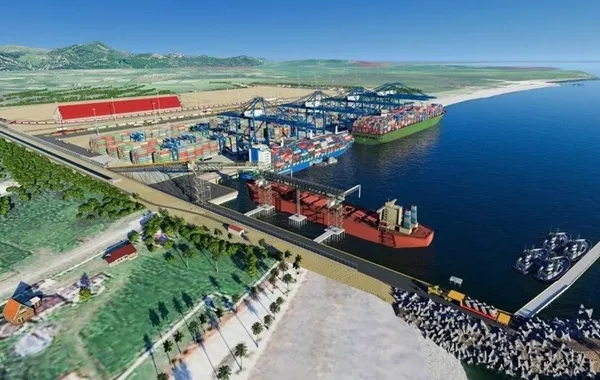
Peter Andreoli, deputy assistant secretary in the State Department’s Bureau of European and Eurasian Affairs, called TRIPP, a 43 km (27-mile) route through Armenia to connect Azerbaijan and its exclave of Nakhchivan, a “paradigm shift” in how Washington and regional partners approach connectivity. The planned route of road, rail, energy, and data links is key to the Middle Corridor connecting China and Southeast Asia to Europe, he said.
Mark Cameron, deputy assistant secretary for South and Central Asian affairs, was even more explicit about the commercial objective, saying US attention to the region “has never been higher.” The new Trans-Caspian Enterprise Fund is designed to use US government resources to “prove the commercial viability” of projects and encourage additional investment, he told a Caspian Business Forum in New York in September.
The $201m fund operates across Armenia, Azerbaijan, Georgia, Kazakhstan, Kyrgyzstan, Tajikistan, Turkmenistan, and Uzbekistan, and has a mandate to bring private sector investment to the South Caucasus and Central Asia.
Washington is also using the US-Armenian TRIPP Development Company to develop the multimodal route and its associated infrastructure. Dallas-based engineering company AECOM is conducting feasibility work for TRIPP infrastructure in Armenia, and plans to publish a report by the year’s end.
Together, these measures address three stages of infrastructure development: investment, corporate structure, and technical feasibility.
The strategic logic behind TRIPP recalls the thinking on Eurasia of Zbigniew Brzezinski, US National Security Advisor under President Jimmy Carter, who argued that connectivity can expand states’ strategic choices by reducing dependence on any single power or route.
The Baku-Tbilisi-Ceyhan pipeline, which started pumping oil in 2006, embodied that logic, but US national interests are now the more immediate driver. Arizona Congressman Abraham Hamadeh argued at the New York forum that TRIPP would strengthen American supply chains, secure energy and critical minerals, and establish “a long-term American presence” in a region that matters to US national security and business.
Washington has underlined TRIPP’s role as a complementary, rather than competing, route. While TRIPP can connect through Armenia to Azerbaijan, its significance depends on what lies beyond, including Azerbaijan’s transport and logistics infrastructure, the Caspian crossing and the onward connection to Central Asia.
A Strategic Partnership Charter, signed by the US and Azerbaijan in February, explicitly links energy, digital infrastructure, investment and security to the Middle Corridor and TRIPP, while identifying Azerbaijan as a strategic partner. For the US, TRIPP creates extra commercial access to the Eurasian region and supply chains that bypass Iran and Russia while competing with China.
The same diversification that creates opportunities for the region also creates a strategic challenge for Georgia, which has China as its largest foreign investor. TRIPP introduces an alternative route that could reduce dependence on Georgia as the principal South Caucasus transit gateway.
It will remain a critical Black Sea link to European markets, but its position will increasingly depend on other forms of competitiveness rather than geography alone.
Kazakhstan sees TRIPP as a “logical extension” of the Middle Corridor, shortening its access to European markets by roughly 1,000km, while Turkey wants to connect it to its existing rail, road, and port infrastructure. The emerging architecture will connect the South Caucasus not only to European markets but to Central Asia.
The biggest challenge is no longer political momentum but execution. It will need interoperable ports, efficient borders, digital customs, fiber-optic networks, logistics hubs, predictable regulations, and financing structures resilient to geopolitical shocks.
Private investors at the Caspian Business Forum in New York stressed resilient infrastructure, reliable partners, predictable returns, and appropriate long-term financing as their requirements. The test is whether geopolitical momentum can now be translated into concrete, bankable projects.
UNGA week suggested that Trans-Caspian connectivity has moved higher on the US foreign-policy and commercial agenda. The next test will be in mid-October, when Secretary of State Marco Rubio is expected to lead more than 100 US companies to Uzbekistan for a C5+1 meeting focused on connectivity, trade, energy, and investment.
The question is whether Washington can turn TRIPP from an entry point into something much larger: a commercially viable Trans-Caspian architecture with the US fully onboard.
By Nino Lezhava