"Central Asia has always been a bridge. The transformations and changes that this part of the planet has undergone over the centuries have made it what it is today: the hinge between two continents, a point of contact between Europe and Asia, the junction between worlds that were once very distant but are now more interconnected than ever." This is how Italian PM Giorgia Meloni described Central Asia at the International Astana Forum in May 2025, showcasing Rome’s desire to open a new chapter in the region.
The days of 28, 29, and 30 May 2025 marked a major turning point in relations between Italy and Central Asia. Giorgia Meloni first visited Uzbekistan before speaking at the Astana Forum 2025 and at the first Italy-Central Asia summit. This historic event took place against a complex regional diplomatic backdrop, already shaped by multiple dynamics and actors, such as the European Union, Russia, and China.
Central Asia: at the Heart of a Shifting Eurasia
After Russia's large-scale invasion of Ukraine in 2022, a number of European countries found themselves faced with the urgent need to diversify their trading partners and secure their supply chains. In this context, Central Asia appears to be a strategic alternative, rich in natural resources and positioned as a key corridor for international transport, sandwiched between Europe and Asia. The Eurasian region is therefore gradually being redrawn around Russia, which, despite its traditional power, is allowing a geopolitical and commercial vacuum to emerge through its policy that can be exploited by other players.
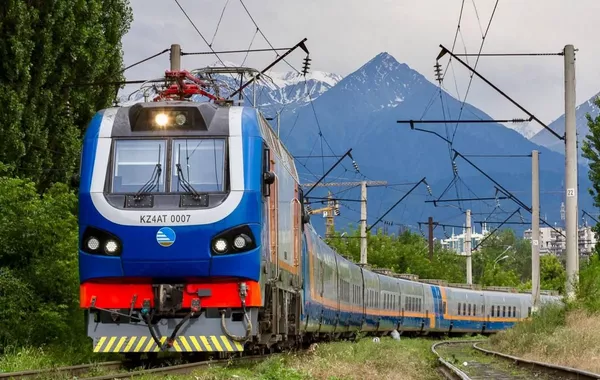
For instance, the Trans-Caspian International Transport Route, or Middle Corridor, which emerged as a solution for bypassing Russia as early as 2014 during Russia's illegal annexation of Crimea, is gaining momentum. This corridor, which connects Europe to Asia via the Caucasus and Central Asia, was designed as a strategic alternative to the Northern Corridor. However, this development is not neutral. China, the eastern anchor point of the corridor, has quickly become involved in these exchanges through the Belt and Road Initiative. China is establishing itself in Central Asia not only as a major trading partner, but also as an investor and project manager for infrastructure projects, particularly in Kyrgyzstan and Uzbekistan, with the China-Kyrgyzstan-Uzbekistan railway project, valued at $6 billion and designed to strengthen regional connectivity.
In light of these changes, Central Asian nations are seeking to position themselves on the global market as reliable suppliers of energy, natural gas, and rare earth elements, with the aim of diversifying their alliances and reducing their historical reliance on Moscow. The heads of state of Kazakhstan, Uzbekistan, Kyrgyzstan, Tajikistan, and Turkmenistan are thus strengthening the “C5+1” format, a multifaceted diplomatic platform designed to strengthen dialogue between the five countries and an external partner, notably with the U.S., Turkey or other strategic international actors.
Italy, a Key European Voice in the Region
In April 2025, roughly a month before the Astana Forum, the European Union took a major step forward in its relations with Central Asia by organizing its first ever summit with the five nations of the region in Samarkand. The event provided an opportunity to review all existing and future areas of cooperation: economy, trade, energy transition, security, and technological innovation.
Among the flagship initiatives, the Middle Corridor was at the center of discussions. The EU confirmed its commitment by announcing a 10 million euros investment to strengthen this vital corridor, thereby consolidating its commercial, diplomatic and geopolitical involvement in the trade route. These commitments are all under the umbrella of the Global Gateway, the European strategy to promote smart, clean and secure connections in the digital, energy and transport sectors, while strengthening health, education and research systems worldwide. In the energy sector in particular, this strategy naturally directs European attention towards Central Asia, whose states are among the richest suppliers of natural resources.
Italy recognized the sovereignty of the Central Asian countries as early as 1992. In the same year the industrial giant ENI became one of the first foreign energy companies in the world to set up operations in Kazakhstan, where it still operates today at strategic sites such as Karachaganak and Kashagan. Italy has invested approximately $8 billion in Kazakhstan's energy sector over the past 20 years. Today, owing to mutual trust in this strategic sector, Italy is Kazakhstan's third largest trading partner, behind Russia and China.
From a diplomatic standpoint, Rome was the first European capital to organize a “1+5” dialogue in 2019, when then-Foreign Minister Luigi Di Maio brought his Central Asian counterparts together in Rome, showcasing Italy’s interest in consolidating partnerships not only with Kazakhstan, but with the others Central Asian countries.
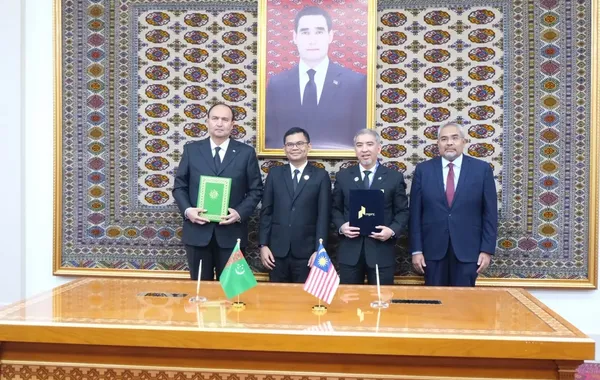
Giorgia Meloni's visit to the region in May 2025 illustrates Italy's desire to transform these partnerships into concrete and sustainable projects. While relations with Tashkent are less closely knit than those with Astana, since 2023 Italy and Uzbekistan have established a strategic partnership to expand areas of cooperation in both bilateral and multilateral formats. Turkmenistan and Italy are strong partners in the field of security: in 2021, Italy exported the equivalent of 35% of Ashgabat's arms imports, including heavy weapons, and the CEO of Leonardo, one of the world's largest arms companies, was received by the Turkmen President. Although relations with Tajikistan and Kyrgyzstan are less advanced, Italy maintains excellent relations with both states and aims to deepen them, in particular through involvement in infrastructure projects such as the Rogum Dam in Tajikistan.
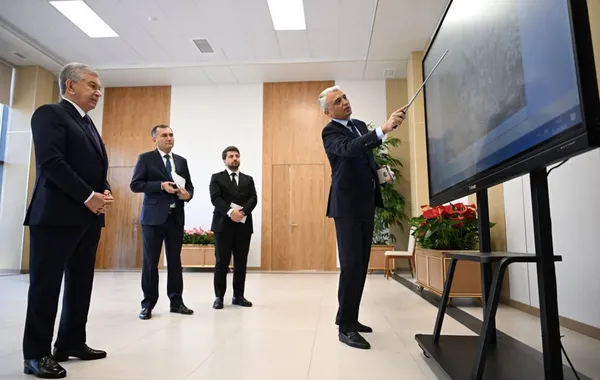
In this context, Italy's attendance in Astana in the spring of 2025 comes as no surprise. On this occasion, eight agreements were signed with Uzbekistan and Kazakhstan, worth a total of $7 billion, in the fields of oil and gas, renewable energy and water management, a major issue in a region facing severe shortages.
It is thus through this approach that Italy is establishing itself as a preferred interlocutor within Europe for the nations of Central Asia. By remaining consistent with the Global Gateway initiative, Italy is not only paving the way for coordinated European action, but also positioning itself at the forefront of a multitude of tactical sectors.
Rome’s Central Asian Gambit
Italy therefore intends to position itself as an essential link between Europe and Asia, capitalizing on its historic partnership with Kazakhstan and Giorgia Meloni's clear desire to become a European pioneer in the strategic dynamics of trade and natural resource exchange.
Nevertheless, this ambition faces several realities that are impossible to disregard. For one, Italy's economic and diplomatic capacity remains modest. While Rome can count on a solid relationship and trust with Astana, this alone does not make it a leading player capable of competing with China or the United States in Central Asia.
Furthermore, Italy's engagement in Central Asia also comes at a delicate diplomatic moment. Rome has remained a staunch member of the European anti-Kremlin front since 2022, and Italy’s ongoing diplomatic initiatives in Central Asia reflect this commitment. However, some components of Italy’s political class have historically maintained close ties with Moscow. This ambivalence, inherited in particular from the Berlusconi era and maintained by certain segments of the current right wing, does not call into question Italy's alignment with Brussels, but adds a layer of complexity to its credibility in a region that continues to maintain close ties with Russia.
Ultimately, the issue of human rights remains a sensitive one: several Central Asian states are among the most authoritarian regimes in the Eurasian region, exposing Rome to the risk of contradictions between its strategic interests and the democratic principles it claims to defend. Italy is therefore navigating a challenging diplomatic landscape, where economic opportunities and political imperatives intersect without always converging.
Whilst the partnership with Kazakhstan, based on energy and fossil fuels, has been carefully woven and strengthened over time, Italy must overcome certain internal and external challenges in order to assume the leading role it wishes to play in this region. That said, it is safe to say that Italy has gained a privileged position within the European Union. By paying due attention to strategic balances, emphasizing cross-sector partnerships and engaging in multilateral and open dialogue with the five Central Asian countries and its other European partners, Italy has the potential to play a more significant role in this shift. If Central Asia has long been a bridge between worlds, Italy now hopes to become one of its essential pillars.
One thing is certain: Central Asia was never as central to Rome's foreign policy as it is today.
By Valentina Trevisan