Why Central Asia’s Middle Corridor Needs Trans-Caspian Pipelines
The dream of the “Trump Route” in the Caucasus will remain unfulfilled without further connectivity to Central Asia.
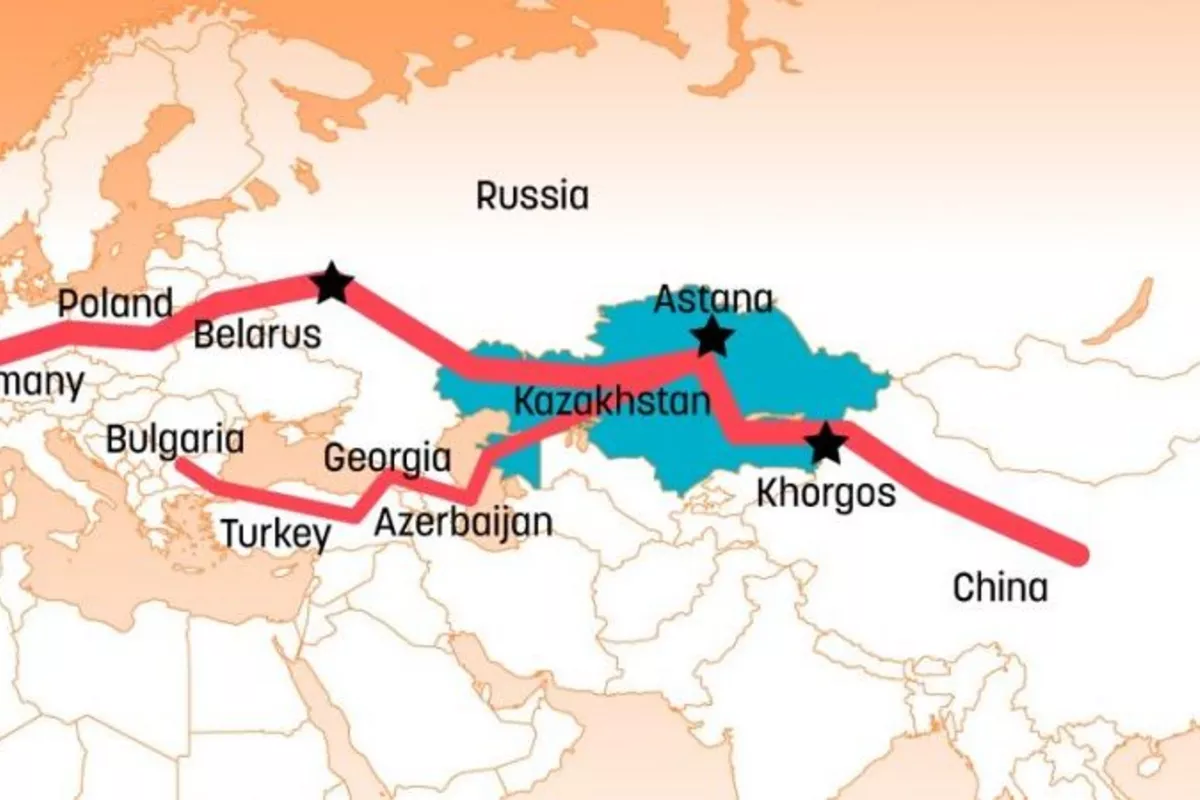
One of Europe’s most promising strategic energy opportunities lies in its own neighborhood. Kazakhstan and Turkmenistan are rich in the resources Europe needs, but lack the capacity to get them to market. Together, they are Europe’s most underinvested energy asset.
Brussels is beginning to grasp this. At the first EU-Central Asia summit in Samarkand in April 2025, European Commission President Ursula von der Leyen called Central Asia “the very definition of a global gateway, the beating heart of Eurasia.” She then announced a €12 billion ($13.8 billion) Global Gateway investment package for a variety of infrastructure, critical minerals, energy, digital connectivity, and water projects. That moment marked a potential turning point, but the architecture is yet to be built. Recognition is not a strategy. Pledges are not pipelines. The Caspian-Black Sea corridor will not become a pillar of European resilience until Washington and Brussels treat it as a single strategic challenge, not a sequence of bilateral files. Now the window is open. The next step is past due.
The Caspian region is rich in hydrocarbons but cannot deliver them directly to markets. Kazakhstan produces oil at a world-class scale, but four out of every five barrels still travel westward through Russia to a terminal on the Black Sea. Turkmenistan sits on one of Eurasia’s largest gas reserves, but nearly 80 percent of its exports flow east via a monopolistic arrangement with China.
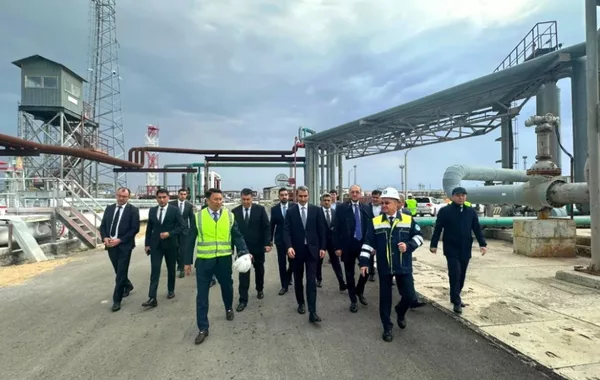
Azerbaijan is not the bottleneck-it is the opportunity. Its main Caspian port, Baku, is ready to receive additional volumes, as is the infrastructure stretching west through the South Caucasus. Both are significantly underutilized. The Baku-Tbilisi-Ceyhan pipeline operates well below capacity, and Baku-Supsa is largely dormant. In other words, the infrastructure beyond the Caspian already exists. The missing link spans the Caspian itself.
The problem is not scarcity but route design and the political will to build it.
Europe has laid the foundations. It has created the market, built the regulatory architecture, and mobilized the financing needed to modernize regional infrastructure. The next step is strategic execution. Here is where Washington’s unique assets come into play. These include American investment in Kazakhstan’s energy sector, the presence of US majors in Tengiz, EXIM financing tools, and enduring security relationships across the South Caucasus. Europe can provide the needed demand and the institutional framework, but the United States must provide the strategic catalyst. Together, they can transform the heretofore neglected Caspian-Black Sea corridor into a cornerstone of the West’s long-term energy security.
To succeed, President Donald Trump and von der Leyen must work together. Happily, the impediments are not ideological but industrial-specifically, the use of leverage to expand infrastructure. It is the kind of file where a transactional White House and a strategic European Commission can easily find common ground. Europe-and the West-needs the corridor. Washington has the tools to build it. Now is the time to bring them together.
The West has done this before. In the 1990s and early 2000s, Caspian oil was also stranded-behind hostile geography, Soviet-era infrastructure, and inadequate project financing. There was no easy route to the Mediterranean. Nonetheless, the Baku-Tbilisi-Ceyhan corridor emerged. Washington built it. It named a special envoy for Caspian Basin energy diplomacy; created a Caspian Finance Center in Ankara; and brought the EXIM Bank and OPIC to the table. Western majors were prepared to commit billions to a project that seemed to defy geography.
The result reshaped the region’s energy map. Today the BTC pipeline carries shipborne Kazakh, Turkmen, and local Azerbaijani barrels. Yet it still runs only half of its 60 million-ton annual capacity. Why? Because it lacks a connection with the Caspian’s eastern shore. The need is not to invent this strategic corridor but to build it.
When Hamlet pondered “to be or not to be,” he considered both sides of the issue, not just one. But with the two absent trans-Caspian pipelines, Washington and Brussels have considered only the upside benefits they might bring, not the downside costs if they are not built.
There are five potential consequences of inaction:
First, both Russia and Iran gain near-monopolies on the export to the West of oil from Kazakhstan and gas from Turkmenistan;
Second, as buffers to uncertainty in the Persian Gulf, China gets more of Kazakhstan’s oil and Turkmenistan’s gas;
Third, governments in both Central Asia and the Caucasus are thwarted in their efforts to “bridge the Caspian” and create “Greater Central Asia” as a functioning new world region and economic zone;
Fourth, those same governments, as well as Türkiye, will question whether the United States is a reliable partner on the world stage;
Fifth, a US failure to open the trans-Caspian transit of Kazakh oil and Turkmen gas will severely dilute President Trump’s achievement in the Trump Route for International Peace and Prosperity (TRIPP) and push shippers to view the existing east-west transit routes through Russia and Iran more favorably.
American “can-do” spirit and Trump’s “art of the deal” can do better.