Georgia-Korea Deal: A Strategic Step for Expanding Constrained Markets
Since the start of Russia's war in Ukraine, Korean companies have encountered challenges in directly engaging with both the Russian and Ukrainian markets, while business conditions across the broader region have become more complex and risk-sensitive.
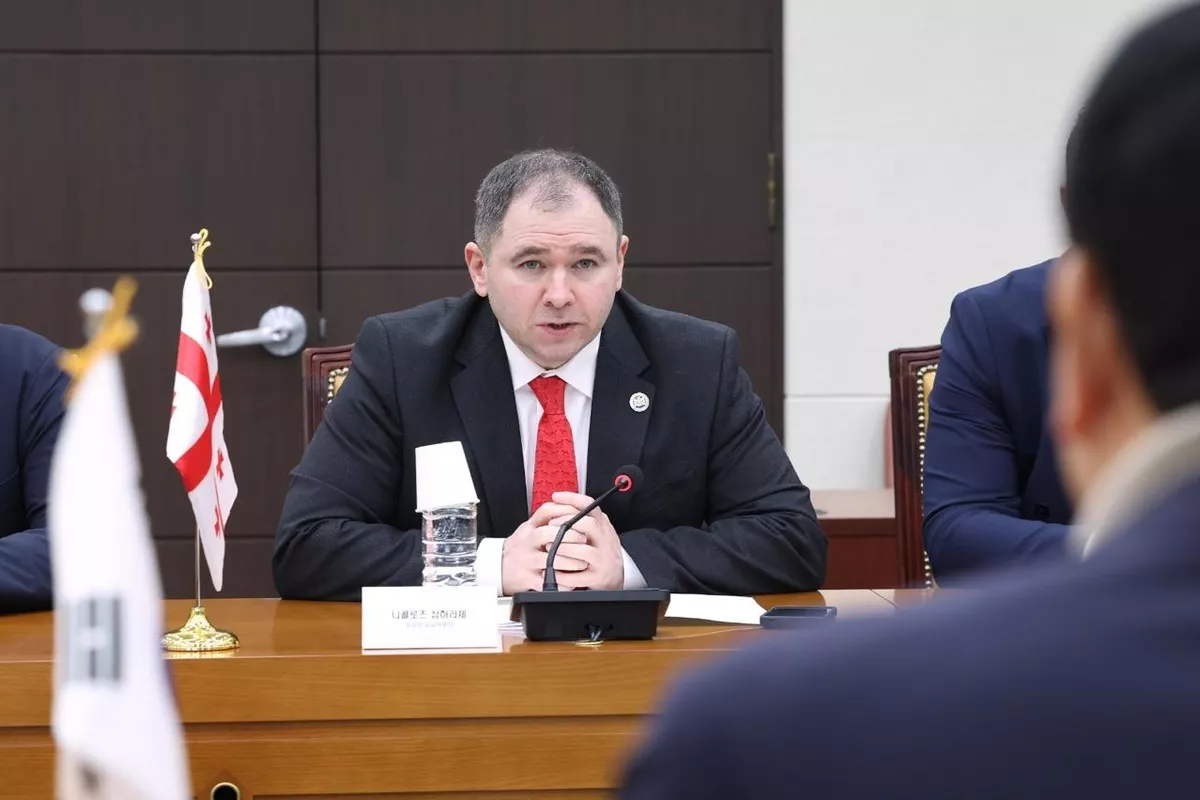
Against this backdrop, Georgia could play a constructive and stabilizing role, according to Nikoloz Samkharadze, chairperson of the Georgian Parliament's Foreign Relations Committee, The Caspian Post reports, citing foreign media.
Speaking in an interview with The Korea Herald, Samkharadze said Georgia's relative insulation from the conflict positions it as a practical platform for renewed regional engagement.
"Sooner or later, all wars end, and we hope the war in Ukraine will end sooner rather than later," he told The Korea Herald. "When that happens, opportunities will reopen."
"The Georgia-Korea partnership can help Korean companies gradually regain access to these markets, with Georgia serving as a starting point," he added.
Samkharadze said an early presence in Georgia would give Korean companies a competitive edge as regional conditions normalize.
"If Korean companies already have a solid presence in Georgia, it will be much easier for them to reenter Ukraine, Russia and neighboring markets," he said, highlighting Georgia's strong investment climate, ease of doing business and low tax burden.
Pragmatism as diplomatic foundation
Meanwhile, Samkharadze also acknowledged South Korea's pragmatic diplomatic approach amid growing global uncertainty and Georgia's apparent alignment with this strategy, emphasizing shared values between the two countries.
"Georgia and the Republic of Korea are like-minded countries when it comes to international law, peaceful conflict resolution and pragmatic diplomacy," he said, using South Korea's formal name. "This shared outlook creates a strong foundation for cooperation."
He noted that recent institutional developments reflect the growing momentum in bilateral ties.
"Pragmatism unites us and will lead to more active relations and new avenues for cooperation," Samkharadze said.
"The opening of a fully fledged Korean Embassy in (Georgia's capital) Tbilisi, along with a Trade Promotion Agency, demonstrates Korea's commitment. We would also welcome the opening of a KOICA (Korea International Cooperation Agency) office in Tbilisi."
He added that the signing of an air traffic agreement enabling direct flights would further boost exchanges between the two countries.
"These developments create more opportunities for businesses and people from various backgrounds to benefit from closer relations," he said.
Samkharadze said despite past challenges, growing exchanges and shared values will deepen Georgia-Korea cooperation, noting mutual support on security and international law.
"Georgia has supported Korea's policy of denuclearization of the Korean Peninsula and has backed Korea at the United Nations on many occasions," he added.
Samkharadze also shared "good news" on a Georgia-Korea comprehensive economic partnership agreement, saying a deal has been reached and legal teams are finalizing the text for signing this year.
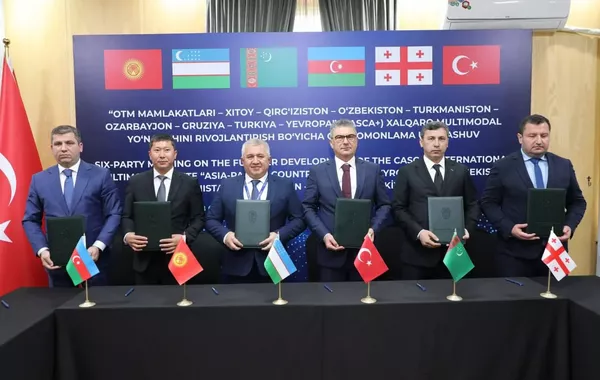
He also highlighted Georgia's strategic role in the Trans-Caspian Transport Corridor, noting it as a key link between the East and West.
"Our goal is to make this corridor not only the shortest route between Europe and Asia, but also the most convenient. Georgia is a vital link, and it would be in the interest of Korean companies to use Georgia's transit potential for exports to Europe."
He added that Georgia's free trade agreements with the EU, Turkey and former Soviet states make it an ideal gateway for investment, production and regional exports.
Meanwhile, Samkharadze said Korea is a priority partner for Georgia, calling for stronger trade, youth exchanges and cooperation in education and culture. He expressed the hope that growing Korean tourism - over 31,000 visitors last year - could increase further with direct flights and niche offerings such as golf combined with cultural and wine tourism.