Georgia's Papuashvili Slams Helsinki Commission for Political Bias
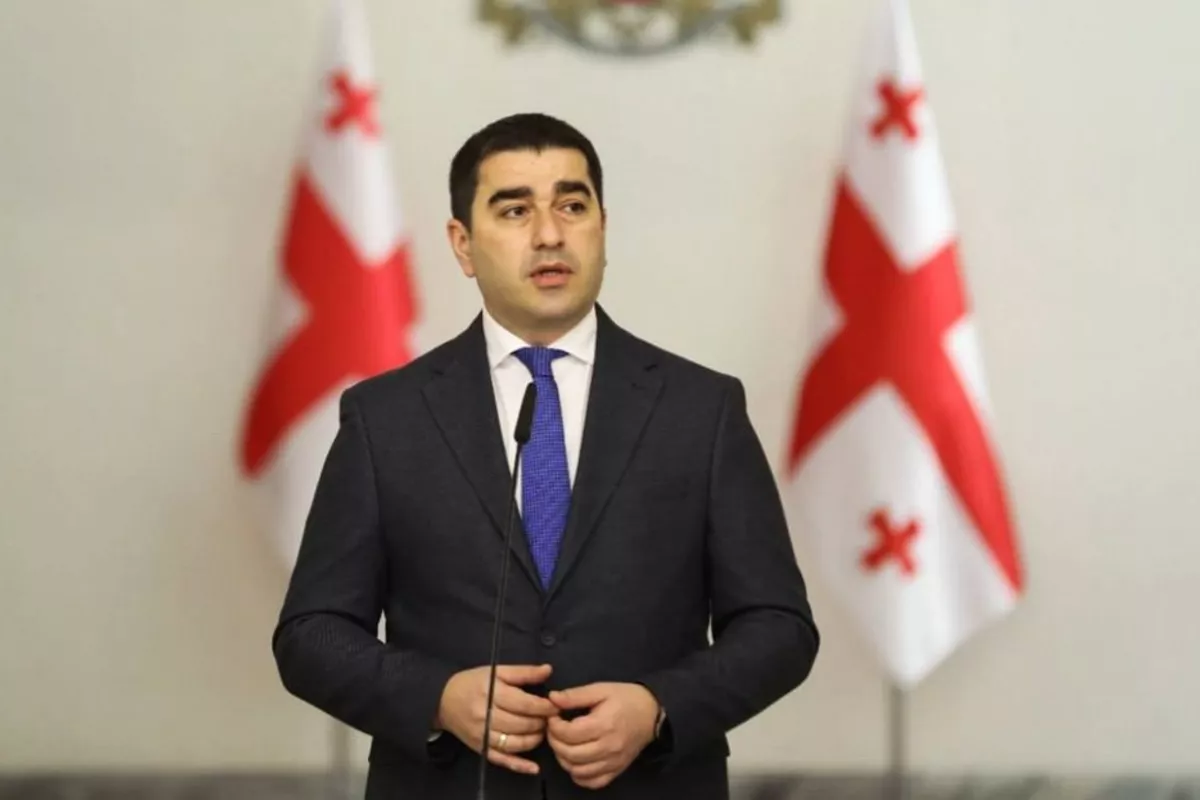
Georgian Parliament Speaker Shalva Papuashvili strongly criticized the US Helsinki Commission ahead of its February 11 meeting, accusing the commission of advancing "an obvious political agenda against the Georgian people."
Speaking to journalists, Papuashvili claimed that several leaders within the Commission are actively promoting a biased narrative regarding Georgia and expressed skepticism about the objectivity of the upcoming discussion, The Caspian Post reports, citing foreign media.
The Speaker specifically referred to Laura Thornton, Senior Director for Global Democracy Programs at the McCain Institute and former head of the National Democratic Institute office in Georgia. Papuashvili questioned whether Thornton would attend the session and suggested that her previous political statements undermine the credibility of testimony presented before the Commission.
“I expect Madam Thornton to attend the meeting, and I wonder if she will repeat her previous statements,” Papuashvili said, implying that the Commission relies on testimony from individuals whose views, in his assessment, are politically motivated.
He further stated that the Georgian government has “no expectations” regarding the outcome of the meeting, arguing that the Commission’s approach toward Georgia has demonstrated a consistent pattern of political bias.
The US Helsinki Commission, officially known as the Commission on Security and Cooperation in Europe, is an independent US government agency created in 1976 to monitor compliance with the Helsinki Final Act. Its mandate includes oversight of human rights, democracy, rule of law, and security issues across the 57 member states of the OSCE.
The Commission frequently holds hearings and briefings on democratic governance, electoral processes, media freedom, and foreign influence in various countries, including Georgia.
Relations between certain US institutions and Georgia’s ruling party have experienced periodic strain in recent years, particularly over issues such as:
Democratic standards and electoral reforms
Judicial independence
Media environment
Civil society legislation
Georgia’s foreign policy orientation.
Recent debates over Georgia’s political direction, as well as discussions surrounding alleged democratic backsliding, have drawn attention in Washington policy circles.
The February 11 briefing is expected to address developments in Georgia’s political environment and democratic trajectory. However, Georgian officials maintain that international criticism often reflects political bias rather than objective assessment.
Papuashvili reiterated that, in his view, the Commission’s leadership is advancing a predetermined narrative.
“We see the Helsinki Commission’s working style,” he said. “They hold to an absolutely obvious political agenda against the Georgian people.”