The Caspian Post speaks with renowned Azerbaijani mountaineer Israfil Ashurly, the first Azerbaijani to summit Mount Everest and the holder of the prestigious unofficial “Snow Leopard” title.
- How different is the Israfil Ashurly who first set out on a major expedition from the person and mountaineer you are today?
- My first truly serious expedition was to Kangchenjunga in 2011. The team was led by Alexey Bolotov, an International Master of Sport who died in 2013 while attempting a new route on Everest. Among the other members of our 10-person team were the legendary Nikolai Totmyanin, who died in 2025 after an attempt to climb Pobeda Peak, and Gleb Sokolov, who died of cancer that same year. It was a true sporting expedition. We did not use Sherpa support. We established the route ourselves and fixed ropes for our own team and other climbers. Of the 10 members of our team, only Bolotov, Totmyanin and I reached the summit.
Since then, I have climbed many different peaks, both solo and as part of sporting and commercial expeditions. But the Kangchenjunga expedition remains the foundation of everything I have done since and everything I will do in the future. It was that expedition that taught me endurance - how to summon every ounce of willpower when you have to perform at the very limit of your abilities.
- What motivates you to keep pursuing new summits today, when it might seem that you no longer have anything to prove?
- I want to climb all 14 of the world's highest peaks, each rising above 8,000 metres, in the Himalayas and Karakoram. If I achieve that, I will bring the “Crown of the Earth”, also known as the “Crown of the Himalayas”, to Azerbaijan. I have already successfully climbed nine of the 14 peaks. Five remain, and I will do my best to reach them.
- What does it mean to you to raise the Azerbaijani flag on a summit?
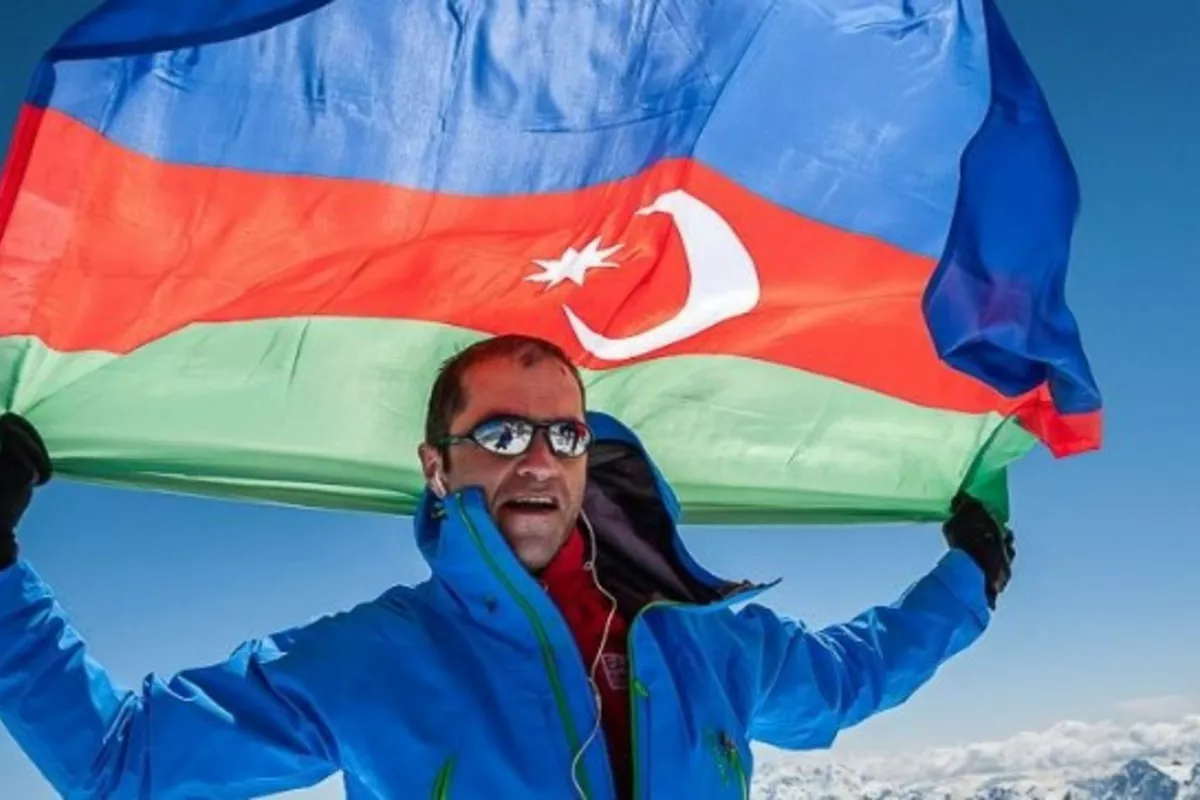
- I have spent much of my life outside my homeland, and I have always wanted to do something meaningful for it. As it turned out, my most significant contribution has been reaching some of the world's highest summits - in most cases, for the first time in the history of Azerbaijani sport. Margaret Thatcher, who had nothing to do with mountaineering, once expressed the idea very well: “A man may climb Everest for himself, but at the summit he plants his country's flag.”
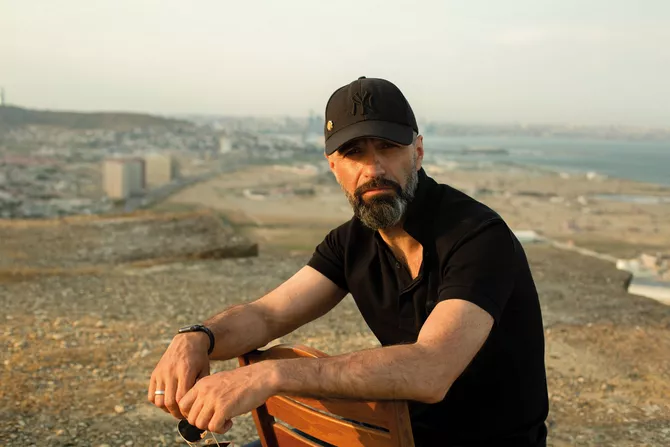
photo: Instagram
The Azerbaijani flag I carried on my expeditions from 2004 to 2024 - a flag that also travelled with me to Antarctica and the North Pole - is now an official exhibit at the National Flag Museum. I used to sign it out before an expedition and return it afterwards. But it is now part of the museum's “Sporting Achievements of Azerbaijan” exhibition, displayed behind glass, so it can no longer be taken out.
That is why I now climb with a new flag. Once I complete my project, I will donate that one to the museum as well. Whether or not I manage to raise the flag on a particular summit, what matters most to me is knowing that I represent Azerbaijan first and foremost, rather than simply myself. Sometimes I may be doing so in a place where no Azerbaijani has ever been before. That places a special responsibility on everything I do and every decision I make.
- Your passion for mountaineering has made you a frequent visitor to Pakistan and Nepal. Have there been occasions when people you had never met recognised either you or the Azerbaijani flag?
- After I took part in rescue operations following the 2023 earthquake in Hatay, there were occasions when Turkish climbers recognised me in the mountains. I have participated in rescue operations in Pakistan four times, so people know me there as well. I have visited Nepal 13 times since 2003, and I am treated almost like a local there. People call me Bhai, meaning “elder brother”.
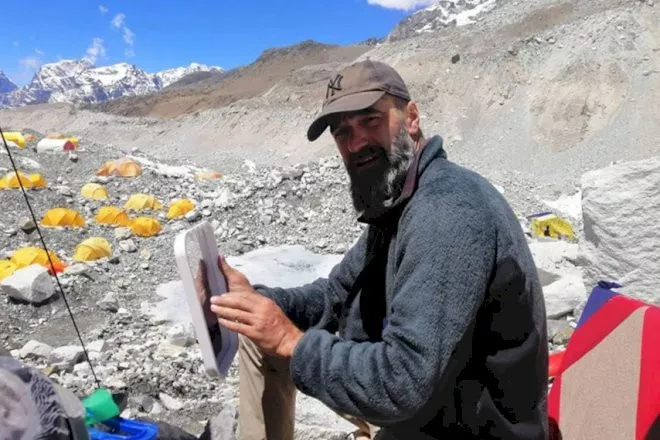
photo: Instagram
I have many friends among Nepal's different ethnic communities. In general, I have great affection and respect for Pakistanis and Nepalese. Most of them are remarkably down-to-earth, honest and kind people, and that feeling is mutual. When I am there, surrounded by extraordinary nature and people who have become like family to me, I feel completely at home.
- Does Azerbaijan have the potential to develop its own strong school of high-altitude mountaineering?
- To be frank, given the current state of affairs, I do not believe so. We do not have a strong tradition of high-altitude mountaineering. Before the collapse of the Soviet Union, mountaineering was still practised systematically in Azerbaijan because there was a strong Soviet mountaineering school.
We may not have been its most prominent part, but we were nevertheless part of that tradition. After independence, however, we lost much of what little we had. I cannot be considered a product of an Azerbaijani national mountaineering school. I grew and developed as a climber outside Azerbaijan, in a completely different environment.
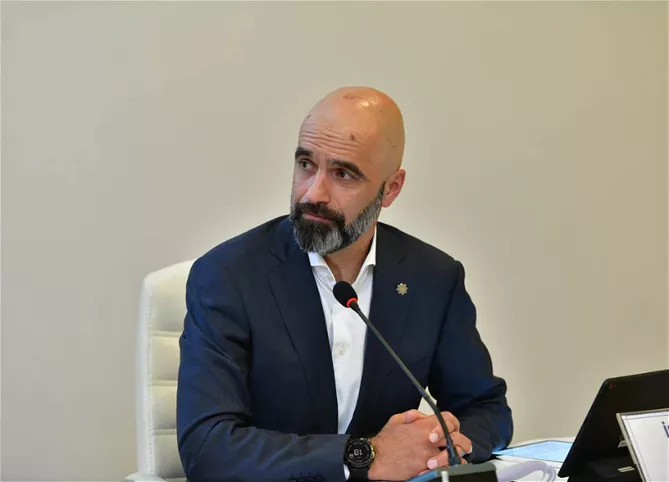
photo: Instagram
My instructors, coaches and mentors were some of the world's strongest mountaineers. What is often called mountaineering in Azerbaijan today - walking the easiest routes with so-called “black guides”, or unqualified guides operating unofficially - can hardly be described as mountaineering in the classical sense. People here may falsely claim to have reached the summit of a particular mountain, which is completely unacceptable in mountaineering. They may arbitrarily award themselves grades and titles. Mountaineering in Azerbaijan is dead, and I do not see meaningful efforts being made to change the situation.
Turning things around would take time and an enormous amount of work. We need to bring in genuine professional instructors from abroad who can train climbers and help raise technical standards. We need to organise joint international training camps, attend mountaineering camps abroad, compete in events, undertake climbs at the highest grades of difficulty and establish new, challenging routes - both in the mountains of Azerbaijan and beyond.
- What summit does Israfil Ashurly still need to conquer before he can say, “Now my mountaineering story is complete”?
- Of course, I have a wish list of mountains I would very much like to climb, and only one of them is above 8,000 metres. They may not be the highest mountains in the world, but they are exceptionally beautiful and technically demanding peaks. Perhaps I will not have enough time to climb every mountain on that list before I decide to bring my mountaineering journey to an end. But time will tell.