Against the backdrop of a rapidly shifting geopolitical landscape in the Middle East, the South Caucasus, and the broader Eurasian region, the perspective of an external yet deeply engaged analyst is particularly valuable.
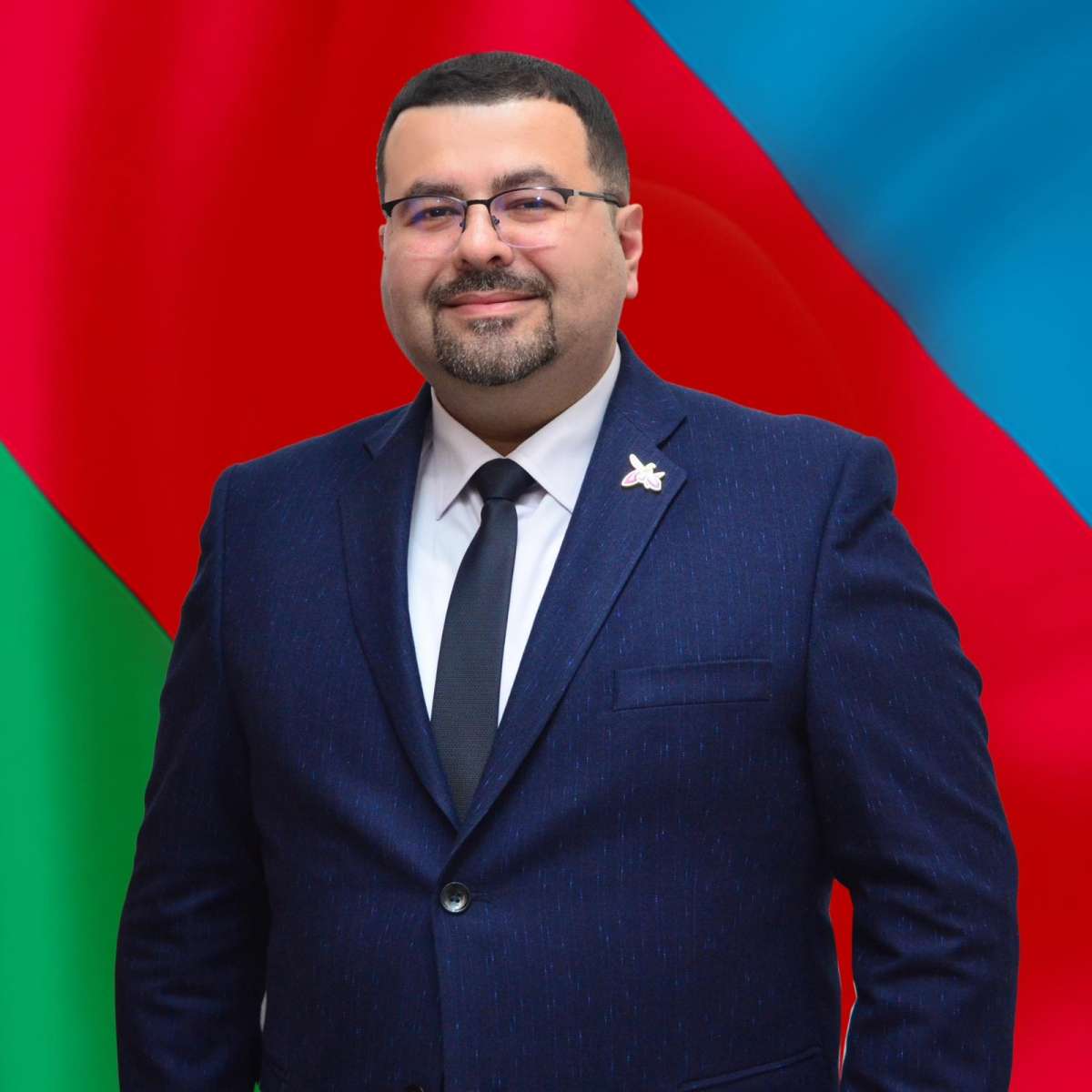
Jakub Korejba, a Polish political scientist and researcher at the Ankara-based Center for Eurasian Studies (AVİM), is known for his vivid, direct, and conceptually structured assessments of international affairs.
In an interview with him, The Caspian Post sought to understand how the current escalation involving Iran is reshaping the strategic roles of Azerbaijan and Türkiye, what new risks and opportunities are emerging for the region, and why a new political reality is taking shape now - one whose consequences will extend far beyond the Middle East.
- If the current conflict around Iran ultimately destroys the old balance in the Middle East, how much does the strategic role of Azerbaijan and Türkiye increase under these conditions?
- The collapse of the old order inevitably leads to the formation of a new one, although its contours remain difficult to define at this stage. In such a situation, it is important for Azerbaijan and Türkiye to actively participate in shaping the future regional architecture in order to secure strong positions within it. In pivotal regions like this, remaining on the sidelines is not an option: those who do not act as subjects risk becoming objects of others’ policies.
The South Caucasus and adjacent areas have long ceased to be peripheral. That is why Baku and Ankara must closely monitor ongoing processes and strengthen their influence accordingly.
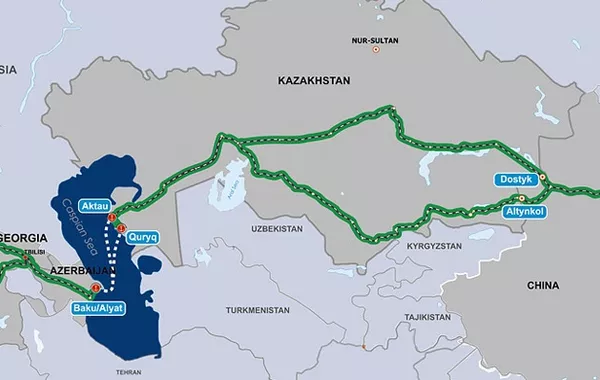
- Can it be said that amid the escalation involving Iran, Azerbaijan and Türkiye are becoming anchor points of a new security and transit architecture between East and West?
- One of the main achievements of Azerbaijan and Türkiye today is that they have maintained stability and avoided being drawn into war. In conditions of geopolitical crisis, this is already a significant success. However, maintaining such a position is only possible through strategic maturity, strong diplomacy, and a clear understanding of national interests.
The main task for both countries is to avoid the destructive spillover effects of the crisis while simultaneously leveraging their logistical, political, and economic potential. Against the backdrop of weakening influence in other regional directions, Türkiye and Azerbaijan remain resilient and can therefore become a key link between East and West.
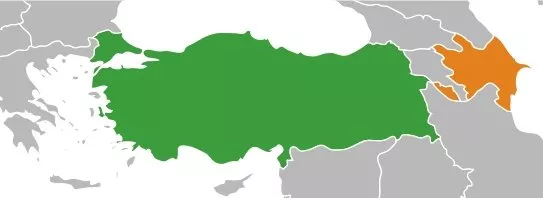
photo: Wikipedia
- Does this mean that the South Caucasus and Anatolia are becoming part of a single zone of strategic turbulence?
- Tensions around Iran indeed make the entire surrounding region more vulnerable. However, Azerbaijan and Türkiye have so far managed to avoid the most severe consequences of the conflict, and maintaining this approach should remain a priority.
Both countries have long operated in an unstable environment, and the number of threats is likely to increase regardless of the outcome of the confrontation. Whether Iran is weakened or subjected to external pressure, the region will remain a source of instability for a long time. Against this backdrop, Azerbaijan and Türkiye act as an important barrier preventing the spread of these risks toward Europe, which is why their importance for the EU is objectively increasing.
- What new opportunities and threats could open up for Azerbaijan and Türkiye if Iran is further weakened?
- Iran itself chose a confrontational course and is now facing its consequences. A strategy based on persistent confrontation with the outside world naturally leads to isolation and an increase in the number of adversaries. Against this backdrop, a different approach becomes more visible - one demonstrated by Azerbaijan: an orientation toward constructive relations, the pursuit of partnerships, and the minimization of conflict.
Even after the difficult experience of war with Armenia, Baku has sought to extract the maximum possible positive outcome from the situation. This reflects a more mature model of state behaviour. In this sense, compared to Iran’s confrontational course, the policies of Azerbaijan and Türkiye appear as examples of rationality, responsibility, and strategic calculation.
- How significant could the factor of Iranian Azerbaijanis become in political terms?
- The contrast between the situation of Azerbaijanis on both sides of the border already carries political significance in itself. People share language, culture, and historical memory, yet living standards and conditions differ noticeably. This disparity is a factor that cannot be ignored.
If pressure on Iran increases, the situation of Azerbaijanis inside the country may worsen further, as during crises regimes often seek internal scapegoats. This means that Baku and Ankara will need a particularly careful, measured, and forward-looking approach. One cannot exclude appeals for support or potential humanitarian implications emerging from the Iranian side.
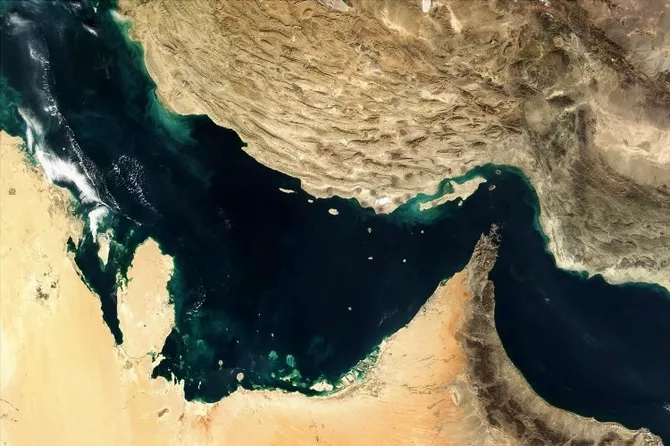
photo: Getty Images
- Can the current crisis be seen as a historical opportunity for the Azerbaijan-Türkiye tandem?
- Any major crisis dismantles the old system while simultaneously opening a window of opportunity. In this sense, Azerbaijan and Türkiye indeed have a chance to strengthen their agency and capture part of strategic flows - trade, transport, finance, and tourism.
Amid Iran’s weakening and rising risks in some Gulf countries, Baku and Ankara can present a more stable and secure alternative. This applies to transit, investment, and international logistics. However, such an opportunity requires decisiveness, calculation, and political will. Missing it would be a strategic mistake.
- If the conflict around Iran drags on, can Azerbaijan and Türkiye become architects of a new regional reality?
- The conflict is likely to be prolonged, as it reflects a deep and structural clash of interests. Against this background, Türkiye and Azerbaijan gain particular importance as stable, capable, and rational actors linking Europe and Asia. Their advantages lie in geography, governance capacity, and the ability to pursue balanced foreign policies.
However, in international relations there is no vacuum: various actors will always attempt to fill any emerging space. Therefore, objective advantages alone are not sufficient. Sustained activity, caution, strategic boldness, and political will are also required. If these conditions are met, Azerbaijan and Türkiye can indeed play a key role in shaping the emerging regional order.