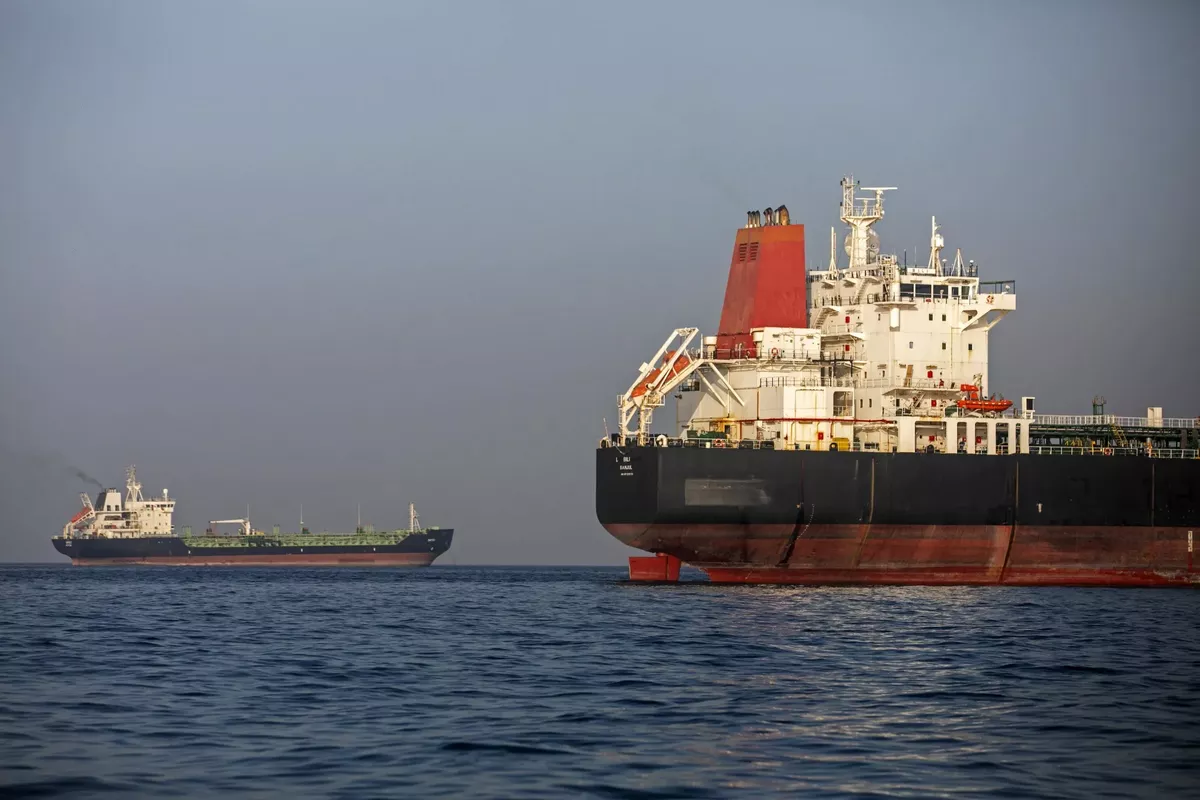
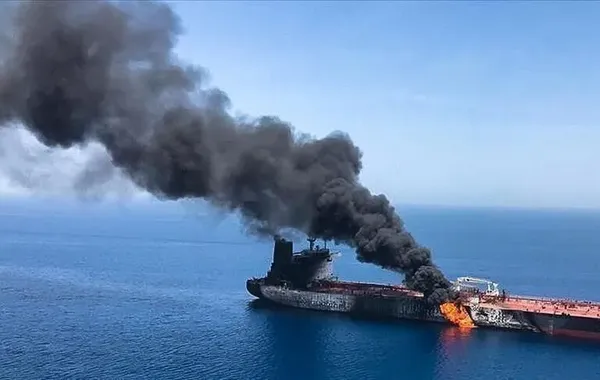
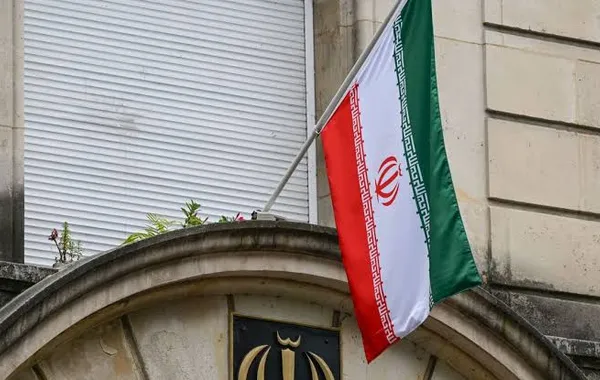
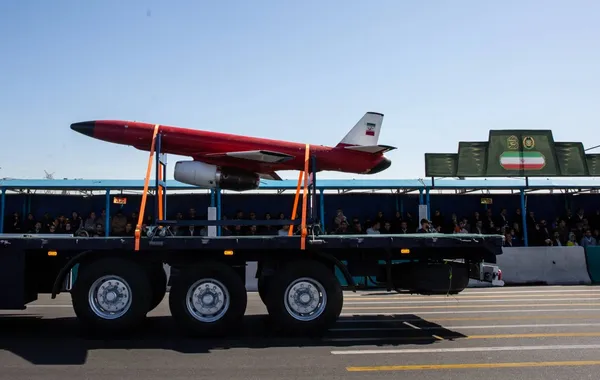
Iran’s insistence that the Strait of Hormuz remains closed contrasts with evidence of continuing oil shipments, highlighting the distinction between unrestricted navigation and cargoes moving through a disrupted export system.
Iranian Parliament Speaker Mohammad Bagher Ghalibaf said Sunday that the waterway would not reopen until seven conditions under the Islamabad memorandum were fulfilled, according to state news agency IRNA.
He said US proposals had been conveyed through intermediaries and that Tehran would pursue diplomacy alongside military preparedness. IRNA’s account did not enumerate the seven conditions.
Regional exports recover through different exits
Kpler, an intelligence firm providing maritime data, using data available on Sept. 29, put non-Iranian crude and condensate exports from the Middle East Gulf region at a minimum of 16.5 million barrels per day over Sept. 1-28, matching their pre-war average.
Of that volume, 60%, or 9.9 million barrels per day, crossed Hormuz, while 23% loaded on the Gulf of Oman coast and 17% departed through the Red Sea.
Although some vessels continue passing the strait, confirmed flows remained more than a quarter below pre-war levels.
Country-specific figures show confirmed Saudi crude crossing the strait rose from 0.7 million barrels per day in August to 2.8 million in September.
Kpler also identified September regional crude exports of 3.2 million barrels per day from the UAE and 2.6 million from Iraq. These measure country-origin exports rather than ship passages, and the UAE total includes bypass routes.
Iranian crude crossings have remained near zero since July following the reimposition of the US blockade, according to Kpler.
Hormuz carried 20.9 million barrels per day of oil in the first half of 2025, according to the US Energy Information Administration. That historical figure covers crude and petroleum liquids, a broader category than Kpler’s September measure.
Windward finds a gap between visible ships and moving oil
Visible ship passages remain sharply below pre-war levels.
Maritime intelligence firm Windward’s Sept. 29 assessment recorded 55 AIS-visible transits during Sept. 16-23, about 94% below its pre-war benchmark of roughly 910 a week. However, ships operating with their Automatic Identification System transmitters switched off are missing from the visible count, so that percentage does not establish the decline in all actual passages.
Using satellite detections alongside Vortexa cargo data, Windward estimated that 26.72 million barrels of crude exited through Hormuz during Sept. 20-22.
That equates to approximately 8.9 million barrels per day across the three days, but Windward stressed that convoy movements represented peaks rather than a sustained export rate. Roughly two-thirds subsequently moved through ship-to-ship transfers.
Windward also reported 55 crude tanker loading events at Saudi Gulf ports in September, including 50 involving very large crude carriers, citing Vortexa data. Almost all loaded with AIS switched off. Those are loading events, rather than counts of distinct ships crossing Hormuz.
The figures illustrate why ship counts, cargo volumes and terminal activity need to be distinguished when assessing the strait’s status.
Tanker shuttles keep cargoes moving
A separate Kpler analysis published Sept. 21 described an expanding shuttle trade through Hormuz, with cargoes transferred between tankers in the Gulf of Oman.
Ships carry oil out of the Gulf before handing it to other vessels for onward transport. Fujairah and Sohar have become important transfer points, although their supporting services face capacity constraints.
Kpler warned that transfer activity is not equivalent to the volume crossing Hormuz: a cargo can undergo several transfers, causing the same barrels to appear repeatedly in transfer statistics.
Tracking can miss crossings or create false ones
Switching off transmitters can conceal real movements, while distorted positioning signals can generate apparent crossings that never occurred.
In a separate August study, Windward classified 393 of 642 logged Hormuz transits, or 61.2%, as false movements associated with GPS jamming.
Its verification method compared transit logs with a daily baseline of vessels actively transmitting AIS and excluded vessels operating without signals. The result therefore concerns errors in that tracking dataset rather than a complete count of all ships crossing Hormuz.
Kpler likewise uses satellite imagery, vessel draught changes, port information and destination checks to verify movements. Its recent export totals represent minimum confirmed volumes and can be revised as evidence arrives.
Bypass routes have physical limits
Saudi Arabia’s East-West pipeline carries crude to Yanbu on the Red Sea, while the UAE’s Abu Dhabi Crude Oil Pipeline connects to Fujairah outside Hormuz.
These routes reduce dependence on the strait, but pipeline capacity alone does not determine how much oil reaches buyers.
In a July assessment, Kpler identified Yanbu’s loading infrastructure as a constraint on further Saudi bypass exports, estimating sustainable terminal capacity at around 4.5 million to 5 million barrels per day. Further expansion would require improvements at the ports as well as along the pipelines.
Continuing flows come with logistical constraints
Maintaining shipments through shuttles and offshore transfers requires more vessels and handling.
Kpler estimated that shifting transfer operations from the Gulf of Oman to western India would extend round voyages from roughly 17 to 21 days. Using offshore Malaysia would increase them to about 38.5 days, reducing the transport capacity each tanker provides.
Find the original article here