Trump’s ultimatum nears expiry as peace deal stalls.
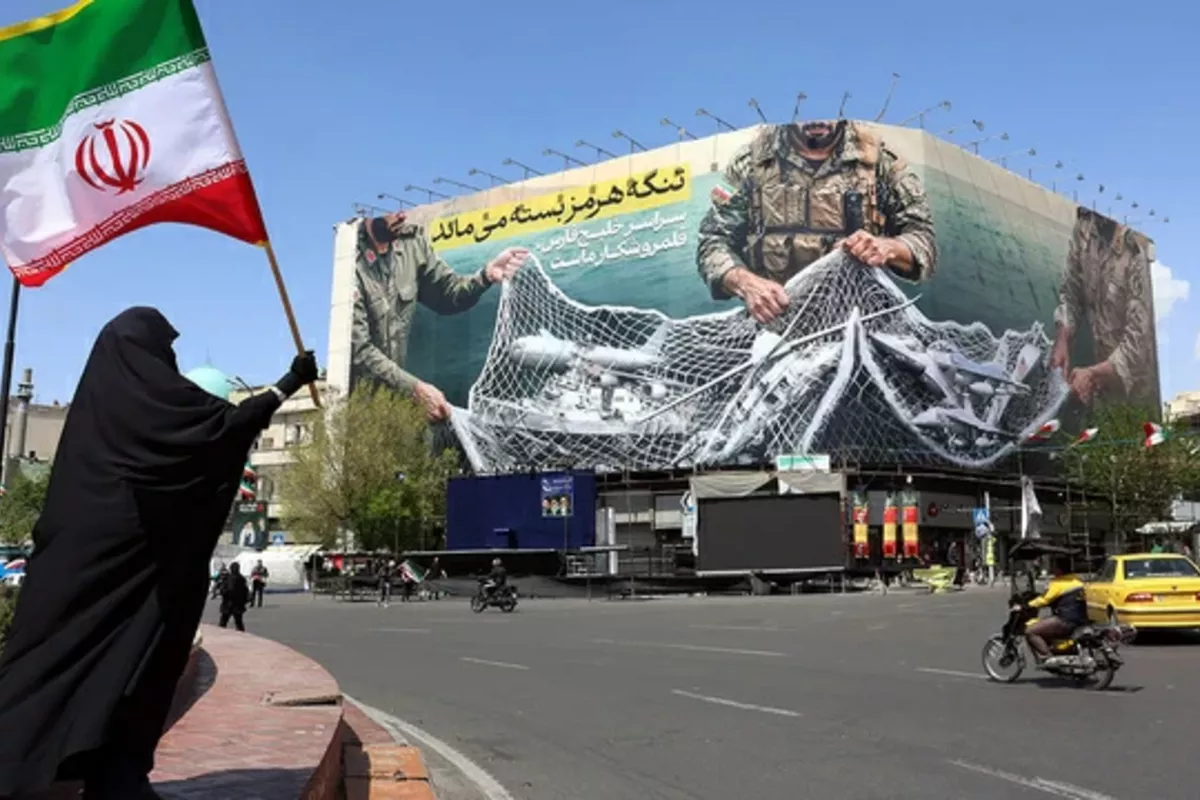
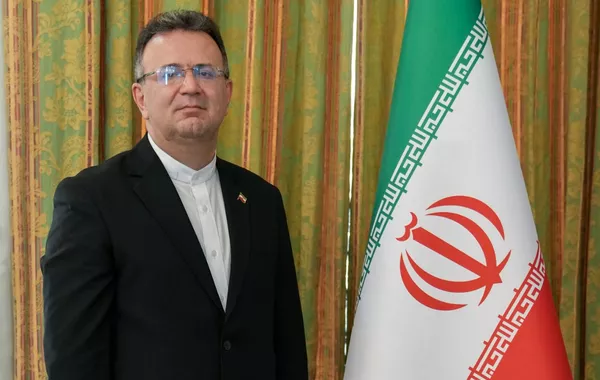
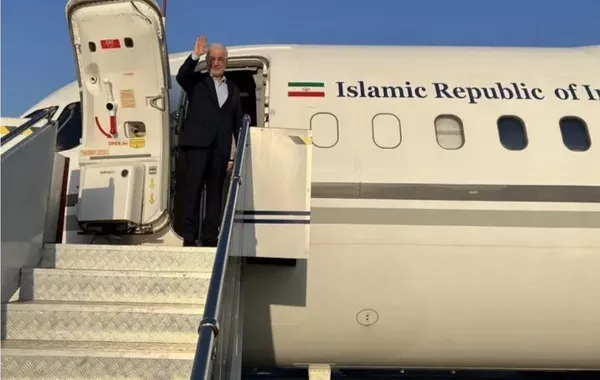
Iran is not engaging in negotiations with the US over reopening the Strait of Hormuz and is prepared to repel a potential US ground attack on its territory, an Iranian diplomatic source said ahead of the April 6 deadline set by US President Donald Trump for a “peace deal”, The Caspian Post reports via Russian media.
According to the source, a possible US ground operation against the Islamic Republic would represent the weakest link in Washington’s military and political strategy in the region.
“If the confrontation escalates to a new level, our army is capable of inflicting heavy losses on American forces,” the diplomat said.
Tehran will only agree to negotiations with Washington if the dialogue leads to the creation of a new security architecture in the Middle East with Iran’s full participation, a diplomatic source said.
The source added that, as a precondition, the international community must recognize the US and Israel as aggressors and require them to pay reparations to Iran.
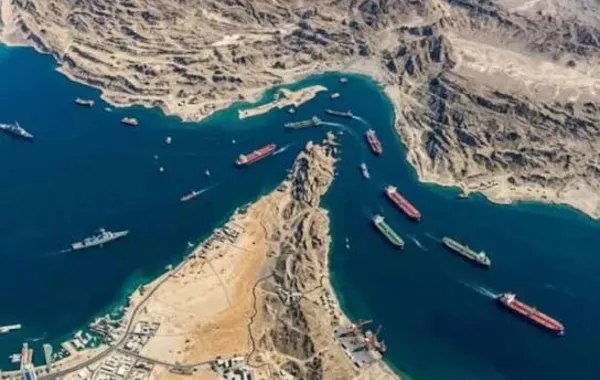
Iranian authorities are also pushing for the recognition of a new navigation regime in the partially restricted Strait of Hormuz. Currently, the Islamic Republic allows passage only to vessels from friendly nations along a secure route controlled by its military.
Just 48 hours before his ultimatum expired, Trump took to the social platform Truth Social, warning he would “unleash hell” on Iran if Tehran refused his proposed deal.
He later escalated the rhetoric, vowing a “day of destroyed bridges” and “day of destroyed power plants,” accompanied by harsh language directed at Iranian leadership if they failed to reopen the Strait of Hormuz.
Trump’s proposed deal reportedly includes sweeping demands: dismantling Iran’s missile and nuclear programs, ending support for regional armed proxies, and handing over uranium stockpiles to inspectors from the International Atomic Energy Agency.
In return, Washington would lift all sanctions on Iran and offer support for developing civilian nuclear energy.
Earlier, Trump had also warned of targeting Iran’s energy infrastructure, threatening to plunge the country into what he described as a “stone age” scenario.
The meeting failed to produce tangible results, as Iran’s leadership remains unwilling to engage in dialogue with Washington, The New York Times and The Wall Street Journal reported, citing sources.
At the same time, Iran’s Foreign Minister Abbas Araghchi, in phone calls with his Egyptian and Pakistani counterparts, expressed gratitude for their diplomatic efforts but reaffirmed Tehran’s determination to defend its territorial integrity by all available means.
On April 5, Ali Abdollahi, head of the Islamic Republic’s Khatam al-Anbiya Headquarters warned the US and Israel that Iran would “open the gates of hell” if strikes on its energy infrastructure continue.
The statement from Iran’s military command came after the country’s air defenses reportedly shot down two American warplanes for the first time since the conflict began - an F-15E Strike Eagle and an A-10C Thunderbolt II.
According to Fox News and Al Jazeera, citing sources, the US launched a large-scale rescue operation in southern Iran to evacuate the pilot and weapons systems officer of the F-15E.
Later, Trump announced on Truth Social that the pilots had been successfully evacuated from Iranian territory.
According to US Central Command, the operation resulted in damage to several aircraft, which were subsequently destroyed by US forces. These reportedly included two specialized planes based on the C-130J Super Hercules - a tanker and a special operations aircraft - as well as two light special forces helicopters, MH-6 Little Bird.
As of the time of reporting, US authorities had not disclosed any personnel losses.
Despite recent losses, the overall course of the conflict appears to be shifting in Iran’s favor, said Yury Lyamin, a senior researcher at the Center for Analysis of Strategies and Technologies.
He noted that US and Israeli forces have failed to achieve a swift victory, while the Islamic Republic is demonstrating strong institutional resilience and steadily raising the political and economic costs of the war for its adversaries.
In this context, it remains difficult to predict how Trump might attempt to turn the tide. The expert suggests that the US could continue strikes on key infrastructure and economic targets in Iran and may even consider a limited ground operation. However, a large-scale offensive is unlikely due to insufficient resources in the region.
Iran’s leadership is well aware of the limitations of US military capabilities in the region and is prepared to respond to any escalation, said Lyamin.
Meanwhile, Vladimir Vasiliev, Chief Research Fellow at the Institute for the US and Canadian Studies, pointed to signs that Washington may be preparing for a potential ground operation in Iran. One such signal, he noted, was Trump’s recent dismissal of senior military officials who opposed military action.
Another indicator, according to the expert, is the White House’s request to Congress for a sharp increase in defense spending - from $1.1 trillion to $1.5 trillion in the 2027 budget - funded in part by cuts to social programs.
“The administration appears to be aiming to ramp up and modernize the defense industry. Congress may well support this proposal,” Vasiliev added.
In a potential US military operation, Washington would likely aim to completely destroy Iran’s nuclear facilities and, if possible, remove a significant portion of enriched uranium, believes Vasiliev.
“In this context, Moscow is currently withdrawing its personnel from the Bushehr nuclear power plant. I wouldn’t rule out that this is happening on the recommendation of the US administration,” the expert added.
Rajab Safarov, director of the Moscow-based Center for Studies on Modern Iran, said that the US could theoretically attempt to seize one or two islands in the Persian Gulf and hold them temporarily to restore its shaken international image.
However, Safarov cautions that maintaining control would result in massive financial and military losses for Washington.
Hypothetically, US forces could launch carpet bombing campaigns against Iran’s strategic facilities to cripple the Islamic Republic’s economy, he added.
“Yet such a move would impose enormous costs on the global economy,” Safarov continued. “It is almost certain that Tehran would retaliate with strikes of similar scale against US-allied countries in the Middle East, target Israel’s high-tech industries, and block the Bab-el-Mandeb Strait, a key oil transport route in the Red Sea.”
By Nurlan Gasimov