Azerbaijan-Uzbekistan relations have changed considerably over the past three decades. The relationship that began with the establishment of diplomatic ties in the mid-1990s has gradually developed into a much broader political, economic and institutional partnership.
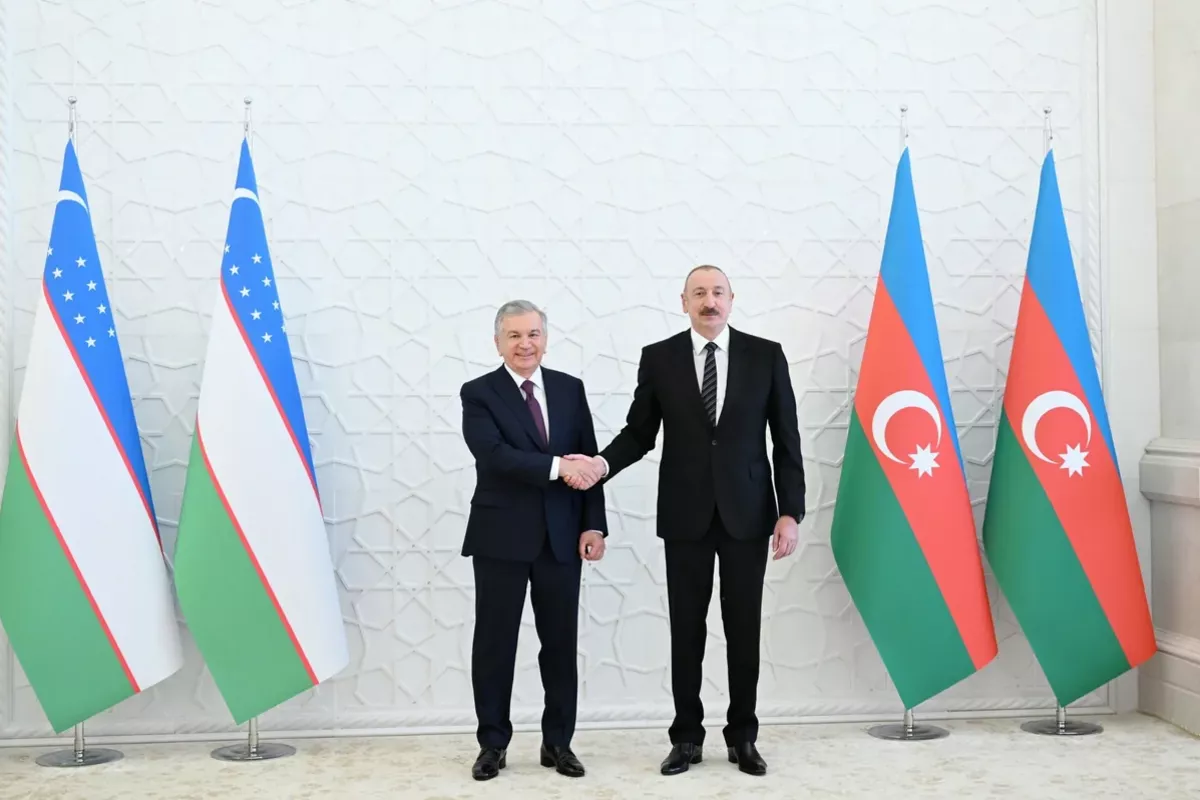
By 2026, the two countries had formally reached the level of allied relations. Their legal framework now includes around 220 documents. The Supreme Interstate Council is in operation, a joint investment company has been created, bilateral trade reached $795 million in 2025, and transit shipments between the two countries amounted to 1.4 million tons.
To understand how the relationship reached this point, it is useful to look at its development in stages.
The Heydar Aliyev-Islam Karimov period
Diplomatic relations between Azerbaijan and Uzbekistan were established in October 1995. The following years were primarily devoted to building the political and legal basis of cooperation.
The first major contacts at the presidential level took place under Heydar Aliyev and Islam Karimov.
Karimov paid an official visit to Azerbaijan in May 1996. During that visit, the sides signed 19 documents, including the Treaty on Friendship and Cooperation.
Heydar Aliyev visited Uzbekistan several times during the same period. His official visit on June 18-19, 1997 became one of the key events in the early history of bilateral relations. A further 19 documents were signed during that visit.
In other words, the two official visits in 1996 and 1997 alone produced nearly 40 bilateral agreements.
At that stage, however, the emphasis was mainly political. The two governments were creating the framework for future cooperation rather than working with the level of economic interaction seen today.
Transport was already part of the agenda. In the second half of the 1990s, Baku and Tashkent discussed routes linking Central Asia with the South Caucasus and Europe through the Caspian Sea, Azerbaijan and Georgia.
This is worth noting because transport has since become one of the main components of bilateral cooperation. What was largely a strategic concept in the 1990s has gradually developed into an operational network of cargo routes, transit flows and regular air connections.
Continuity under Ilham Aliyev and Islam Karimov
After Ilham Aliyev became president in 2003, Azerbaijan maintained the same general line toward Uzbekistan.
Political contacts continued and several official visits took place. Ilham Aliyev visited Uzbekistan in 2010, while Islam Karimov paid an official visit to Azerbaijan in 2012.
The sides continued to sign cooperation programs and sectoral agreements, but economic relations remained modest compared with the political level.
The trade figures illustrate this clearly.
Bilateral trade stood at about $21.5 million in 2013. It increased to $61.5 million in 2014, then dropped to $17.4 million in 2015 and $15.3 million in 2016.
These figures show that the economic component of the relationship was still limited and unstable in the final years of Karimov's presidency.
At the same time, the political framework established in the 1990s remained intact. By the end of the Karimov period, the bilateral legal base included more than 100 documents.
The main feature of this period was therefore continuity rather than rapid expansion. Political dialogue remained stable, but trade, investment and industrial cooperation had not yet reached a comparable level.
What changed under Shavkat Mirziyoyev
The pace of relations increased noticeably after Shavkat Mirziyoyev came to power in Uzbekistan in 2016.
The most visible change has been the frequency of high-level contacts.
Over the past five years, Ilham Aliyev has made two state visits and four working visits to Uzbekistan. Shavkat Mirziyoyev, during the same period, has made two state visits and seven working visits to Azerbaijan.
The legal status of the relationship also changed.
The two sides signed a Declaration on Deepening Strategic Partnership and Expanding Comprehensive Cooperation, an agreement establishing the Supreme Interstate Council, and a Treaty on Allied Relations.
The Supreme Interstate Council, established in 2023, has become one of the main mechanisms for coordinating bilateral relations. Its first meeting was held in Tashkent in 2024, the second in Baku in 2025, and the third is scheduled to take place during Ilham Aliyev's state visit to Uzbekistan on August 23-24, 2026.
This is an important difference from the earlier period.
In the 1990s and 2000s, relations depended heavily on presidential diplomacy and bilateral agreements. Today, the relationship is supported by permanent institutions, commissions, investment mechanisms and regional cooperation formats.
Trade growth
The change is particularly visible in trade.
In 2016, bilateral trade was only $15.3 million. By 2025, it had reached $795 million. That is more than 50 times the nominal figure recorded nine years earlier.
The 2025 result was itself more than three times higher than in 2024. In January-May 2026, trade reached $144 million, an increase of 33% compared with the same period of the previous year.
Long-term comparisons should be treated carefully because statistical methodology may differ across reporting periods, but the overall change in scale is clear.
The structure of economic ties has also become broader.
More than 130 Uzbek companies currently operate in Azerbaijan. Some are involved in projects in the territories restored to Azerbaijani control.
Industrial cooperation has also developed. Azermash works with Uzbek companies on the production of Chevrolet and Isuzu vehicles. More than 10,000 Chevrolet vehicles and over 300 Isuzu vehicles have been produced under this cooperation.
The Azerbaijan-Uzbekistan Investment Company, established in 2023, provides another institutional mechanism for financing projects in both countries. The Intergovernmental Commission has also become more active; its 15th meeting was held in Tashkent in July 2026.
Transport and connectivity
Transport is now one of the most practical areas of cooperation.
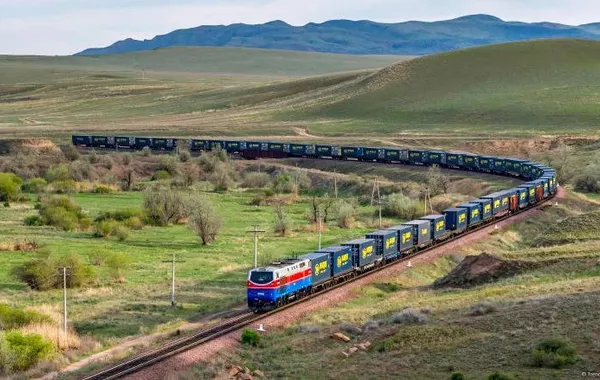
In 2025, transit shipments between Azerbaijan and Uzbekistan reached 1.4 million tons.
Air links have also expanded.
AZAL operates seven weekly flights between Baku and Tashkent and two between Baku and Samarkand. Uzbekistan Airways operates four weekly flights on the Tashkent-Baku route, while Centrum operates another three.
The significance of this goes beyond passenger traffic.
For Uzbekistan, Azerbaijan provides access to transport routes running westward across the Caspian Sea. For Azerbaijan, stronger links with Uzbekistan increase the volume and relevance of the Trans-Caspian connection.
The transport agenda therefore links today's cooperation with discussions that began under Heydar Aliyev and Islam Karimov in the 1990s.
Azerbaijan's growing role in Central Asia
Another difference between the current period and the earlier stages is Azerbaijan's participation in regional Central Asian formats.
Ilham Aliyev attended the fifth and sixth Consultative Meetings of the Heads of State of Central Asia in 2023 and 2024 as an honorary guest.
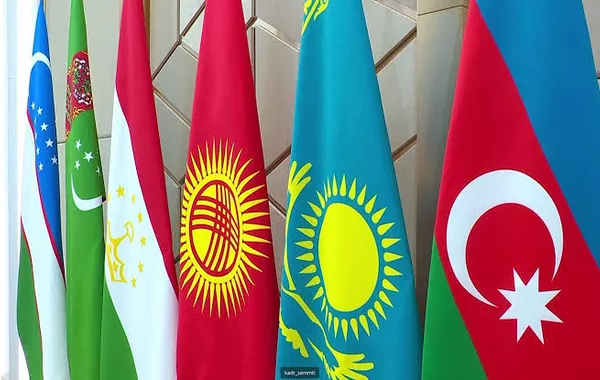
In November 2025, at the seventh meeting in Tashkent, a decision was adopted on Azerbaijan's full participation in the format. The source material describes this as the effective transformation of the C5 format into C6.
This gives Azerbaijan-Uzbekistan relations a broader regional dimension.
In the 1990s and 2000s, the relationship was largely bilateral and developed through existing post-Soviet and Turkic cooperation mechanisms. Today, it is increasingly connected with Azerbaijan's wider engagement with Central Asia.
The two countries also coordinate their positions within the UN, the Organization of Islamic Cooperation, the Organization of Turkic States, CICA, the Non-Aligned Movement and other multilateral platforms.
Three periods, three different models
The development of Azerbaijan-Uzbekistan relations can therefore be divided into three broad stages.
The first was the period of Heydar Aliyev and Islam Karimov in the 1990s and early 2000s. The main task at that time was to establish diplomatic relations, open embassies and create the political and legal basis for cooperation.
The second stage covered the period of Ilham Aliyev and Islam Karimov. Political contacts continued and the legal framework expanded, but the economic component remained relatively modest. Between 2013 and 2016, annual trade fluctuated between approximately $15 million and $61.5 million.
The third stage began after Shavkat Mirziyoyev came to power. High-level contacts became much more frequent, bilateral institutions multiplied, trade increased sharply, and cooperation expanded into investment, industry, transport and regional diplomacy.
The difference is measurable.
The legal base has grown from just over 100 documents by the end of the Karimov period to around 220 today. Trade has increased from $15.3 million in 2016 to $795 million in 2025. More than 130 Uzbek companies are now operating in Azerbaijan. Transit shipments reached 1.4 million tons in 2025. A joint investment company and the Supreme Interstate Council have been established.
The political foundation of Azerbaijan-Uzbekistan relations was laid under Heydar Aliyev and Islam Karimov. That foundation remained in place during the following years.
What has changed since 2016 is primarily the scale and structure of cooperation. Political relations have been supplemented by much larger trade flows, direct investment, industrial projects, transport links and permanent bilateral institutions.
That is the main distinction between the Azerbaijan-Uzbekistan relationship of the 1990s and 2000s and the model that has emerged in the 2020s.