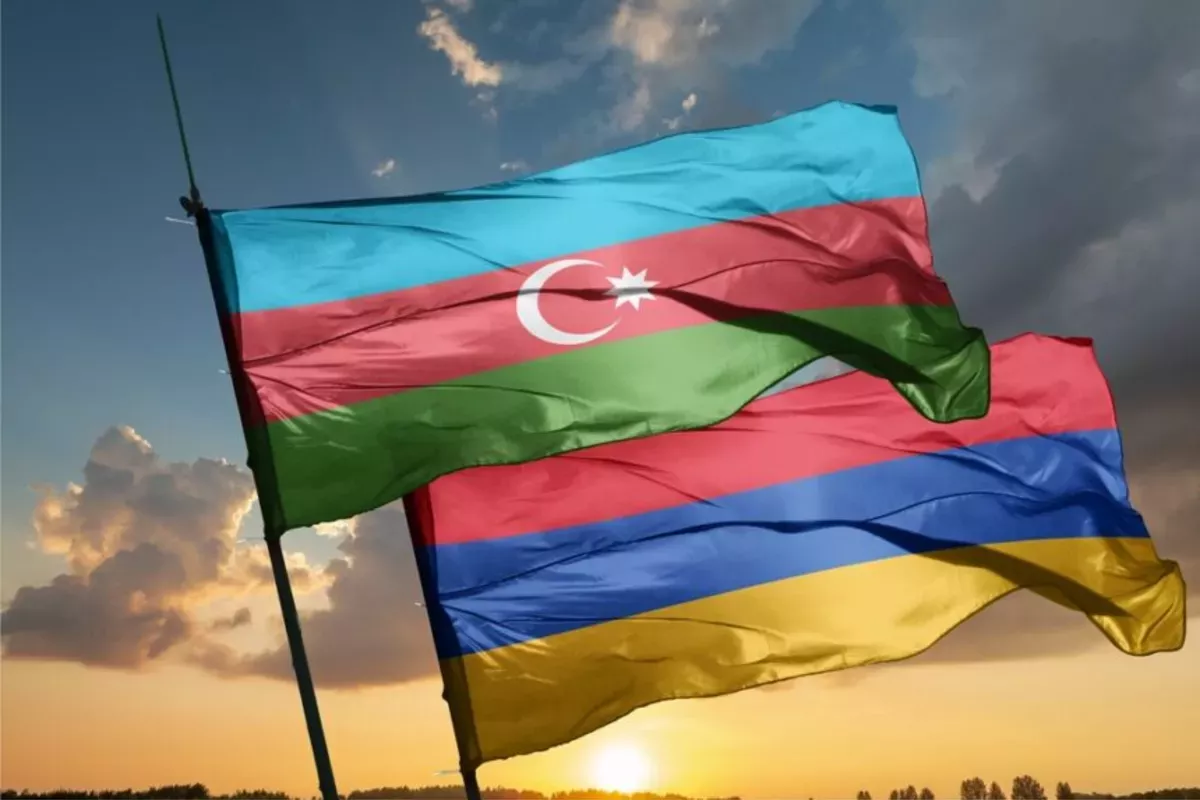
In recent years, Azerbaijan and Armenia have made notable progress towards normalising their relations. Advances in border delimitation, discussions on reopening regional transport links, negotiations on a peace agreement, and the emergence of new geopolitical realities have created cautious optimism about the prospect of lasting stability in the South Caucasus.
Yet beneath these diplomatic efforts lies a far more fundamental challenge - one that cannot be resolved through legal documents or political agreements alone. Beyond borders, transport corridors and diplomatic negotiations, one of the greatest obstacles to sustainable peace remains the deeply rooted hostility towards Turks and Azerbaijanis that has been cultivated within Armenian society over decades.
History demonstrates that peace agreements alone do not guarantee reconciliation. Modern political science emphasises that durable peace depends not only on the willingness of governments but also on the psychological and ideological readiness of societies. If one society continues to perceive the other as a permanent enemy, political agreements risk remaining little more than documents on paper.
Recent public statements by residents of Gyumri illustrate this problem. During a street interview, one respondent declared: "Nikol constantly frightens us with war. But the war has already arrived. Those who refuse to fight and defend themselves will simply disappear, just as the Armenian people were destroyed a hundred years ago." Another stated: "I have never trusted a Turk and never will. What peace are we even talking about?"
These remarks should not be dismissed as isolated emotional reactions. Rather, they reflect the enduring impact of a political and ideological discourse that has shaped public attitudes for decades.
Since gaining independence, Armenia's nation-building process has, to a significant extent, been intertwined with narratives of confrontation involving both Azerbaijan and Türkiye. Educational curricula, school textbooks, political rhetoric, sections of the media and various public institutions have long contributed to preserving an image of the "other" as a permanent adversary. As a result, generations have grown up viewing the region not primarily as a space for cooperation, but as one defined by perpetual conflict.
Political science describes this phenomenon as the institutionalisation of the enemy image. Under such circumstances, hostility ceases to be merely an individual prejudice and instead becomes an ideological construct reproduced through state institutions, education and public discourse. Consequently, statements such as "Turks can never be trusted" should not be viewed solely as personal opinions, but as the social outcome of years of political messaging.
There is often an assumption that signing a peace treaty will automatically resolve the underlying conflict. International experience suggests otherwise. From the Balkans and Northern Ireland to Rwanda and South Africa, post-conflict reconciliation has demonstrated that political agreements represent only the beginning of a much longer process. If hate speech and entrenched enemy narratives continue to persist within society, any future political or security crisis could quickly revive old hostilities.
This is precisely why Armenia faces a challenge that extends well beyond diplomacy. Alongside negotiations with Azerbaijan, it must also undertake a process of domestic social transformation. If official peace initiatives are not accompanied by corresponding changes in public attitudes, a dangerous gap emerges between state policy and societal perceptions, ultimately undermining the sustainability of peace.
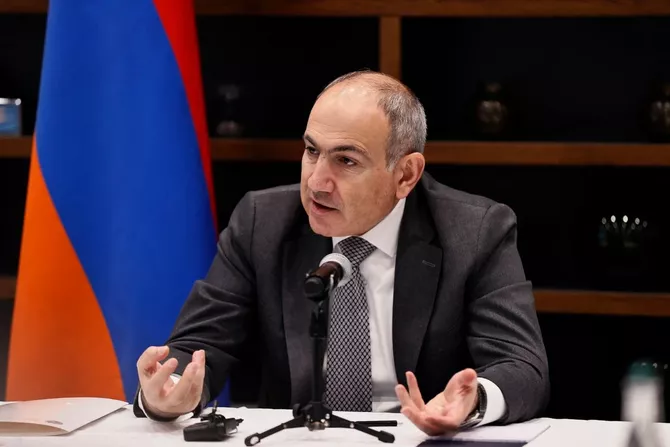
Photo credit: oc-media.org
Prime Minister Nikol Pashinyan has repeatedly expressed support for regional normalisation, reopening transport links and pursuing a peace agenda. Yet public attitudes suggest that these political messages have not been fully internalised by parts of Armenian society. While the government speaks of regional integration and economic cooperation, segments of the public continue to view relations through the lens of conflict and historical hostility. Such contradictions pose a significant long-term risk to any future peace settlement.
If peace is genuinely Armenia's strategic objective, diplomatic engagement alone will not be sufficient. Institutional reforms aimed at reducing hostility within society are equally necessary. Education, the media and public awareness initiatives will inevitably play a central role in this transformation.
Educational institutions are among the most influential actors in shaping collective memory and national identity. Promoting balanced historical education, reducing ethnic stereotypes, and strengthening instruction in multiculturalism, human rights and peaceful coexistence would help foster a healthier public discourse over time. Likewise, the media bears responsibility for moving away from narratives that reinforce demonisation and hostility. In societies emerging from conflict, limiting hate speech is widely recognised as an essential component of reconciliation, and such efforts require consistent public policy rather than isolated initiatives.
In this regard, Azerbaijan presents a different model. For many years, multiculturalism has been promoted as an integral component of state policy. Protecting the rights of diverse ethnic and religious communities, alongside initiatives promoting cultural diversity and interfaith dialogue, has helped foster an environment of coexistence. This experience illustrates that national security is reinforced not only by military capability but also by mutual respect and social cohesion.
The South Caucasus is entering a new geopolitical era. The growing importance of the Middle Corridor, expanding transport connectivity, regional energy cooperation and economic integration present unprecedented opportunities for all countries in the region. However, realising these opportunities requires not only political will but also a transformation in public attitudes.
As long as hostility towards Turks and Azerbaijanis continues to function as a political instrument or an entrenched social narrative within Armenia, regional integration, connectivity projects and the development of a durable regional security architecture will remain vulnerable.
Lasting peace cannot be achieved solely by drawing borders or signing treaties. It also requires societies to stop seeing one another as permanent enemies and begin recognising each other as neighbours. For Armenia, this means gradually moving beyond decades-old narratives of hostility and fostering a new political culture through education, the media and public institutions.
Otherwise, even the most carefully negotiated peace agreement will continue to confront the unresolved legacy of societal mistrust, leaving the vision of a stable and prosperous South Caucasus incomplete.