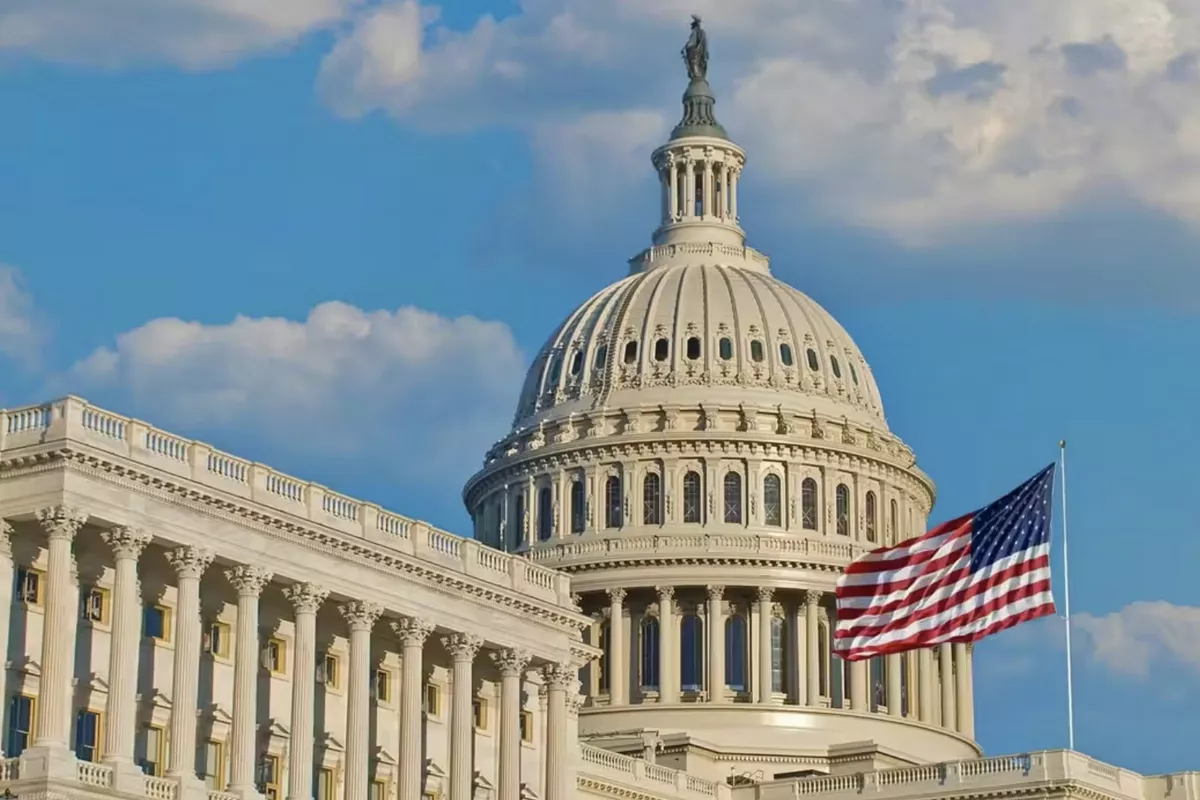
The U.S. State Department’s latest decision to extend the waiver of Section 907 of the Freedom Support Act may appear, at first glance, to be another routine procedural step in Washington’s relations with Azerbaijan. In reality, it raises a much larger question about the coherence of U.S. policy in the South Caucasus.
On August 15, the State Department formally notified Congress that the suspension of Section 907 restrictions on Azerbaijan would be extended. The document, dated August 10, was entered into the Congressional Record and submitted to the House Foreign Affairs Committee. A corresponding notification had already been sent to the Senate Foreign Relations Committee on July 28.
The procedure itself is familiar. Washington has been going through variations of it for more than two decades. But that is precisely the problem.
If successive U.S. administrations repeatedly conclude that enforcing Section 907 would run counter to American interests, why does the provision remain on the books at all?
Section 907 was adopted in 1992, during the First Karabakh War and amid intensive lobbying by Armenian-American organizations. It restricted direct U.S. government assistance to Azerbaijan and created an exceptional legal regime applying specifically to Baku.
Whatever political calculations shaped the amendment more than three decades ago, the regional environment of 2026 bears little resemblance to that of 1992. Yet the legislation remains.
The first major acknowledgment of this contradiction came after 2001, when Congress authorized the U.S. president to waive Section 907 under certain conditions. Since then, administrations of different political colors have repeatedly used that authority.
That record is more revealing than the wording of the original amendment.
For more than two decades, the executive branch has effectively said the same thing: the United States needs sufficient freedom to cooperate with Azerbaijan, and the rigid application of Section 907 can obstruct American national interests.
The exception has effectively become the rule.
Yet Washington continues to preserve the rule from which it repeatedly seeks an exception.
That is the central contradiction surrounding Section 907 today.
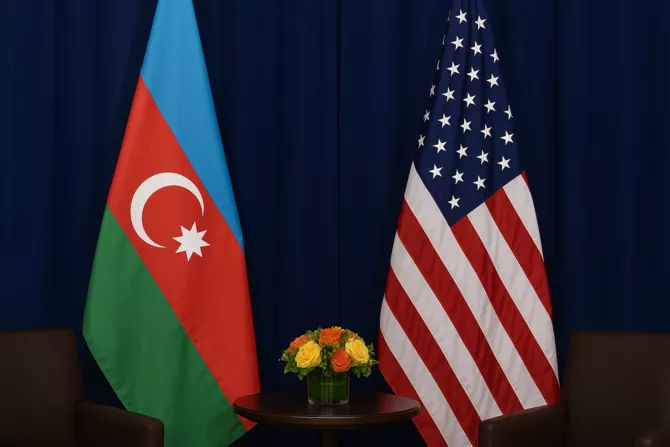
A waiver, of course, is not repeal. Section 907 remains legally intact, and a future administration or Congress could once again attempt to use it as leverage against Baku. Azerbaijan therefore remains subject to a political mechanism whose application depends partly on Washington’s internal political environment rather than solely on the strategic state of U.S.-Azerbaijan relations.
Credit: Reddit
This makes little sense for a country that Washington itself increasingly treats as an important regional partner.
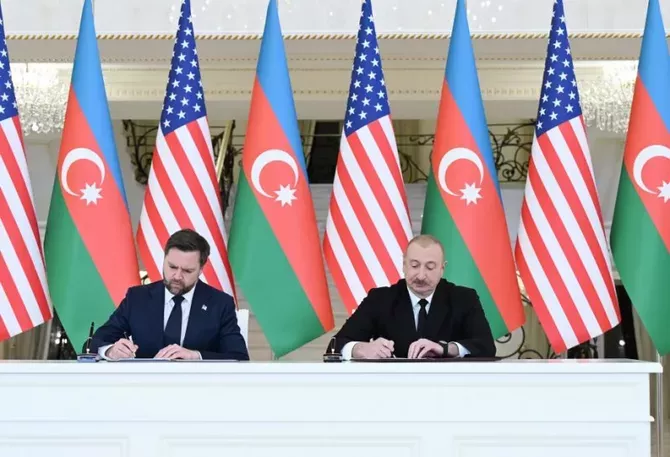
The issue has gained additional significance under President Donald Trump. In March 2026, Trump signed a waiver concerning Section 907 during a White House ceremony attended by Azerbaijani President Ilham Aliyev. The political symbolism was difficult to miss.
This was no longer simply a bureaucratic certification buried inside Washington’s foreign policy machinery. It reflected a broader recognition that relations with Azerbaijan matter to the United States in areas directly connected to American strategic interests.
And those interests are substantial.
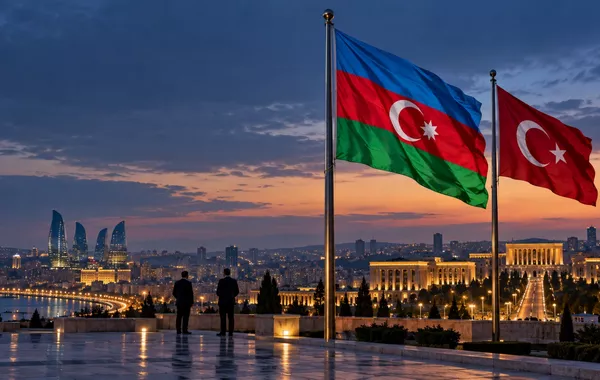
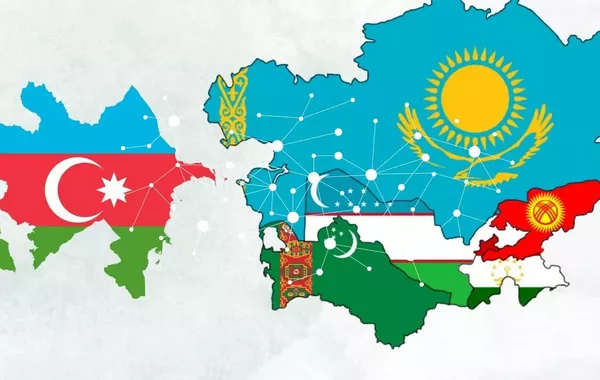
Azerbaijan occupies one of the most strategically important geographical positions in the wider Eurasian space. It connects the Caspian region and Central Asia with the South Caucasus and Türkiye. It sits at the center of increasingly important east-west transport routes. It is an energy producer and transit country. And it plays a growing role in discussions over the future connectivity architecture linking Europe with Central Asia.
That alone should encourage Washington to reassess a legislative restriction inherited from a very different era.
The development of the Middle Corridor makes the contradiction even clearer.
The United States and its allies increasingly have an interest in diversified trade and transport networks that are not dependent on routes passing through Russia or Iran. Any serious east-west corridor across the Caspian necessarily gives Azerbaijan a central role.
Baku is therefore not a peripheral actor in this emerging geography. It is one of its indispensable nodes.
A policy that seeks stronger trans-Caspian connectivity while simultaneously preserving an outdated mechanism capable of restricting cooperation with Azerbaijan works against itself.
The same applies to energy.
For years, Azerbaijan has contributed to Europe’s efforts to diversify oil and gas supplies. This role became even more important as European governments sought to reduce strategic vulnerability created by excessive dependence on single suppliers.
From Washington’s perspective, a more diversified European energy architecture has obvious geopolitical value. Azerbaijan contributes directly to that objective.
Why, then, should U.S. law continue to contain a country-specific restriction that potentially reduces Washington’s flexibility toward a state whose importance to European energy security has increased?
The usual answer is domestic politics.
Armenian-American organizations, particularly the Armenian National Committee of America, have strongly opposed waivers of Section 907 and continue to view the provision as an important instrument for influencing U.S. policy toward Azerbaijan.
That lobbying effort has increasingly moved back into Congress.
Proposals such as the Armenia Security Partnership Act seek to place additional restrictions on the president’s ability to waive Section 907 unless Azerbaijan meets specified conditions. If adopted, such an approach would not merely express disagreement with one administration’s policy. It would further institutionalize congressional constraints on Washington’s ability to adjust policy according to changing strategic circumstances.
And that brings the debate to its most important point.
This should not be viewed primarily as a question of whether Washington should be “pro-Azerbaijan” or “pro-Armenia.”
That framing is outdated.
The real question is whether U.S. foreign policy should be guided by contemporary assessments of American national interests or constrained indefinitely by legislation designed for the geopolitical circumstances of 1992.
The United States does not need to weaken its relationship with Armenia in order to build a stronger relationship with Azerbaijan. Nor should support for Armenia require maintaining discriminatory legal mechanisms against Baku.
A serious regional strategy should give Washington the flexibility to work with both countries.
That is especially important because the South Caucasus itself has changed fundamentally.
Azerbaijan has restored control over its internationally recognized territories. The military and political configuration around Karabakh that existed when Section 907 was adopted no longer exists in the same form. At the same time, the region is entering a new phase focused increasingly on peace, normalization, transport links and economic connectivity.
Old legislative instruments cannot substitute for a policy designed for this new reality.
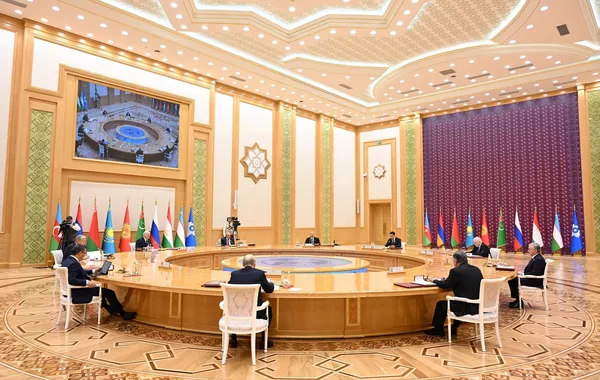
If Washington wants to encourage Armenia-Azerbaijan normalization, support regional communications and strengthen east-west connectivity, it should avoid preserving legal mechanisms that institutionalize asymmetry between the two states.
Repealing Section 907 would therefore not constitute an American concession to Azerbaijan, nor would it amount to abandoning Armenia.
Credit: AZERTAC
It would be an acknowledgment that U.S. legislation should reflect U.S. strategy.
The August 2026 notification is important precisely because it exposes how large the gap between the two has become.
On one hand, Washington continues to identify Azerbaijan as relevant to counterterrorism, security cooperation, European energy resilience, transport connectivity and broader stability in the South Caucasus.
On the other, it preserves a legislative provision whose original purpose was to restrict cooperation with the same country.
Year after year, the executive branch resolves that contradiction through another waiver.
But temporary waivers are not a strategy.
They are a mechanism for postponing a political decision.
After more than two decades of suspensions, Washington should ask whether maintaining Section 907 serves any meaningful strategic purpose beyond providing a recurring instrument for domestic political pressure.
If the United States genuinely believes that cooperation with Azerbaijan serves American national interests, then the logical next step is no longer another annual waiver.
It is repeal.
Section 907 belongs to the political geography of the early 1990s. The South Caucasus has changed. Azerbaijan’s strategic role has changed. American interests have changed.
U.S. law should change with them.
After more than 20 years in which Washington has repeatedly found reasons not to enforce Section 907, the simplest question is also the hardest to avoid:
If the United States itself has concluded, year after year, that applying Section 907 is contrary to its interests, why does it continue to keep it alive?