In recent months, the Middle East has undergone profound geopolitical change across a vast area. The pro-Iranian proxy forces that for many years held entire countries in fear are gradually fading into history.
The framework agreement between the Republic of Lebanon and the State of Israel, brokered by the United States and concluded on 26 June 2026 despite Hezbollah's opposition, has become a symbol of the Islamic Republic's waning influence in the region. One of the agreement's key provisions was Beirut's acceptance of the legitimacy of the Israeli military's presence in parts of southern Lebanon. In other words, the Israel Defense Forces (IDF) have become Lebanon's de facto partner in confronting Hezbollah and, by extension, Iran.
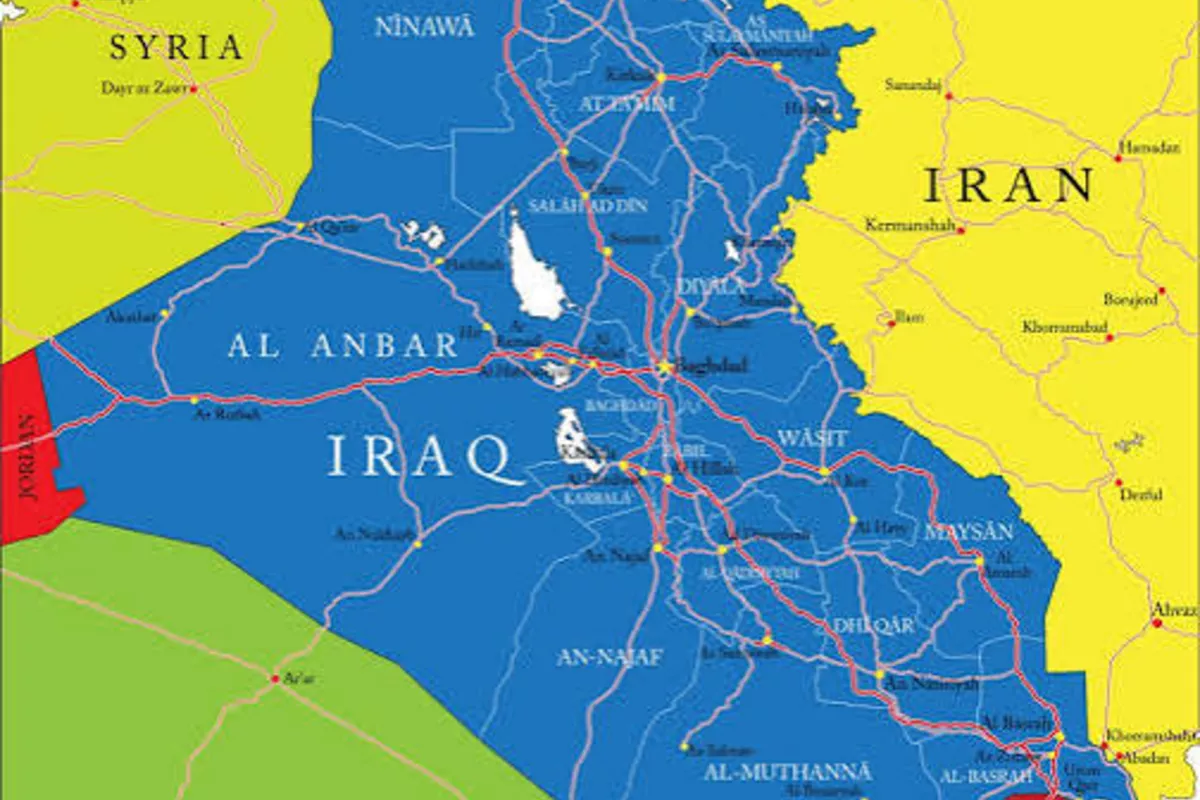
It should be noted that Lebanon represents the second link in the so-called Shiite Crescent after Syria, which Tehran effectively lost at the end of 2024. Attention is now increasingly turning to Iraq, where developments are becoming ever more troubling for Tehran as Baghdad also seeks to reduce the Islamic Republic's influence.
It is worth recalling that Iraq's Shiite majority gained political power after the fall of Saddam Hussein's regime, under which authority had been concentrated in the hands of the Sunni minority, which accounted for roughly 20-30 per cent of the population. Sunnis occupied virtually all senior government posts, while the Shiite majority was kept under tight control because Saddam feared it would align itself with Iran.
Following Saddam Hussein's overthrow, the Shiite majority came to power through democratic elections. Iran sought to use this new political reality to expand its influence in Iraq. However, Tehran overlooked one crucial factor: religious affiliation does not necessarily override ethnic and national identity, which is deeply rooted in history and culture. An Arab Shiite does not automatically regard himself as a brother to an Iranian Shiite.
Led by Muqtada al-Sadr, many Shiites in Baghdad advocate a unified and strongly centralised Iraqi state while opposing all forms of regional autonomy. This position makes them, if not outright opponents of Iran, then certainly not its allies. Tehran has little interest in the emergence of a strong and independent Iraqi state. In this respect, the Sadrist movement has more in common with Iraq's Sunni community than with Iran's political vision.
The country's second major Shiite faction is based in Basra in southern Iraq. Regional in outlook, it has long displayed separatist tendencies and aspires to establish an autonomous "Republic of Basra" with Iranian backing.
A third Shiite faction also maintains close ties with Tehran. It consists largely of Iraqi Shiites who fled Saddam Hussein's rule and spent many years in Iran. In 1982, they established the Supreme Council for the Islamic Revolution in Iraq (SCIRI), later renamed the Islamic Supreme Council of Iraq (ISCI), which began operating openly inside Iraq after 2003.
Given this balance of power, Iran has been unable to exercise decisive influence over Iraqi Shiites through religious authority alone. The highest religious authority in Twelver Shiism is based not in Iran but in Iraq and bears the title of Marja' al-Taqlid (Source of Emulation), a position often held by an Iraqi Arab cleric. A Marja' has the authority to issue fatwas that followers regard as binding.
Against this backdrop, Baghdad has witnessed a series of significant developments. They began after Iraq's new Prime Minister, Az-Zaidi, took office and declared the fight against corruption to be his government's highest priority.
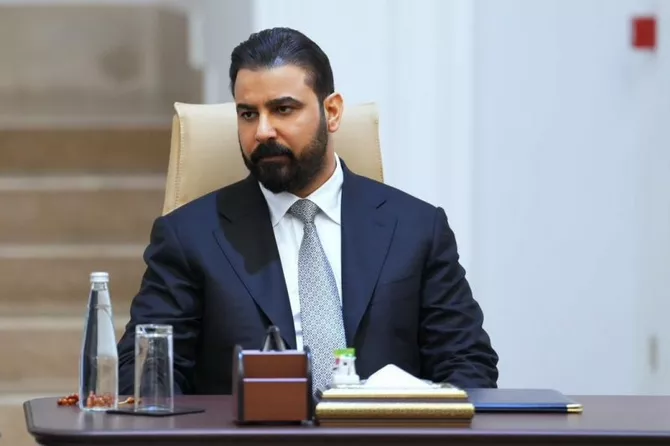
Photo: Getty Images
Corruption is hardly a new phenomenon in the Middle East. It has existed throughout the region's history. In Iraq, however, it became embedded in the country's political system through the muhasasa quota system - an informal power-sharing arrangement that allocated key government positions among different ethnic and sectarian groups.
Although originally intended to ensure political representation for all communities, the system instead fostered extensive patronage networks, allowing political parties to tighten their control over state institutions and public resources.
By 2019, corruption had reached such unprecedented levels that it triggered mass protests and violent clashes in Baghdad.
In 2022, Iraq witnessed what became known as the "Heist of the Century", when approximately 2.5 trillion Iraqi dinars disappeared from tax authority accounts. None of those responsible was ever brought to justice.
Prime Minister Az-Zaidi has pursued an aggressive anti-corruption campaign.
Police raids across Baghdad's affluent neighbourhoods resulted in the arrest of dozens of senior officials. Authorities seized approximately US$86 million in cash, 70 properties, 21 vehicles and three kilograms of gold.
According to AFP, Iraqi security forces deployed throughout Baghdad's heavily fortified Green Zone, home to the US Embassy and numerous foreign diplomatic missions, as part of a sweeping operation targeting several prominent political figures.
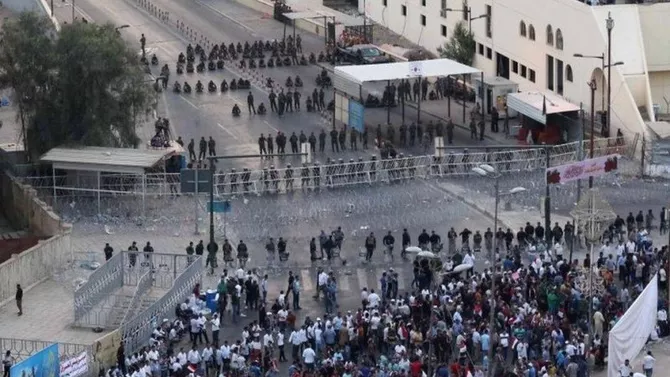
Photo: Getty Images
The significance of these arrests lies in the fact that the anti-corruption campaign strikes directly at political factions that control government institutions, economic sectors and regional power bases.
Many of these networks are protected by armed groups affiliated with the Popular Mobilization Forces (PMF), an umbrella organisation of mostly Shiite militias that emerged during the war against Islamic State between 2014 and 2017.
In Baghdad's Dora district, the Iraqi Counter Terrorism Service (CTS) forces carried out an operation against a farm reportedly controlled by an armed faction, triggering a fierce gun battle. Preliminary reports suggest the site was defended by members of the PMF.
Armed resistance to anti-corruption operations was also reported in Maysan and Saladin governorates.
Many Iraqi state institutions, together with numerous PMF formations, remain under the influence of Shiite parties with close ties to Iran. These groups have borne the brunt of the government's anti-corruption campaign.
In addition, Prime Minister Az-Zaidi has ordered pro-Iranian militias to disarm completely by 30 September.
As noted earlier, Iraq's Shiite community is politically fragmented. It is therefore unsurprising that the government is increasingly relying on the support of Muqtada al-Sadr and his Mahdi Army.
Although al-Sadr is by no means pro-American, he is a staunch advocate of Iraqi nationalism and a vocal opponent of Iranian influence in Iraq. For him, national identity takes precedence over sectarian affiliation.
It is for this reason that Muqtada al-Sadr has called on Iraqis to "support the government's efforts to prosecute corrupt officials".
While seeking to curb pro-Iranian influence at home, Az-Zaidi has simultaneously overseen a marked deterioration in relations with Saudi Arabia, the region's other major power.
During the US-Israeli-Iranian war, pro-Iranian militias in Iraq launched drone attacks against Saudi Arabia. Baghdad requested Saudi assistance in confronting these groups.
No such assistance was forthcoming, reportedly prompting frustration within Az-Zaidi's government.
Saudi Arabia also declined to facilitate Iraqi oil exports through alternative routes bypassing the Strait of Hormuz.
Baghdad has now announced its intention to withdraw from OPEC.
The United Arab Emirates has previously considered leaving the organisation, but has remained a member. If Iraq were to withdraw, it would represent a major blow to the cartel's cohesion.
Should these trends continue, Iraq could emerge as an independent regional power with vast oil reserves and a population of around 40 million, substantially increasing its political and economic influence in the Middle East.
By freeing itself from Tehran's influence, Iraq could also become the world's second major Shiite state to offer an ideological alternative to Iran, which continues to portray itself as the centre of global Shiism.
From this perspective, the so-called Shiite Crescent, painstakingly built by Iran over several decades, appears to have been fundamentally weakened by the successive setbacks inflicted by the United States and Israel.
The closure of the Strait of Hormuz by Iran, followed by the US Navy's blockade of Iranian ports, has also accelerated changes in global hydrocarbon supply chains.
Dependence on Iranian, and more broadly Middle Eastern, oil has begun to diminish as importers diversify supplies and invest in alternative sources of energy.