Kazakhstan has entered a new political era.
The parliamentary election held on August 23 was the first nationwide vote under the country’s new Constitution and produced a result that was widely expected but nevertheless politically significant: the newly created pro-presidential Adilet party won 71.17% of the vote, according to preliminary results from Kazakhstan’s Central Election Commission. Five other parties also secured representation in the new legislature, but all are broadly supportive of President Kassym-Jomart Tokayev’s political course. (Türkiye Today)
The result raises a fundamental question: is Kazakhstan becoming more politically competitive - or is Tokayev building a more centralized system around the presidency?
The answer appears to be closer to the second scenario.
The election itself is important, but its real significance lies in the constitutional transformation that preceded it.
A Parliament Built Under a New Political System
Kazakhstan’s political system changed fundamentally in 2026.
A constitutional referendum held in March approved a new Constitution with 87.15% of votes in favor. The new constitutional framework, which came into force on July 1, abolished the previous bicameral Parliament and replaced it with a single-chamber legislature known as the Kurultai. (Reuters)
The new Kurultai has 145 seats and represents a major institutional restructuring.
The government has presented the reform as an attempt to modernize Kazakhstan’s political system, improve the efficiency of decision-making and strengthen representative institutions.
But the consequences are more complicated.
The new system also gives the presidency significant influence over the country's political architecture. The Kurultai is involved in approving presidential nominees for important positions, including the vice president, prime minister and members of several key state institutions. (The Astana Times)
This means that Kazakhstan is not simply moving from a presidential model toward parliamentary government.
Instead, it is constructing a new presidential system with a redesigned parliament.
And the election results suggest that Tokayev enters this new system from a position of considerable strength.
Adilet’s 71% Is More Than an Election Victory
The most important figure from the election is the 71.17% won by Adilet.
The party was established only recently and is closely associated with Tokayev’s political team. It subsequently absorbed the former ruling Amanat party. (Reuters)
The result gives Adilet a dominant position in the new Kurultai.
Five other parties crossed the 5% threshold: Auyl, Respublika, Ak Zhol and the Nationwide Social Democratic Party, alongside Adilet. But the political distinction between the ruling party and its parliamentary competitors is less pronounced than the terminology of “government” and “opposition” might suggest.
Reuters notes that the parties entering parliament are generally supportive of Tokayev's administration. (Reuters)
This is important because a parliament can be formally pluralistic while remaining politically predictable.
Kazakhstan now has several parties in its legislature, but the central question is whether these parties will act as genuine institutional checks on the presidency.
The election result provides little evidence that they will do so in the immediate future.
photo: getty images
The End of the Nazarbayev Era Is Becoming Institutional
To understand Tokayev’s political consolidation, it is necessary to look back to the events of January 2022.
Tokayev came to power in 2019 as the successor to Nursultan Nazarbayev, who had ruled Kazakhstan for almost three decades.
Initially, Tokayev operated within a political system heavily shaped by Nazarbayev and his allies.
The January 2022 unrest changed that relationship.
Tokayev subsequently moved to dismantle the political and institutional influence associated with the former president. The process was not simply a personal struggle between two political figures. It became a restructuring of Kazakhstan's political elite.
The 2026 constitutional reforms and parliamentary election should therefore be viewed as another stage in that process.
Tokayev is no longer simply trying to distance himself from Nazarbayev.
He is creating a political architecture that is increasingly associated with Tokayev himself.
This distinction is crucial.
Kazakhstan is moving from a system dominated by Nazarbayev and his network toward a system in which Tokayev's presidency is the central political institution.
The 2029 Question
Perhaps the most consequential element of the constitutional reform is the question of Tokayev's political future.
Under the previous constitutional framework, Tokayev was serving a single seven-year presidential term and was not supposed to seek another term.
The new constitutional order has effectively changed that calculation.
A recent constitutional interpretation has reset the term-counting framework, potentially allowing Tokayev to seek another seven-year term after his current mandate expires in 2029. Reuters reported before the election that the reforms could enable Tokayev to run again, although the president himself has not publicly confirmed that he intends to do so. (Reuters)
This is arguably more important than the parliamentary election itself.
The election determines the composition of the legislature.
The constitutional changes determine the potential trajectory of the presidency.
If Tokayev decides to run again in 2029, he could potentially remain in power well into the 2030s.
That would represent a significant transformation of Kazakhstan's political landscape.
Is This a Return to the Old System?
There is an obvious temptation to describe the process as a return to the authoritarian model associated with Nazarbayev.
But that comparison is too simplistic.
Tokayev has deliberately sought to distinguish his political system from Nazarbayev's.
The new leadership has promoted the concept of a “Just Kazakhstan,” emphasizing institutional reform, political modernization and a more responsive state.
At the same time, the concentration of political authority around the presidency is becoming increasingly visible.
The difference is therefore not necessarily between authoritarianism and democracy.
It is between two different models of presidential rule.
Nazarbayev's system was built around a dominant individual who accumulated influence through an extensive political, economic and elite network.
Tokayev appears to be constructing a more institutionalized presidential system in which the presidency itself - rather than a broad informal family network - becomes the central organizing mechanism.
That could make the system more stable.
But it could also make the political opposition weaker.
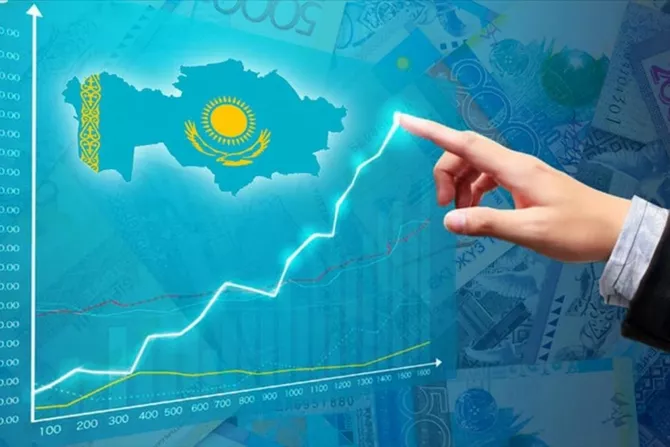
photo: getty images
Economic Pressure Could Become the Real Test
Tokayev's political position is strong, but political stability ultimately depends on more than constitutional engineering.
Kazakhstan faces significant economic pressures.
Inflation has remained high, while tax increases and rising living costs have created public dissatisfaction. AP reported that annual inflation had reached 10.2% ahead of the election. (AP News)
This matters because Kazakhstan's political system has already experienced a major shock once.
The January 2022 unrest demonstrated that social and economic grievances can rapidly become political crises.
Tokayev has therefore achieved substantial institutional consolidation, but the durability of that consolidation will depend partly on whether his government can maintain economic growth and prevent rising living costs from becoming a source of renewed public anger.
In other words, the biggest challenge to Tokayev may not come from parliament. It may come from the economy.
The Opposition Problem
Another question concerns the nature of political competition.
The existence of several parties in the Kurultai creates the appearance of political pluralism.
But genuine competition requires more than multiple names on a ballot.
It requires independent political organizations, meaningful ideological differences, access to media, the ability to criticize the government and the possibility of transferring power through elections.
Critics of Kazakhstan's political system argue that these conditions remain limited. International reporting has pointed to pressure on independent media and opposition groups. (AP News)
This creates a paradox.
Kazakhstan has undertaken one of the most significant constitutional reorganizations in its post-Soviet history, yet the political system may simultaneously be becoming more predictable from the perspective of the executive branch.
The question is whether the new Kurultai will eventually develop into an institution capable of exercising genuine political influence - or whether it will primarily provide legislative support for presidential initiatives.
That question cannot be answered by the election results alone.
It will be answered by how the new parliament behaves once it begins working.
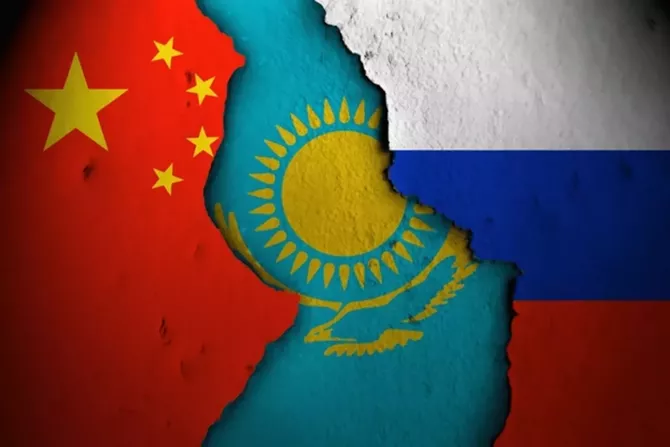
photo: getty images
Why This Matters for Russia, China and the West
Tokayev's strengthened position also has major geopolitical implications.
Kazakhstan is the largest economy in Central Asia and occupies a strategically important position between Russia, China and the Caspian region.
Astana has maintained a multi-vector foreign policy, balancing relations with Moscow and Beijing while simultaneously expanding ties with the European Union, Türkiye and the United States.
A stronger presidency could make this policy easier to implement.
Tokayev can make strategic decisions without having to navigate a highly competitive parliament.
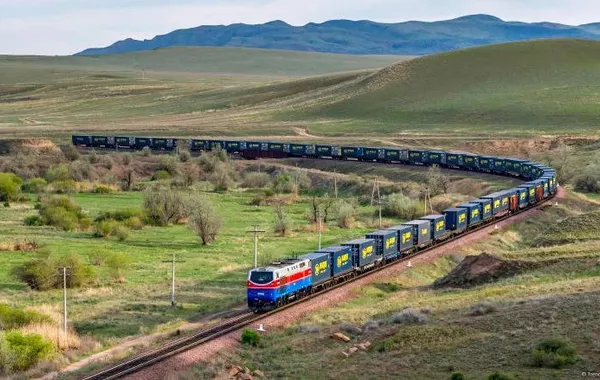
That may be particularly important as Kazakhstan seeks to expand the Middle Corridor, develop ties with China, attract Western investment and maintain its relationship with Russia.
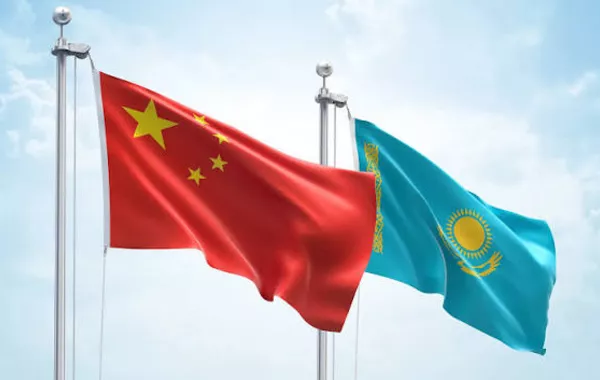
For Beijing, a politically stable Kazakhstan is important for trade and transport connectivity.
For Moscow, Kazakhstan remains a key neighbor and member of several Russia-led regional structures.
For Europe, Kazakhstan is increasingly important as an energy supplier and transit partner.
For Azerbaijan and Türkiye, Kazakhstan is a central component of the Trans-Caspian transport and energy architecture.
The more stable and centralized the decision-making process in Astana becomes, the easier it may be for the government to pursue long-term infrastructure and foreign-policy projects.
The Real Meaning of the Election
The August 23 election should therefore not be interpreted simply as a vote for a new parliament.
It was effectively the first political test of Tokayev's new constitutional order.
And the result was highly favorable to the president.
Adilet's 71% gives the pro-presidential camp a dominant position in the new Kurultai. The constitutional reforms have created a new unicameral legislature, strengthened the institutional role of the presidency and opened the possibility of Tokayev seeking another term after 2029. (Reuters)
The next phase will be more revealing than the election itself.
If the Kurultai develops into an effective institution capable of challenging government policies, Kazakhstan could eventually demonstrate that constitutional reform has produced genuine institutional modernization.
If, however, the new parliament simply endorses the presidential agenda, the 2026 reforms will look less like a redistribution of power and more like a reorganization of power around the presidency.
For now, the evidence points toward the latter.
Tokayev’s Kazakhstan
The most important political development in Kazakhstan is not that one party won 71% of the vote.
It is that the political system itself has been redesigned around a stronger presidency - and the first election under that system has produced a parliament overwhelmingly compatible with the president's agenda.
Tokayev has successfully moved Kazakhstan away from the political architecture inherited from Nazarbayev.
The next question is what comes after that.
If Tokayev seeks another presidential term in 2029, Kazakhstan could enter a new stage in which the president who initially presented himself as the leader of political renewal becomes the longest-serving post-Nazarbayev leader.
That would make the 2026 parliamentary election more than an electoral event.
It could become the moment when Tokayev's political model ceased to be a transitional arrangement and began to look like Kazakhstan's new normal. (AP News)