The events of early January marked a telling shift in the global balance of power. With the support of the United Kingdom, the United States seized a tanker in the North Atlantic that was previously known as Bella 1 and later reflagged as Russian.
Formally, the move was carried out under a federal court warrant. In substance, however, it served as a political signal directed not so much at Venezuela as at Moscow. For the first time in many years, a vessel sailing under the Russian flag was forcibly detained outside an active war zone, and Russia’s response proved predictably restrained.
Moscow accused the United States of violating the UN Convention on the Law of the Sea, labeled the move as piracy, and warned of negative consequences for bilateral relations. Yet no concrete steps followed the harsh rhetoric.
Moreover, Washington openly stated that the vessel’s Russian affiliation was fictitious and was used to conceal the transportation of sanctioned Venezuelan oil. Even setting this argument aside, the precedent itself demonstrated that the Russian flag is no longer a deterrent.
This episode vividly illustrates a fundamental transformation of recent years: Russia is no longer perceived as a center of power capable of guaranteeing security for its partners and allies. Unlike previous U.S. administrations that avoided direct confrontation with Moscow, the current approach rests on openly testing Russia’s actual capabilities. The results of these tests have been deeply unflattering for the Kremlin.

photo: ABC News
The decisive turning point was the war in Ukraine. Russia, with its significant military potential and its long-cultivated image as the “world’s second army,” failed to achieve its declared objectives. Moreover, the conflict led to a systemic weakening of its international standing. Ukraine became not only a battlefield but also a showcase revealing the structural limits of Russian power - from technological lag to problems in logistics and command.
As a result, fear of Russia as a global force has rapidly dissipated, along with other states’ readiness to automatically take Moscow’s interests into account. Today Russia is increasingly unable to dictate terms - openly, diplomatically, or through informal channels. Its sphere of influence is shrinking.
Shifts are evident even in regions traditionally close to the Kremlin. Belarus, long considered Russia’s most reliable ally, has begun cautiously building contacts with the United States and Europe. This does not signal a sharp geopolitical pivot, but the very search for alternatives points to Moscow's declining attractiveness and reliability as a pillar of support.

photo: Reuters
The loss of allies is systemic. Russia has effectively lost Armenia, where its influence sharply declined after a series of political and military failures. Relations with Azerbaijan have also moved beyond the previous model in which Moscow could act as arbiter and informal overseer. The South Caucasus is no longer a zone where Russian envoys can determine the course of events.
With the erosion of its positions in Syria, Russia has effectively lost its foothold in the Middle East. Military presence did not translate into sustainable political influence, and attempts to entrench itself in the region failed to produce strategic results. Retreat became inevitable despite years of investment and loud declarations.
Another key direction was Venezuela. The Kremlin viewed its bet on Nicolás Maduro as an element of global confrontation with the United States and a symbol of support for an alternative world order. Yet recent months have shown that Russian guarantees do not work. Unlike Bashar al-Assad, Maduro did not receive effective protection, dealing a serious blow to Moscow’s prestige as a patron.
The situation around Iran carries particular significance. For decades, Tehran relied heavily on Russian support while balancing under Western sanctions pressure. But as Moscow’s position weakened, internal fractures within the Iranian regime began to surface. The weakening of Russia as an external shield alters Iran’s internal balance of power, reducing the resilience of the clerical system.

photo: jusoor.co
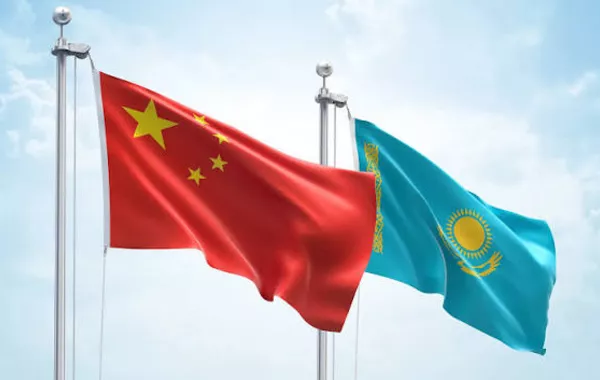
Against this backdrop, China’s behavior is especially revealing. Unlike other partners of Moscow, Beijing never placed all its bets on Russia. It plays its own game, carefully balancing interests and extracting benefits from Russia’s waning influence. This is precisely why China has not lost out; on the contrary, it is expanding its presence where Moscow once dominated.
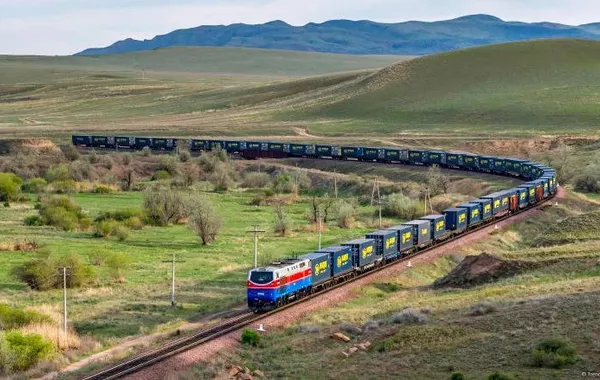
This is most evident in Central Asia. Long tied to Russia through transit corridors and a market for cheap labor, the region is changing. The emergence of the Middle Corridor, the strengthening of China’s economic footprint, and the decline of Moscow’s political weight are depriving Russia of leverage. Central Asian states are increasingly diversifying their external ties, and retaining them by old methods is no longer possible.
Attempts to compensate for losses elsewhere look unconvincing. Replacing Central Asian labor migrants with workers from India is an example of a situational and poorly calculated decision. Moscow hopes this will strengthen ties with New Delhi, yet under U.S. pressure India is unlikely to risk its own interests for Russia’s sake. Symbolic gestures and visits cannot substitute for real guarantees.

photo: TASS
Taken together, these episodes form a coherent picture. What we are witnessing is a steady contraction of Russia’s influence not only at the regional level, but increasingly on a global scale. Moscow is no longer perceived as a player capable of providing protection, projecting influence, or ensuring stability. Words and declarations have lost their weight. In today’s world, influence is validated by action economic, technological, and institutional. It is in this context that the seizure of a tanker under the Russian flag became not an isolated incident, but a clear signal the old rules no longer apply.
Meanwhile, the Kremlin continues to cling to imperial ambitions in politics, economics, and its approach to neighboring states. Yet in the 21st century, this logic is fundamentally counterproductive. Global competition today is built on trust, integration into supply chains, investment attractiveness, and the ability to negotiate. Pressure, coercion, and forceful rhetoric do not expand influence they accelerate isolation.
The growing gap between ambitions and real capabilities is becoming increasingly painful. It erodes not only Russia’s external standing, but also its internal prospects for development. The longer Moscow attempts to operate by the rules of the past, the longer the list of losses will become countries, regions, and partners that, one after another, drift away from Russia’s shrinking orbit of influence. In this sense, the question of “who is next” is no longer rhetorical. It is strategic.