Russian Deputy Foreign Minister Mikhail Galuzin's statement that Moscow's participation in the TRIPP project would only benefit the initiative was no coincidence. It came at a time when the contours of US-Armenian cooperation on the corridor were beginning to take legally binding form.
In January 2026, US Secretary of State Marco Rubio and Armenian Foreign Minister Ararat Mirzoyan officially presented the Framework Agreement on the implementation of TRIPP, setting out the commitments reached at the historic White House summit in August 2025. In doing so, the project moved beyond political declarations and became part of a new regional transport architecture in the South Caucasus.
Against this backdrop, Galuzin's remarks appear less like a genuine offer of cooperation and more like an attempt by Russia to reassert its presence in a project from which it has effectively already been excluded.
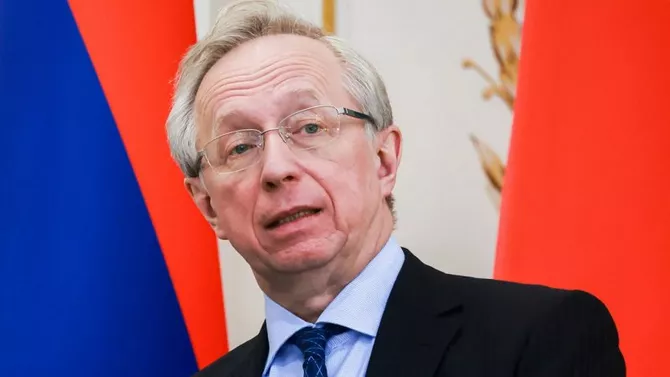
Credit: Vyacheslav Prokofyev / TASS
Russia's argument rests on three key factors. First, Armenia's railway network is operated by South Caucasus Railway, a subsidiary of Russian Railways, under a concession agreement that remains in force until 2038. Second, Armenia uses the Russian railway gauge. Third, Russian border guards continue to serve along the Armenian-Iranian border. Moreover, the proposed TRIPP route passes through an area where Russian border guards have operated jointly with their Armenian counterparts for decades.
From Moscow's perspective, these factors make Russian participation not merely a political preference but a technical necessity. At first glance, the argument appears convincing. Yet it is precisely this supposed "technical necessity" that conceals the principal political trap.
For Armenia, Russian participation in TRIPP would present a twofold dilemma. On the one hand, Galuzin effectively acknowledges that reviving the previous trilateral format involving Russia, Armenia and Azerbaijan has become extremely difficult. The reason is clear: Yerevan has already made a strategic choice in favour of the American framework for the project, including the transfer of a 49% stake in the future operating entity to the US side. In other words, Moscow understands that the window for its formal inclusion is gradually closing.
This does not mean, however, that Russia is abandoning its efforts to exert pressure. Since June 2026, Moscow has restricted imports of several Armenian products, including Jermuk mineral water, alcoholic beverages, vegetables and fruit. At the same time, Galuzin publicly questioned Yerevan's ability to find viable alternative markets in Europe. In this context, economic pressure and diplomatic signalling surrounding TRIPP form part of the same strategy: to compel Armenia to take Russia's position into account even if Moscow's formal participation in the project becomes impossible.
On the other hand, Russian involvement could indeed offer Armenia certain practical advantages. The existing railway infrastructure, the shared railway gauge and the presence of Russian Railways are factors that cannot simply be ignored. However, the price of such advantages would be high: the restoration of Russian leverage at precisely the moment when Yerevan has, for the first time in three decades, begun systematically dismantling it.
For Prime Minister Nikol Pashinyan, the White House summit in August 2025 offered an opportunity to present Western infrastructure investment to the Armenian public as a means of transforming the country into a regional transit hub while preserving full sovereignty over its own territory. Russian participation would undermine that narrative. It would allow Moscow to return to the project not merely as a technical operator but as a political arbiter.
To avoid such a scenario, Yerevan and Washington would have to assume an unprecedented degree of legal and security risk. This could require the de facto revision or even the premature termination of the concession agreement with Russian Railways, which remains valid until 2038. Such a move would almost certainly result in protracted international legal disputes. Furthermore, the launch of the route depends on the physical withdrawal of Russian border guards from key points along the Armenian-Iranian border. No mechanism for such a withdrawal has yet been established. Consequently, Moscow's "infrastructure inevitability" remains one of the project's most significant practical challenges.
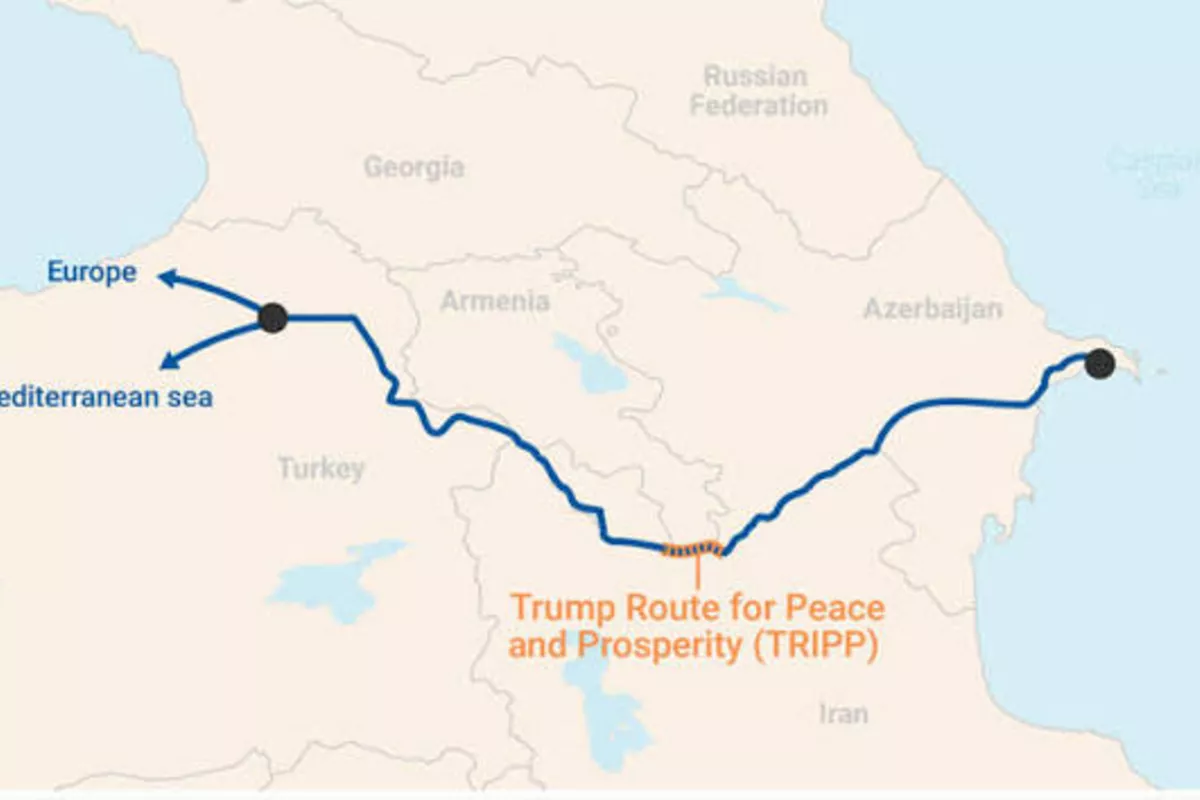
For Azerbaijan, Russian participation in TRIPP presents a different, though equally significant, challenge. Baku has long sought direct and uninterrupted land access to Nakhchivan. Formally, TRIPP is intended to provide exactly that. The project would create a shorter transport link between Türkiye in the west and the Caspian Sea in the east than the traditional route via Georgia.
However, Russia's return as an infrastructure operator would revive precisely the risks that Baku has spent years trying to eliminate. These include dependence on Moscow over transit regulations, tariffs, technical maintenance and the political predictability of the route. For Azerbaijan, which has consistently strengthened its position as an independent regional actor while diversifying its international partnerships, such a scenario would represent a strategic step backwards.
There is also a broader regional dimension. The launch of TRIPP directly affects Georgia's interests. For years, Georgia has served as an indispensable land bridge between Türkiye and Azerbaijan. A new route could result in a partial loss of transit revenues and diminish Tbilisi's regional importance. Georgian policymakers are therefore likely to view the deepening of US-Armenian cooperation on the project with increasing concern.
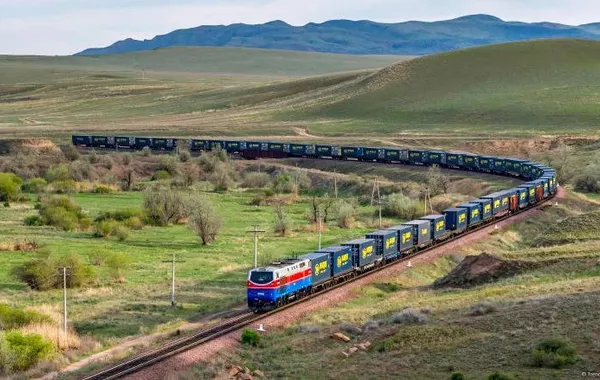
For Türkiye, Russia's involvement in TRIPP would diminish the project's principal geopolitical benefit. Ankara is one of the route's main beneficiaries, as it would gain a second overland connection to the Caspian Sea and Central Asia while bypassing Iran. TRIPP fits naturally into the concept of the Middle Corridor - a transport network linking Europe with Central Asia and China via the South Caucasus and the Caspian Sea. Following the outbreak of the war in Ukraine and the disruption of northern supply routes, the strategic importance of this corridor increased significantly.
If Russia were to secure a role in TRIPP, Türkiye would effectively be forced to share its strategic advantage with the very actor that the new transport architecture was designed to bypass. From Ankara's perspective, such an outcome would be difficult to accept.
Credit:eualive.net
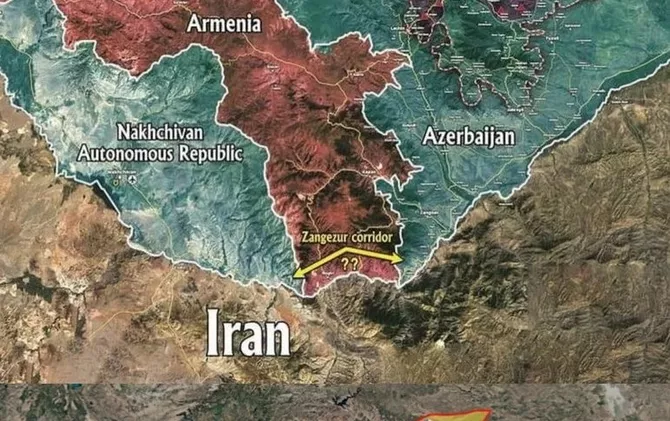
However, the desire to insulate the route from Russia faces another significant challenge: Iran's position. Because the corridor runs in close proximity to the Iranian border in Syunik and is being developed under US patronage, Tehran views it as a direct threat to its own interests. For Iran, this is not merely a matter of transit, but also of national security. Tehran has repeatedly described the inviolability of regional borders as one of its "red lines". This means that even if Russian influence is neutralised, TRIPP's security will remain highly vulnerable to potential Iranian opposition.
Washington's response to Galuzin's initiative is largely predictable. The project's architecture was designed from the outset to bypass traditional multilateral mechanisms and place effective control in US hands. Excluding Russia from a strategically important infrastructure project is therefore not a by-product of TRIPP but one of its defining institutional principles.
In this context, Galuzin's proposal is unlikely to be viewed in Washington as a constructive gesture. Rather, it will be seen as an attempt by Russia to regain a foothold in a project from which it has been systematically excluded. The United States is therefore unlikely to agree to Moscow's formal participation, whether directly or through indirect negotiating mechanisms.
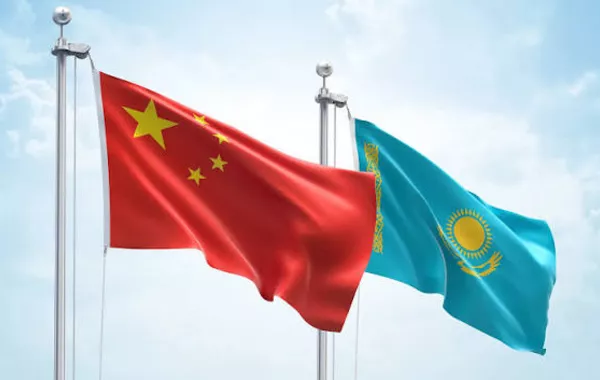
Moreover, Washington appears prepared to support this strategy financially. The United States could mobilise not only private investment but also the resources of international financial institutions, including the World Bank, to anchor Armenia more firmly within a new financial and infrastructure framework. At the same time, however, it will face another complex challenge: reconciling TRIPP with China's transit interests. If Beijing continues to expand cargo flows along the Middle Corridor, the "Trump Route" may evolve not into a purely anti-China initiative but into a more complex arrangement balancing American strategic oversight with Chinese commercial interests.
It is telling that Galuzin himself acknowledges that the trilateral dialogue between Russia, Armenia and Azerbaijan at deputy prime ministerial level was interrupted for reasons unrelated to Moscow. At the same time, he points out that the "modalities for restoring railway communication" had already been discussed within that format. This argument is significant. Russia is seeking to invoke the history of those negotiations as a source of legitimacy at a time when its real leverage has diminished considerably.
Yet references to past agreements no longer answer the central question: who will determine the political and commercial terms of the future route? That remains the key issue for all parties. The Russian railway gauge, the Russian Railways concession and the presence of Russian border guards are all significant factors. Yet they do not guarantee Moscow a place at the negotiating table if the project's political architecture is ultimately designed to exclude it.
For that reason, the prospects for Russia's formal participation in TRIPP remain extremely limited. Armenia, Azerbaijan and Türkiye each have different, yet mutually reinforcing, reasons to prevent Moscow from regaining influence over the corridor. The United States, for its part, has made Russia's exclusion one of the project's defining principles. Moscow understands this. That is why Galuzin frames his argument not in terms of demands, but of "benefit" and "pragmatism". It is the language of a country seeking to negotiate after losing its position of strength.
Even so, excluding Russia does not in itself guarantee TRIPP's success. The practical implementation of the project will require Washington and Yerevan to resolve a wide range of complex issues, including the legal status of Russian Railways' infrastructure, the withdrawal of Russian border guards, Iran's uncompromising position, Georgia's concerns, Türkiye's strategic interests and China's potential role in future cargo flows.
Ultimately, the viability of the "Trump Route" will depend not on bold declarations about excluding geopolitical rivals, but on the ability of the project's participants to manage these practical challenges at every stage. Russia may no longer be in a position to block TRIPP politically. Its infrastructure legacy in Armenia, however, could still significantly complicate the project's implementation.