The strengthening of political ties between Türkiye and Saudi Arabia is having a positive impact on both their bilateral economic cooperation and trade, as well as contributing to regional stability.
Türkiye and Saudi Arabia, which stand out as two key countries in the Middle East, continue to strengthen their historic and deep-rooted relations through an increasing number of high-level reciprocal visits in recent years, The Caspian Post reports, citing Anadolu agency.
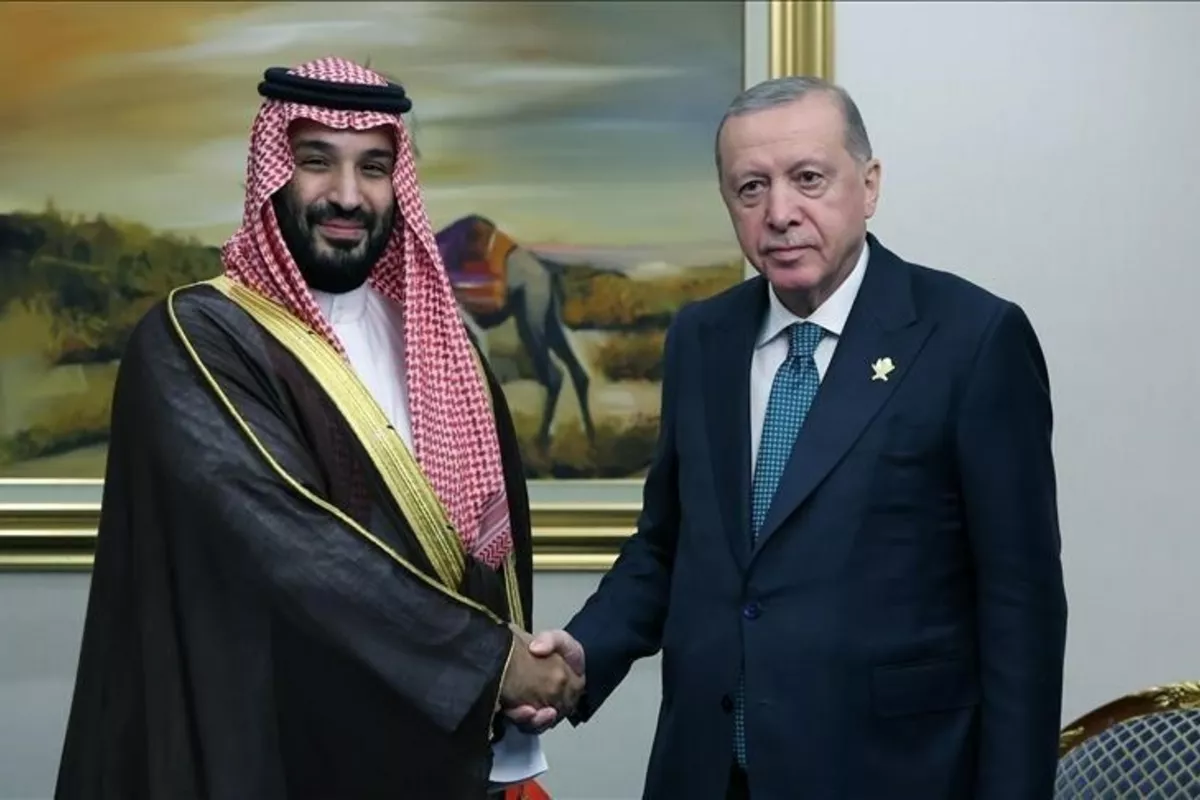
Turkish President Recep Tayyip Erdogan will make another significant visit to Saudi Arabia on Tuesday.
Erdogan is expected to be officially welcomed by Saudi Crown Prince Mohammed bin Salman at Al-Yamamah Palace in the capital Riyadh.
As part of the visit, the “Saudi Arabia-Türkiye Business Forum” will be organized by the Ministry of Trade and the Turkish Foreign Economic Relations Board (DEIK).
Last week, the Saudi Council of Ministers authorized relevant ministries to conclude agreements with Türkiye in the fields of renewable energy and civil defense, and approved a memorandum of understanding on cooperation in social services between the two countries.
Anadolu compiled the historical trajectory of Türkiye-Saudi Arabia relations, which have been further advanced in recent years.
Historical Diplomatic Relations, Cooperation Mechanisms Between Ankara, Riyadh
Türkiye and Saudi Arabia, which established diplomatic relations with the signing of the Friendship Treaty in 1929, have built strong ties over nearly a century through high-level reciprocal visits and regional organizations such as the Organization of Islamic Cooperation (OIC).
As bilateral relations strengthened through diplomatic visits, then-Saudi King Faisal bin Abdulaziz Al Saud visited Türkiye in 1966 as part of efforts toward unity among Muslim countries.
The two countries entered a new phase of rapprochement based on shared interests during the years of the Iran-Iraq War, during which then-Turkish President Kenan Evren also visited Saudi Arabia.
With an agreement signed in Jeddah on Oct. 11, 2003, between the Saudi Chambers of Commerce and Industry, the Türkiye-Saudi Arabia Business Council was established under the umbrella of DEIK.
Then-Saudi King Abdullah bin Abdulaziz Al Saud visited Türkiye on Aug. 8, 2006, accompanied by more than 50 businesspeople. This marked the first king-level visit from Saudi Arabia to Türkiye in 40 years, during which six agreements were signed in the fields of tourism, transportation, health, and the promotion of mutual investments.
Türkiye and Saudi Arabia also signed a protocol establishing the Joint Economic Commission (JEC) to strengthen economic cooperation across various sectors.
Trade Volume Between Türkiye, Saudi Arabia
The close relations between Türkiye and Saudi Arabia are also reflected in bilateral trade.
Saudi Arabia, which derives 85-90% of its state revenues from oil, exports crude oil and petrochemical products to Türkiye, while importing various goods from Türkiye, including carpets, processed stones for construction, tobacco products, food, and furniture.
According to data from the Turkish Statistical Institute, bilateral trade volume reached $5.59 billion in 2015, $5.007 billion in 2016, $4.845 billion in 2017, $4.954 billion in 2018, and $5.107 billion in 2019.
After a decline in trade volume during 2020-2021 due to the COVID-19 pandemic, trade between the two countries has continued to rise.
Trade volume reached $6.493 billion in 2022 and $6.825 billion in 2023, while in 2024 it hovered around $8 billion.
Türkiye’s exports to Saudi Arabia rose to $3.1496 billion last year.
Grains, pulses, oilseeds, and related products ranked first in exports to Saudi Arabia with $371.7 million, followed by carpets with $299.3 million and chemical products with $283.1 million.
Meanwhile, DEIK Chairman Nail Olpak told Anadolu a few weeks ago that momentum in trade with Saudi Arabia has been regained.
Noting that Turkish overseas contracting firms continue to be involved in major projects in Saudi Arabia despite a slight slowdown, Olpak said trade with Gulf countries, particularly Saudi Arabia and the United Arab Emirates (UAE), has reached around $45 billion over the past three years.
Saudi Minister of State for Foreign Affairs Adel al-Jubeir had previously told Anadolu that cooperation between Türkiye and Saudi Arabia has particularly improved in recent times.
“We aim to advance cooperation between the two countries in various fields. We have many shared interests in the economic, energy, political, and military fields,” al-Jubeir said.
Cooperation In Defense, Military Fields
Developing diplomatic and trade relations between Türkiye and Saudi Arabia has also positively affected military cooperation.
ASELSAN signed a memorandum of understanding in July 2015 with King Abdulaziz City for Science and Technology and TAQNIA DST to enhance cooperation in defense electronics.
Following assessments that ASELSAN’s products could meet the needs of relevant Saudi institutions, a cooperation agreement was signed between ASELSAN and TAQNIA DST in 2016.
The Saudi Defense Electronics Company (SADEC), established through a partnership between ASELSAN and TAQNIA DST, represents one of the most significant collaborations between the two countries.
Baykar also signed an export and cooperation agreement with the Saudi Ministry of Defense in July 2023 for the Bayraktar AKINCI unmanned combat aerial vehicle (UCAV). The agreement was recorded as the largest defense and aviation export contract in the history of Türkiye.
Impact Of Ankara-Riyadh Cooperation On Regional Issues
Türkiye and Saudi Arabia, as major military and economic powers in the region, have achieved significant successes in regional policies through strengthened political and diplomatic relations in recent years.
By maintaining a mature balance based on controlled competition and cooperation rather than conflict, Ankara and Riyadh have demonstrated effective stances through institutions such as the OIC and the United Nations (UN) regarding crises in Palestine, Syria, Sudan, Somalia, and Yemen.
After Israel declared war on the Gaza Strip in October 2023, Türkiye and Saudi Arabia aligned their positions on the Palestinian issue, sharing overlapping interests in supporting a two-state solution and playing a joint role in a potential political settlement.
Thanks to international efforts led by Türkiye and Saudi Arabia, together with other regional countries, 160 of the UN’s 193 member states have recognized Palestine as a state.
Türkiye and Saudi Arabia also demonstrated strong cooperation with other regional countries to ensure internal peace and stability in Syria, where the Bashar al-Assad regime was overthrown in December 2024.
Supporting the new administration under President Ahmad al-Sharaa, the Turkish and Saudi governments played an important role in the lifting of international sanctions that would contribute to Syria’s reconstruction process.
Türkiye and Saudi Arabia also continue to demonstrate strong stances in favor of stability through humanitarian aid efforts and diplomatic support in international platforms, not only in Yemen, which has been the scene of internal conflicts for many years, but also in the crises in Sudan and Somalia.