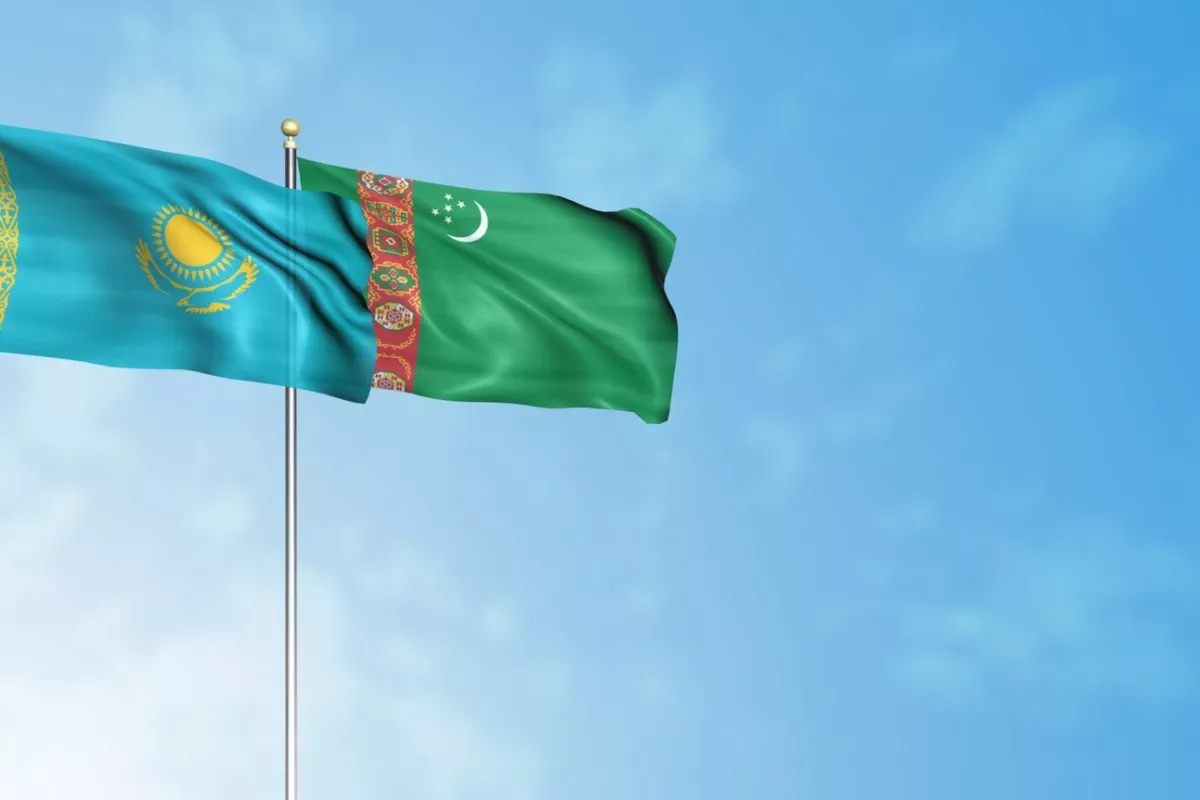
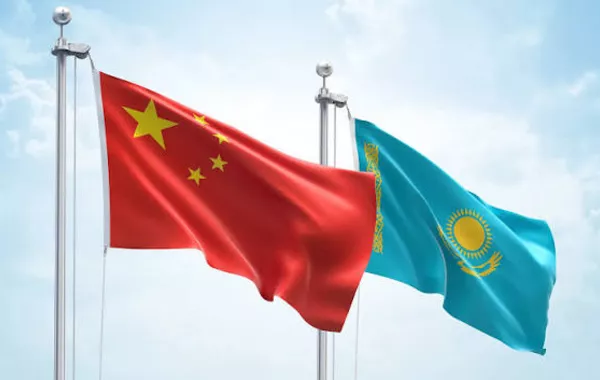
At first glance, the phone call between Kazakh President Kassym-Jomart Tokayev and Chairman of Turkmenistan’s Halk Maslahaty Gurbanguly Berdimuhamedov may look like another routine episode in relations between two neighboring states. Yet the range of issues discussed - trade, transport, logistics and energy - points to a much broader process.
On August 25, the two sides reaffirmed their interest in expanding cooperation in precisely these areas. The conversation did not take place in isolation: in June, during a meeting of the joint intergovernmental commission in Astana, Kazakhstan and Turkmenistan separately discussed investment, transport and logistics cooperation, as well as the oil and gas sector.
When these contacts are considered alongside the rapid development of the Trans-Caspian route, growing shipments of Kazakh and Turkmen oil through Azerbaijan, and Central Asian states’ efforts to diversify export routes, a more important question emerges: could the Kazakhstan-Turkmenistan axis become part of a new energy and transport corridor linking Central Asia, the Caspian Sea, the South Caucasus and Europe?
The prerequisites already exist.
But for now, this is not about a single new pipeline. It is about a gradually emerging network of routes.
Kazakhstan and Turkmenistan Complement Each Other
From a geo-economic perspective, the two countries possess a rare combination of advantages.
Kazakhstan is Central Asia’s largest economy and one of the world’s major producers of oil and uranium. It borders both China and Russia and has direct access to the Caspian Sea through the ports of Aktau and Kuryk.
Turkmenistan holds some of the world’s largest natural gas reserves and also has access to the Caspian through the modernized port of Turkmenbashi.
Both Kazakhstan and Turkmenistan are interested in expanding routes that allow them to reach international markets without relying exclusively on traditional export directions.
This is where their interests increasingly overlap.
Kazakhstan can generate significant cargo and energy flows from northern and eastern Central Asia.
Turkmenistan can provide a southern route linking Kazakhstan with Iran and, potentially, the Persian Gulf. At the same time, Turkmenbashi can serve as another gateway across the Caspian to Azerbaijan.
As a result, the two countries could eventually become important components of intersecting East-West and North-South corridors.
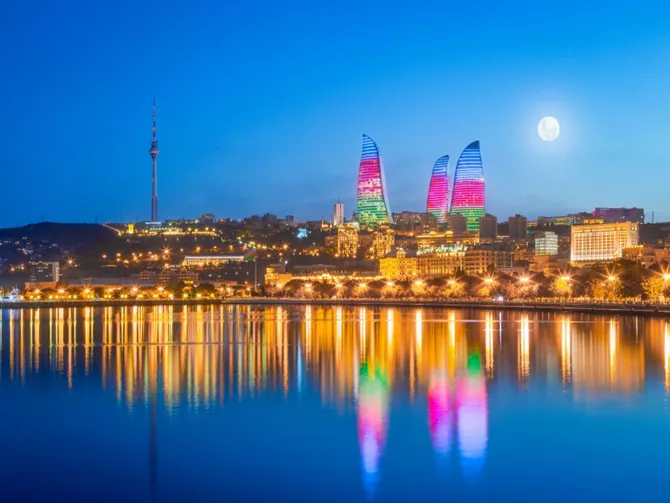
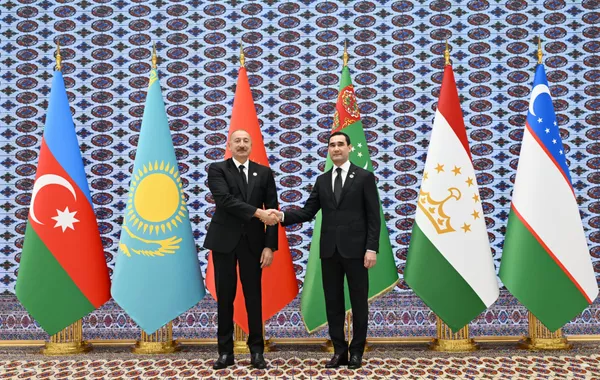
photo: getty images
Azerbaijan Is Becoming the Key Western Link
The most interesting part begins on the Caspian Sea.
In the first seven months of 2026, around 2.62 million tons of oil from Kazakhstan and Turkmenistan were transported through the Baku-Tbilisi-Ceyhan pipeline.
That already accounted for 17.7% of the total oil transported through BTC during the period.
The figure matters not only because of its size.
It demonstrates that the energy route Central Asia → Caspian Sea → Azerbaijan → Georgia → Türkiye already exists physically.
In other words, this is not simply a corridor that might one day appear on a map. The infrastructure is already operating.
The next challenge is increasing volumes.
That is why Azerbaijan is becoming increasingly important for both Kazakhstan and Turkmenistan.
Baku provides access simultaneously to BTC, the South Caucasus, Turkish infrastructure and, beyond that, European markets.
Kazakhstan Needs Additional Oil Export Routes
For Kazakhstan, diversification has become particularly important.
Most Kazakh oil exports traditionally move through the Caspian Pipeline Consortium, or CPC, to the Russian Black Sea port of Novorossiysk.
That route remains the main export channel and is economically critical.
Yet Astana has a clear interest in developing alternatives.
In August, Kazakhstan’s Energy Ministry openly stated that it was considering BTC, the Baku-Supsa route and other transit options through Azerbaijan as additional channels for oil exports.
At the same time, it is important not to exaggerate the scale of any shift.
Kazakhstan is not abandoning CPC. On August 25, Energy Minister Yerlan Akkenzhenov said that shipments through the system were continuing normally.
Astana’s policy is therefore not about replacing the Russian route with a Caspian one.
It is about diversification.
For a major oil exporter, having several independent routes is a matter of economic and strategic resilience.
The Caspian is therefore a natural alternative.
Turkmenistan Could Add a Gas Dimension
If oil is Kazakhstan’s key resource, natural gas is Turkmenistan’s.
This is where the most ambitious scenario emerges.
Turkmenistan possesses enormous gas resources, but its export geography remains relatively limited. China is the main buyer of Turkmen gas.
Ashgabat has therefore been interested for years in diversifying export destinations.
The Caspian direction theoretically offers a route connecting Turkmen resources with Azerbaijan and, from there, the infrastructure of the Southern Gas Corridor.
But there is an important difference between oil and gas.
For oil, maritime transport and BTC already provide functioning infrastructure.
Large-scale westward exports of Turkmen gas would require a much more complex commercial and infrastructure model.
That is why talk of a new energy corridor should still be understood primarily as a strategic direction rather than a completed gas pipeline project.
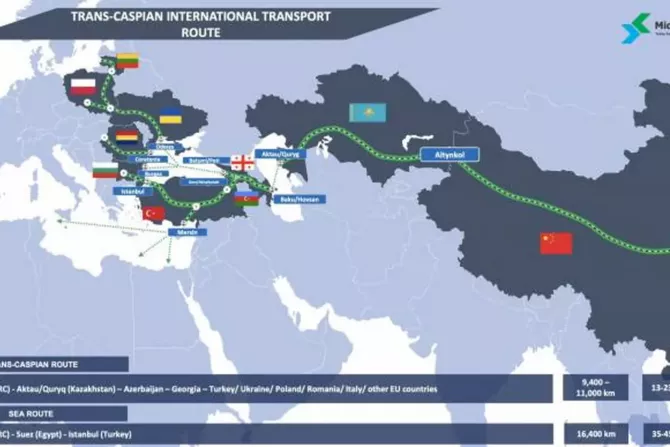
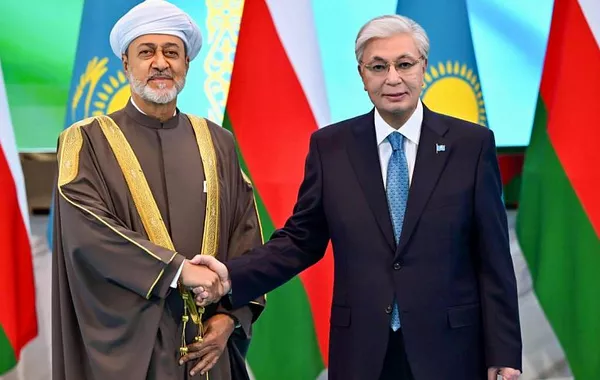
photo: getty images
The Trans-Caspian Route Is Growing Rapidly
Energy development is moving in parallel with conventional logistics.
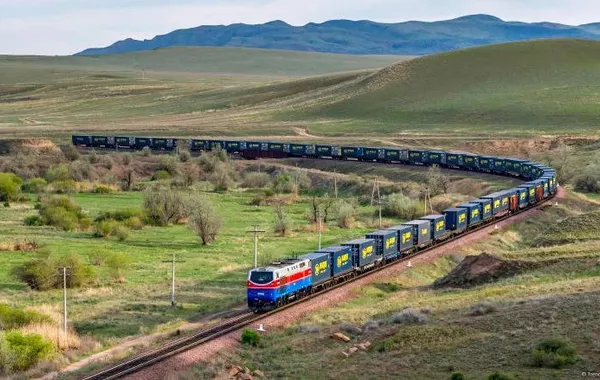
According to OECD data, freight volumes along the Trans-Caspian transport route rose by 62% in 2024, reaching 4.5 million tons.
Growth on the Kazakh section has been especially notable since 2022, with freight along the Kazakhstan-Caspian route increasing from below 1.5 million tons to more than 3.3 million tons between 2022 and 2024.
Kazakhstan aims to become one of the key overland transit hubs between China and Europe.
To achieve this, Astana is modernizing railways, border crossings, Aktau and Kuryk.
But Turkmenistan also has an important advantage - the port of Turkmenbashi and railway links to the south.
This means Kazakhstan-Turkmenistan cooperation goes well beyond bilateral trade.
In the future, the two countries could connect different parts of Eurasia’s transport network.
Turkmenistan Is Also Looking West Across the Caspian
Ashgabat’s own actions are particularly revealing.
In June 2026, during talks between Turkmen President Serdar Berdimuhamedov and Azerbaijani President Ilham Aliyev, the two sides placed considerable emphasis on transport and transit cooperation.
The Turkmen side highlighted the operation of the route Afghanistan → Turkmenistan → Azerbaijan → Georgia → Türkiye and supported the development of another direction: Turkmenistan → Azerbaijan → Georgia → Romania.
In effect, this would connect the Caspian and Black Seas.
This is an important detail.
It shows that Turkmenistan increasingly sees the Caspian not simply as its western maritime boundary, but as a gateway to Europe.
If Kazakhstan simultaneously expands the use of routes through Azerbaijan, the two Central Asian states are effectively moving in the same direction.
A Digital Infrastructure Is Emerging as Well
Another indicator is less visible, but extremely important.
Since August 2026, Kazakhstan and Turkmenistan have introduced a full system of advance electronic information exchange on goods and vehicles crossing their border.
The system allows customs authorities to receive data before cargo arrives, reducing clearance time and paperwork.
These kinds of technical measures determine whether a transport corridor becomes commercially viable.
Building a railway is not enough.
If freight spends several days waiting at border crossings because of customs procedures, the route loses competitiveness.
Digitalization of the Kazakhstan-Turkmenistan border is therefore part of the same broader geo-economic transformation.
Bilateral Trade Is Still Relatively Modest
At the same time, trade between Kazakhstan and Turkmenistan remains relatively limited.
According to official Kazakh data, bilateral trade reached around $555.7 million in 2024. In January-September 2025, trade totaled $363.6 million.
Yet over a five-year period, trade increased roughly fourfold, and in the previous two years it exceeded $500 million annually.
That means bilateral commerce is growing quickly, even if it is still starting from a relatively modest base.
The main economic value of the relationship may therefore not lie only in how much Kazakhstan directly sells to Turkmenistan.
What matters more is which markets the two countries can open for each other.
Turkmenistan Gives Kazakhstan a Southern Route
There is another direction that is often overshadowed by the discussion of the Middle Corridor.
Through Turkmenistan, Kazakhstan gains overland access to Iran.
The Kazakhstan-Turkmenistan-Iran railway connects Central Asia with the Iranian transport network and potentially with Persian Gulf ports.
This follows the logic of the North-South Corridor.
Kazakhstan therefore occupies a unique position.
Through the Caspian and Azerbaijan, it can move west.
Through Turkmenistan and Iran, it can move south.
Across its eastern border, it connects directly with China.
And through Russia, it retains a northern route.
This type of multi-vector transport architecture is fully consistent with Astana’s broader external economic strategy.
Turkmenistan Is Becoming More Than an Energy Exporter
For Turkmenistan, the changes may be even more significant.
For years, the country was viewed primarily as a major gas producer geographically distant from key Western markets.
Ashgabat is now attempting to use its location differently.
In 2025, around 20 million tons of cargo passed through Turkmenistan’s border crossings, the highest level since 2019.
Transit freight exceeded 7 million tons, rising by 28% compared with the previous year. Maritime transport accounted for 28% of the country’s foreign trade and transit cargo.
These figures indicate an attempt to transform Turkmenistan from primarily a commodity exporter into a full-fledged transit state.
Closer cooperation with Kazakhstan could accelerate that process.
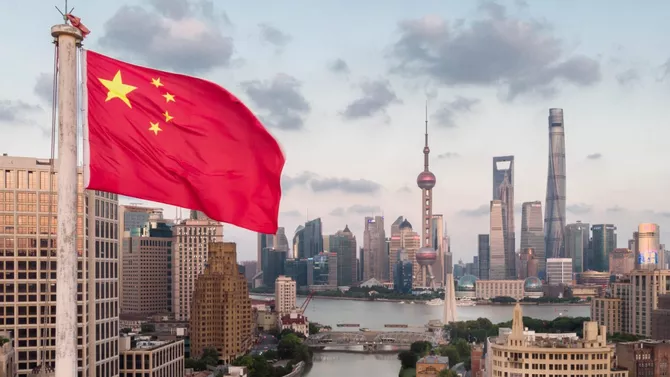
photo: Journal of Democracy
The China Factor
Behind all of this stands another major actor: China.
Beijing is interested in developing as many overland routes westward as possible.
Kazakhstan is already a key link in rail trade between China and Europe.
But additional corridors through Turkmenistan, the Caspian, Iran and the South Caucasus create a more diversified and resilient network.
For Beijing, that means less dependence on any one route.
For Kazakhstan and Turkmenistan, it means more transit revenue and investment.
A new corridor therefore does not necessarily need to be launched as a single political mega-project.
It can emerge gradually by linking existing railways, ports, pipelines and customs systems.
Where Does Azerbaijan Fit In?
For Baku, these developments have strategic significance.
If Kazakhstan and Turkmenistan increase the flow of cargo and energy resources across the Caspian, Azerbaijan becomes Central Asia’s natural western hub.
From Azerbaijan, routes continue toward Georgia, Türkiye, the Black Sea and Europe.
Baku therefore gains the opportunity to work simultaneously with two of Central Asia’s major Caspian states.
This transforms Azerbaijan from a transit state of the South Caucasus into a connecting bridge between Central Asia and Europe.
That is why deeper Kazakhstan-Turkmenistan cooperation in transport and energy directly serves Azerbaijan’s strategic interests.
Major Constraints Remain
It would nevertheless be premature to speak of a fully formed new energy corridor.
There are several serious obstacles.
The first is infrastructure capacity.
The OECD has pointed to shortages of vessels, limited container capacity, rail bottlenecks and problems at border crossings.
The second is the falling level of the Caspian Sea.
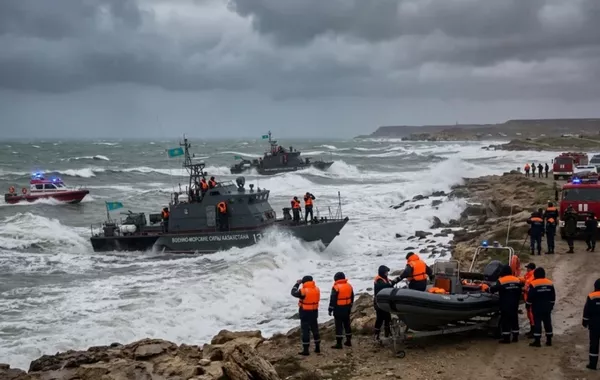
This is already creating difficulties for Aktau and Kuryk, as vessels cannot always be fully loaded, increasing transport costs. Kazakhstan has had to carry out extensive dredging work.
The third issue is cost.
The Caspian route involves multiple transfers between rail and maritime transport, making it more complex than a direct pipeline or uninterrupted overland route.
The fourth challenge is energy infrastructure.
Oil already has functioning routes.
Transforming Turkmen gas into a major westward export flow would require much larger investments and interstate agreements.
Not a New Pipeline, but a New Energy Geography
The current process is therefore better understood not as the construction of a single “new energy corridor.”
What is emerging is a new energy and transport geography for Central Asia.
Kazakhstan is diversifying oil exports.
Turkmenistan is seeking new routes for gas and transit.
Azerbaijan is strengthening its role as a Caspian hub.
Türkiye gains additional energy and transport flows.
Europe receives another channel of access to Central Asian resources.
And China gains a more diversified network of westward routes.
In this context, the August 25 conversation between Kassym-Jomart Tokayev and Gurbanguly Berdimuhamedov matters not simply because of the meeting itself.
It reflects a broader structural process.
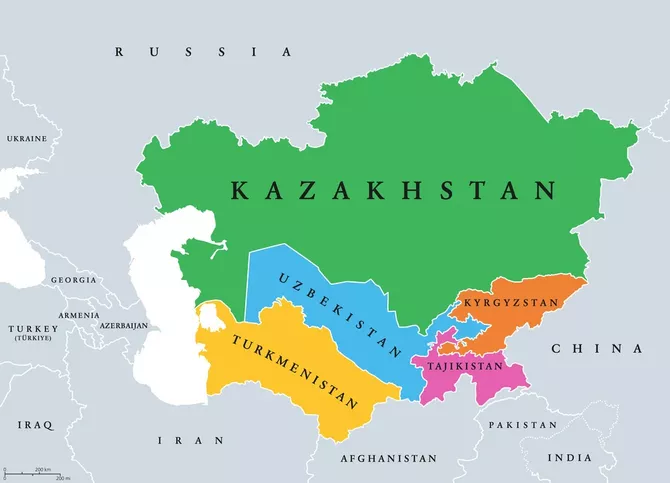
photo: The Facts Institute
Central Asia Is Redrawing Its Transport Map
For decades, most of Central Asia’s export infrastructure was oriented either toward Russia or, later, toward China.
Today, a third system is emerging.
It runs across the Caspian: Kazakhstan/Turkmenistan → Caspian Sea → Azerbaijan → Georgia → Türkiye / Black Sea → Europe.
This system still carries far less volume than traditional routes.
But it is expanding quickly.
And one of the most revealing figures is the 2.62 million tons of Kazakh and Turkmen oil that moved through BTC in just the first seven months of 2026.
That means the new geography no longer exists only on political maps.
Real energy flows are already moving through it.
The key question, therefore, is not whether a new corridor will appear.
It is already gradually taking shape.
The real question is whether Kazakhstan, Turkmenistan, Azerbaijan and their partners can build enough port, rail, maritime and energy infrastructure to turn a collection of separate routes into a fully integrated Eurasian system.
If they succeed, Kazakhstan and Turkmenistan will gain much greater freedom in choosing export directions, Azerbaijan will strengthen its position as the principal Caspian bridge between Central Asia and the West, and the region’s energy map will become considerably less dependent on traditional routes through Russia.
That is why the current Kazakhstan-Turkmenistan rapprochement should be viewed as more than simply an improvement in relations between two neighboring states.
It could become one of the building blocks of a new Central Asia-Caspian-South Caucasus-Türkiye-Europe energy axis.