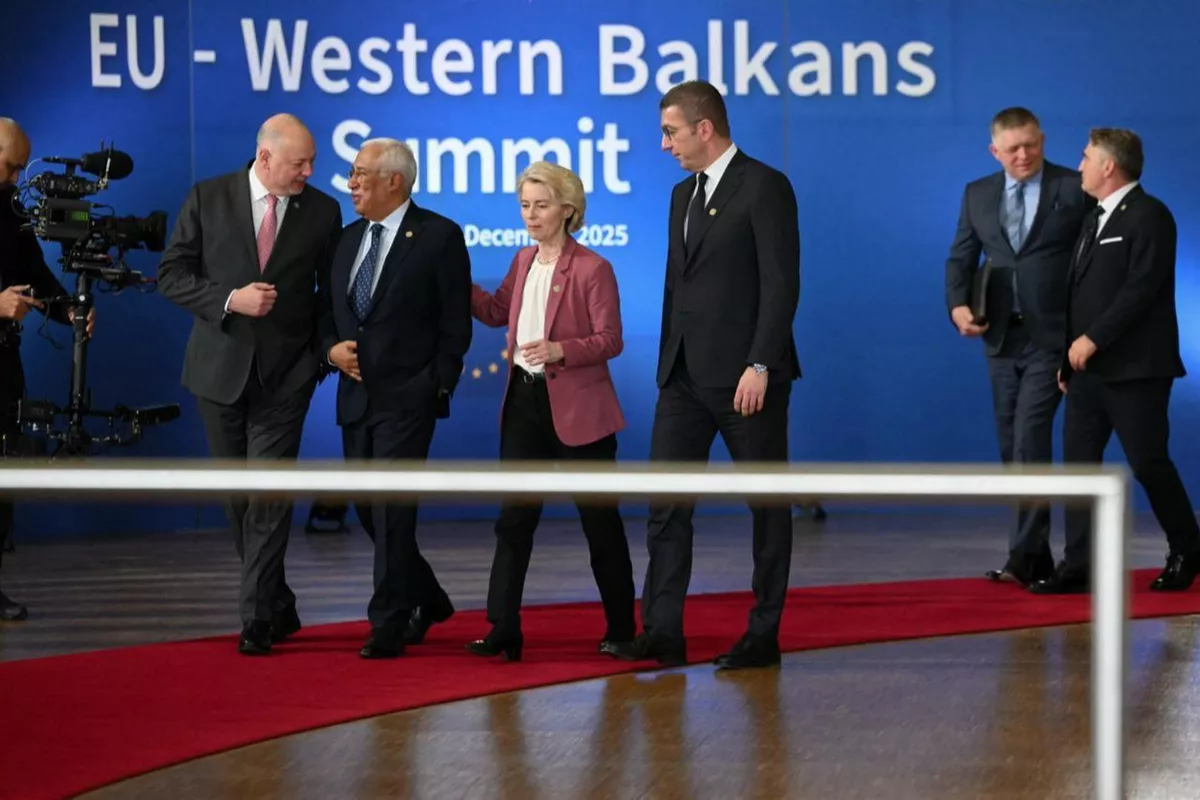
European Commission President Ursula von der Leyen recently dropped a diplomatic bombshell that will likely haunt EU-Türkiye relations for years.
It is striking that a single sentence managed to cause such a massive uproar: "We must succeed in completing the European continent so that it does not fall under Russian, Turkish or Chinese influence," The Caspian Post reports via Turkish media.
When asked by Türkiye’s Anadolu Agency, Commission spokesperson Paula Pinho attempted to clarify the remarks, saying, “What was said here is, of course, that Türkiye, precisely as a candidate country, also has an additional responsibility in the neighborhood. We do not oversee the influence that it has in the neighborhood; in this case, the reference was to the Western Balkans in line with EU values. That was the context in which the president referred to Türkiye.”
However, the commentaries that followed approached these remarks from a wider angle.
Many argued that the EU was now categorizing Türkiye among its top "geopolitical adversaries" rather than a candidate country. There are some sound grounds to advocate those claims.
For the sake of argument, I will accept Pinho’s interpretation of the statement, for in this particular context, it is not unreasonable to accept that von der Leyen was indeed talking about the Western Balkans.
There are six Balkan countries-Serbia, Bosnia, North Macedonia, Montenegro, Albania, and Kosovo-that are not EU members yet. However, when we accept the narrower interpretation that Pinho provided, another question would naturally follow.
Is Türkiye an actor that is working against the EU's interests in the region?
I believe that Türkiye’s goals in the region are very much aligned with the EU's vision. Competition is natural but the essence of this competition is not detrimental to the region or the EU. Therefore, I argue that it is not fair to place Türkiye in another camp.
Türkiye: Strategic Asset, Not Threat in Balkans
First of all, Türkiye is a natural actor in the region. It has been present in the region since the 14th century. It shares a common culture with the Muslim populations of the region.
Bosnians, Albanians, Kosovans, and Macedonian’s have considerable diasporas in Türkiye. The country is geographically close to the region, and as the largest economy of the Balkans, it is a large investor, contributing to the region’s development.
Despite the lack of fraternal relations it enjoys with some Balkan countries, Türkiye has established comprehensive and friendly relations with Serbia, the most prominent actor in the region. This partnership has served to decrease regional tensions and contributed to greater stability in Bosnia.
It has also been able to facilitate dialogue in the region. Türkiye, like the EU, supports Bosnia’s integrity. As one of the few actors that is trusted by all sides, it has been contributing to the peace in the region.
The EU stands to benefit the most from such stability, and membership of these countries is only possible through that stability.
When juxtaposed with von der Leyen’s remark, it is ironic that Türkiye supports EU membership for the Western Balkan countries. Above all, EU membership would enhance the stability of the region. That is in Türkiye’s interest. It would protect the Turkish and Muslim populations in the region.
Secondly, these friendly countries would, albeit slightly, influence Türkiye-EU relations positively. In sum, Türkiye and the EU share the same vision for the region.
Türkiye naturally would like to form strong cultural and economic bonds within the region. This should not be a zero-sum game for Europe.
Türkiye has a proven track record of supporting moderation between different countries: not just in political matters but also in religious ones. Turkish Islam is compatible with the multicultural identity of the region. Türkiye’s economic interests and participation are also crucial for the region to develop and catch up with the EU economies. The various roles that Türkiye has been playing are beneficial for all actors, including the EU.
Limiting Türkiye Does Not Mean More European Influence
There is also another factor the EU should consider.
If Türkiye were to become totally indifferent to the Western Balkans today, is the EU certain it could fill the void? It is highly likely that China or Saudi Arabia would step in, using their significant funding or religious ties to expand their influence.
Türkiye’s presence in the region restricts the influence of other actors whose role the EU would also like to keep limited.
Most of the six Balkan countries are likely to join the EU in the next decade. Türkiye will remain an important partner as well. It should be perfectly normal and desirable for all stakeholders, including the EU, to see comprehensive relations between Türkiye and the EU members in the Balkans.
That is, of course, if the EU really means what it is saying officially. Otherwise, a completely different conversation awaits us.