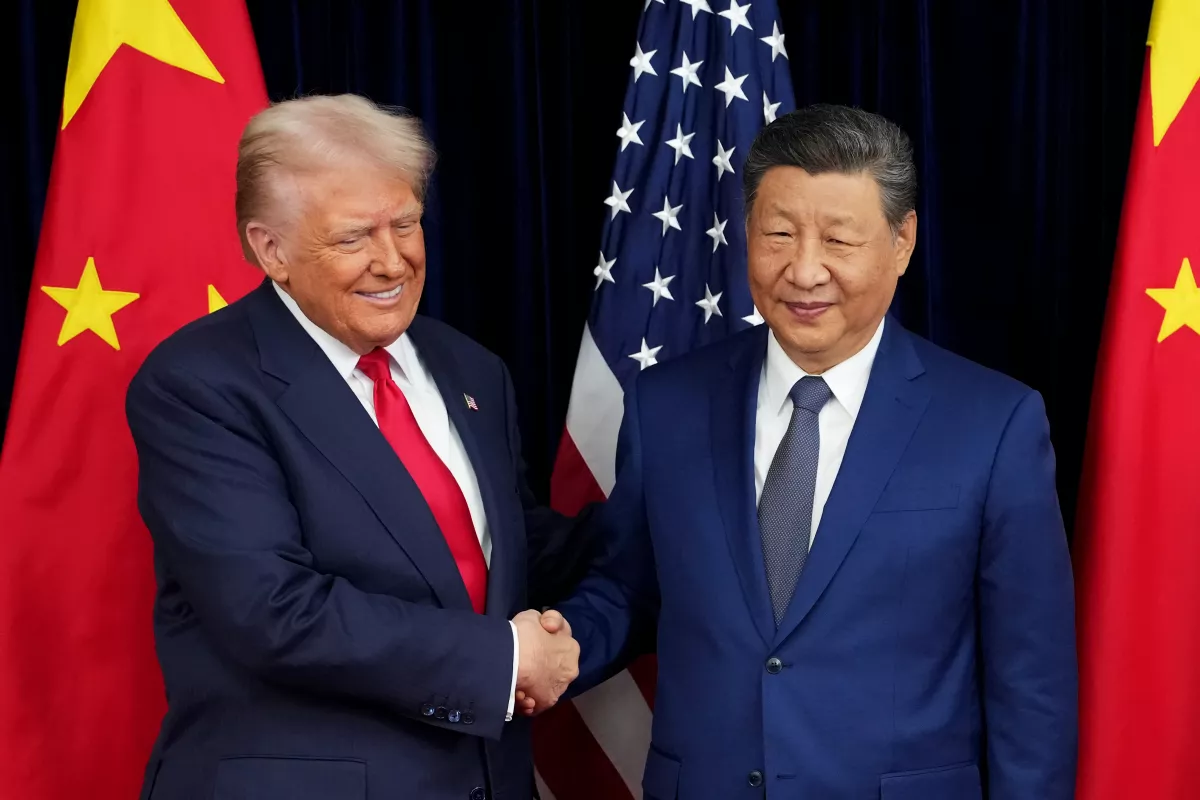
In U.S.-China strategic competition, diplomacy is more than just ceremony. It is how leaders allocate scarce political attention toward their key priorities. Leaders cannot be everywhere or do everything, so where they go, whom they host, and how often they travel all reveal priorities that political statements and strategy documents can obscure.
By this measure, Beijing and Washington are pursuing different diplomatic strategies. Since Xi Jinping took office in 2013, and especially since the COVID pandemic in 2020, U.S. presidents have traveled abroad more often than Xi has. But Xi has visited a wider range of countries, and Beijing has welcomed far more foreign leaders than Washington. The contrast is especially striking across the Global South, where Chinese diplomacy has often been broader, more regular, and in many regions more ambitious, The Caspian Post reports via Asia Society Policy Institute.
Face-to-face diplomacy is important because leaders can sometimes accomplish in person what is difficult to do through cables, intermediaries, or calls. Direct meetings allow them to exchange information more candidly, cut across bureaucratic silos, communicate resolve and redlines more clearly, and build personal familiarity that can prove valuable in a crisis. They also have symbolic force, signaling priorities and showing the world which relationships matter most. Not every summit delivers a breakthrough, but leader-level travel and hosting patterns are a valuable way to track strategic attention.
This analysis draws on an original dataset of leader-level diplomacy from 2013 to 2025. It tracks outbound visits by the Chinese and U.S. presidents and inbound visits by foreign heads of state and government to China and the United States. Each country stop is counted as a visit, regardless of length or the number of meetings, excluding refueling stopovers and trips to military bases without diplomatic engagements.
Outbound Diplomacy: U.S. Presidents Travel More, Xi Travels Wider
The chart below shows that, since 2013, Xi has made 126 visits to 72 countries. Over the same period, Barack Obama, Donald Trump, and Joe Biden made 146 visits to 56 countries. In other words, U.S. presidents have traveled more often, but Xi has reached more places.
However, that gap in total visits is mostly a product of the pandemic and its aftermath. Before COVID, Xi and U.S. presidents traveled at broadly similar rates. From 2013 to 2019, Xi made 100 visits, compared with 90 by U.S. presidents. After that, the two trajectories separated sharply. Xi made just one foreign trip in 2020 and none in 2021. Even after China reopened, his travel remained limited: five visits in 2022, four in 2023, ten in 2024, and six in 2025. By contrast, U.S. presidential travel recovered faster, rising from six visits in 2021 to thirteen in both 2022 and 2023, seven in 2024, and fifteen in 2025.
That produced a clear post-pandemic reversal. Before COVID, Xi was traveling at roughly the same pace as his American counterparts. Since COVID, U.S. presidents have generally traveled much more often, even as Xi’s foreign travel has become more selective. Since 2020, U.S. presidents have traveled to more countries than Xi every year except 2024. In 2025, Trump made 15 foreign visits to 13 countries, one of the highest annual figures in recent U.S. presidential history, against Xi's six visits.
What has not changed much is the focus of Xi’s itinerary, as shown in the chart below. Most of his travel is to countries in the Global South and/or on the Belt and Road Initiative (BRI), his signature effort to enhance China’s international connectivity, especially in its region. Xi now travels less, but his trips are more tightly aligned with Beijing’s effort to consolidate influence across partner states in Africa, Central Asia, Latin America, and Southeast Asia.
The regional distribution of travel is where the divergence becomes clearest. Almost two-fifths of all U.S. presidential visits since 2013 have gone to Western Europe: 56 of 146. Another 19 went to the Middle East and North Africa. U.S. presidents also made 17 visits to East Asia and 15 to Southeast Asia. This is a diplomacy of alliance management and crisis response. It reflects the lasting pull of the North Atlantic Treaty Organization (NATO), long-standing Middle Eastern security commitments, and the rising importance of relationships with allies and partners in the Indo-Pacific.
Xi’s travel map tells a different story. Before the pandemic, that footprint was both broad and active: Xi made 18 trips to Western Europe, twelve to Latin America, eleven to Southeast Asia, ten to Central Asia, and nine to Sub-Saharan Africa, while also maintaining a steady presence in South Asia and Russia with eight visits each. Most strikingly, by the end of the 2010s, Xi’s visits to Latin America had surpassed that of U.S. presidents over the same period - twelve visits against eight - a striking fact for a region Washington has long seen as its strategic backyard.
After 2020, that map narrowed dramatically. Western Europe fell from 18 visits to two, Latin America from twelve to two, Sub-Saharan Africa from nine to one, and South Asia from eight to none. The exceptions were closer to home. Southeast Asia remains a major destination, slipping only from eleven visits to seven, while Central Asia still drew five and Russia three. That left Xi’s post-pandemic travel more concentrated on China’s neighborhood and a smaller circle of strategic partners. Even so, he still outpaced U.S. presidents in regions Washington often neglects, such as Central Asia and Southeast Asia.
That broader reach matters. Of the 72 countries Xi visited, 32 did not receive a U.S. presidential visit during the same period. They include important regional states such as Pakistan, Bangladesh, Thailand, Chile, Serbia, all five Central Asian republics, and several smaller partners across Africa, the Pacific, and Latin America. By contrast, only 16 countries visited by a U.S. president did not receive a visit from Xi.
Put simply, Washington’s presidential diplomacy has been denser where the United States already has strong alliances and institutional ties. Beijing’s has been spread more deliberately across the developing world and among geopolitical swing states, where diplomatic alignments are more fluid and high-level attention can deliver greater value.
Inbound Diplomacy: More World Leaders Go to China Than the United States
If presidential travel shows Chinese and U.S. influence efforts abroad, foreign leaders’ trips to Beijing and Washington help reveal where that influence lands. Here, China's advantage is more durable and, in several regions, more dramatic.
The chart below shows that, from 2013 to 2025, foreign heads of state and government made 894 visits to China, compared with 619 visits to the United States. In that period, 434 individual leaders visited China, against 310 who visited the United States. Beijing also hosted leaders from more countries: 174, compared with 163 for Washington.
China led the United States in inbound leader visits in ten of the thirteen years in the dataset. Its advantage was especially large before the pandemic. From 2013 to 2019, China averaged about 85 leader visits a year, compared with about 44 for the United States. The peak disparity came in 2018, when 121 foreign leaders visited China, against just 27 who traveled to the United States.
The pandemic briefly interrupted that pattern. China’s border controls drove inbound leader visits down to five in 2020 and zero in 2021. The United States pulled ahead during those years and again in 2022, when a series of major summits in Washington produced an exceptional spike in visits. But once China reopened, Beijing regained the lead quickly: 79 visits in 2023 to Washington’s 74, 109 to 67 in 2024, and 75 to 50 in 2025.
So even as Xi himself travels less, Beijing remains the more attractive destination for world leaders. The regional breakdown in the next chart shows where that convening power is strongest. Since 2013, China has hosted 179 leader visits from Sub-Saharan Africa, compared with 105 for the United States. From Southeast Asia, the gap is wider still: 150 visits to China versus 46 to the United States. In Central Asia, the comparison is 76 to 17; in South Asia, 59 to 13. China also leads in Eastern Europe, East Asia, Oceania, and the Caribbean. But a more revealing story emerges when the data are split between the pre- and post-Covid periods.
Before the pandemic, Beijing built a commanding advantage in attracting foreign leaders from much of the developing world. From 2013 to 2019, China hosted 111 visits from Sub-Saharan African leaders, compared with 55 for the United States; 93 from Southeast Asia, compared with 23; 44 from Central Asia, compared with six; and 38 from South Asia, compared with nine. Beijing had established itself as the main diplomatic hub for large parts of the Global South and its near periphery, thanks in part to new large-scale events such as the Belt and Road Forum and the China International Import Expo, which drew dozens of leaders to Beijing simultaneously.
Those are not small differences. They point to a Chinese diplomatic advantage across emerging economies and a broad stretch of the developing world. Some of that reflects geography but much of it reflects sustained institutional effort: economic exchanges, regular summits, party-to-party diplomacy, and a foreign policy apparatus built to master specific contexts, speak local languages, and maintain high-level political access.
After 2020, that pattern endured but became more mixed. China still led in all four regions mentioned above, hosting 68 Sub-Saharan African leader visits to Washington’s 50, 57 Southeast Asian visits to 23, 32 Central Asian visits to eleven, and 21 South Asian visits to four. But the margins narrowed, especially in Sub-Saharan Africa and Central Asia, as the Biden administration regained some ground through regionally focused convenings such as the U.S.-Africa Leaders’ Summit and the C5+1 Presidential Summit Meeting.
The more striking post-pandemic shift came in regions where Washington has deeper traditional ties. Before 2020, China actually led in visits from Latin American leaders, 34 to 28. After 2020, that reversed significantly, with the United States hosting 37 Latin American leader visits to China’s 19. In Western Europe, the United States went from trailing China before the pandemic to holding a decisive post-pandemic lead, hosting 51 visits to China’s 18, likely reflecting Beijing tolerance of Russia’s invasion of Ukraine. Eastern Europe saw an even sharper reversal: after trailing 65 to 27 before Covid, Washington led 38 to 18 after 2020, probably for much the same reason. Oceania followed a similar pattern, with the United States overtaking China 32 visits to 17 in the post-pandemic period after trailing twelve to 34 from 2013 to 2019. Washington also maintained its lead in the Middle East, hosting 56 visits to China’s 39 before the pandemic and 34 to 19 after it.
The result is a more competitive post-pandemic diplomatic landscape. Beijing remained the main destination for leaders from much of Asia and Africa, but it lost the clear edge it once held in Europe and Latin America. That shift suggests that the pre-Covid era was defined by China’s broad expansion as a global convening power, while the post-Covid era has been marked by a more regionally uneven recovery in which Washington regained ground where alliance networks, geography, and older political ties gave it stronger foundations. The challenge now is to maintain that momentum as China continues to seek a more influential role in global affairs.
What This Means for the United States and China
The clearest takeaway from the data is that the United States and China are practicing different kinds of diplomacy. Washington remains strongest where it already has dense alliances and institutional ties. Beijing, by contrast, has invested more heavily in broadening leader-level engagement across the world, especially in the Global South. Before the pandemic, that made China a striking diplomatic hub for leaders from Asia, Africa, Latin America, and parts of Europe and the Pacific.
Since the pandemic, the picture has become more mixed. The United States has regained ground in Western Europe, Eastern Europe, Oceania, and Latin America, while China retained a clear edge across much of Asia and Africa. At the same time, Xi has pulled back from the relentless travel pace of his first years in office and appears to be delegating more of China’s in-person diplomacy to Premier Li Qiang and other senior officials. The result is still a durable edge in regions that will be pivotal to the future of the global economy.
High-level meetings do not necessarily translate into diplomatic influence, and the United States still benefits from security alliances, military partnerships, and institutional ties that China cannot easily match. But repeated leader-level contact still matters. It signals priority, builds familiarity, and shapes perceptions of reliability and long-term commitment. By that measure, Beijing has been more present, and often more organized, across many of the regions where Washington’s relationships are thinner.
For U.S. policymakers, the implication is straightforward. The United States does not need to match China stop for stop, but it would benefit from more top-level engagement with Africa, Southeast Asia, Central Asia, South Asia, and Latin America. That means not only presidential travel, but also more regular engagement by cabinet officials and other senior figures. If Washington wants to compete more effectively for influence in the Global South, it should show up there more consistently.
For Beijing, the findings point to both strength and vulnerability. China has built an impressive diplomatic machine that can draw leaders to China even when Xi travels less. But the post-pandemic reversals in visits from Europe, Latin America, and Oceania also show the limits of convening power when China’s positions clash with regional interests or values. China’s challenge is therefore not simply to host more leaders, but to translate diplomatic access into durable trust, practical cooperation, and mutual benefit at a time when many countries want closer ties with Beijing without becoming dependent on it.
These patterns of leader-level diplomacy shape the competitive landscape of U.S.-China relations. China’s advantage is that Beijing has made itself a seemingly essential partner for leaders across regions where global economic growth, infrastructure demand, resource politics, and geopolitical swing votes will matter most. Washington can still compete effectively, especially when it leans into diplomacy and the convening power of the American presidency, but doing so will require investing more time and resources in leader-level engagement beyond its traditional circles of allies and partners.