FAO, Uzbekistan Sign New Framework to Boost Rural Resilience
The UN Food and Agriculture Organization (FAO) and Uzbekistan have signed a new framework agreement aimed at providing more targeted support to rural communities and strengthening the resilience of the country’s agri-food sector.
The document focuses on improving the effectiveness of territorial development strategies, ensuring food security and better nutrition, enhancing epidemiological surveillance under the “One Health” approach, promoting sustainable management of natural resources, and reducing environmental risks and threats in agriculture by 2030, The Caspian Post reports via Uzbek media.
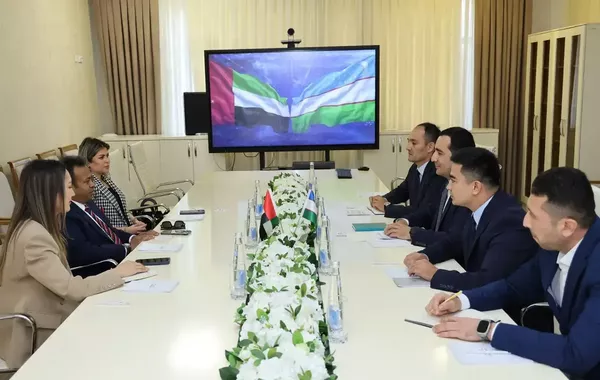
The FAO-Uzbekistan Cooperation Framework for 2026-2030 is aligned with the United Nations’ priorities in the country as well as the global Sustainable Development Goals. The agreement entered into force upon its signing by FAO Deputy Director-General and Regional Representative for Europe and Central Asia Viorel Gutu and Uzbekistan’s Minister of Agriculture Ibrokhim Abdurakhmonov.
“Our partnership with Uzbekistan is built on a strong commitment to making the agri-food sector more inclusive, resilient, and resistant to external shocks,” Gutu said. “FAO brings world-class expertise and accumulated experience to help improve the lives of rural families and support the development of local economies.”
Uzbekistan joined FAO in 2001, and the organization’s country office in Tashkent opened in 2014. Despite being a landlocked country located largely in arid and mountainous areas, agriculture remains a key pillar of Uzbekistan’s economy, accounting for about 19 per cent of GDP in 2024. In recent years, the country has made notable progress in strengthening food security and improving nutrition, as reflected in international indicators and national statistics.
At the same time, the agricultural sector faces serious challenges, including limited access to key resources-especially for women and youth in rural areas-climate change, environmental degradation, shifts in trade patterns, and dependence on transboundary water resources. These factors underscore the need for a more focused and systematic effort to enhance the resilience of Uzbekistan’s agri-food system.
The new framework program is designed to support Uzbekistan’s national strategic priorities for transforming the agri-food sector. It places special emphasis on sustainable agricultural development, efficient use of land and water resources, climate resilience, rural development, and the creation of inclusive economic opportunities.
The program also aims to strengthen national capacity to implement effective territorial development strategies that reduce poverty and inequality in rural areas. To improve public health and nutrition, it envisages enhancing integrated food safety management systems, nutrition policies, and sanitary and epidemiological surveillance within the “One Health” framework.
Another key focus is integrated land and water management, conservation of biodiversity within agri-food systems, and the reduction of environmental risks. This includes plant protection, responsible use of chemicals, waste management, air and water quality control, and disaster risk reduction.
Currently, FAO is implementing 35 projects across Uzbekistan, covering a wide range of areas such as school feeding programs, agricultural statistics, digitalization of agriculture, biodiversity conservation, integrated natural resource management, and the promotion of the “One Health” approach-all aimed at ensuring the sustainable development of the country’s rural regions.