Azerbaijan Starts Work on EU-Oriented Power Corridor
Azerbaijan has taken a concrete step toward deeper energy integration with Europe, launching work on a new EU-oriented power corridor aimed at boosting electricity exports and strengthening regional connectivity. The move was highlighted by journalist David O'Byrne in an article published on Eurasianet, which examines how the project fits into the country’s broader strategy to position itself as a key energy bridge between the South Caucasus and the European Union.
Azerbaijan’s power transmission grid operator AzerEnergy has begun construction of Azerbaijan’s sections of a planned line that ultimately can connect Azerbaijan and Europe via the TRIPP corridor and Türkiye, The Caspian Post republishes the article.
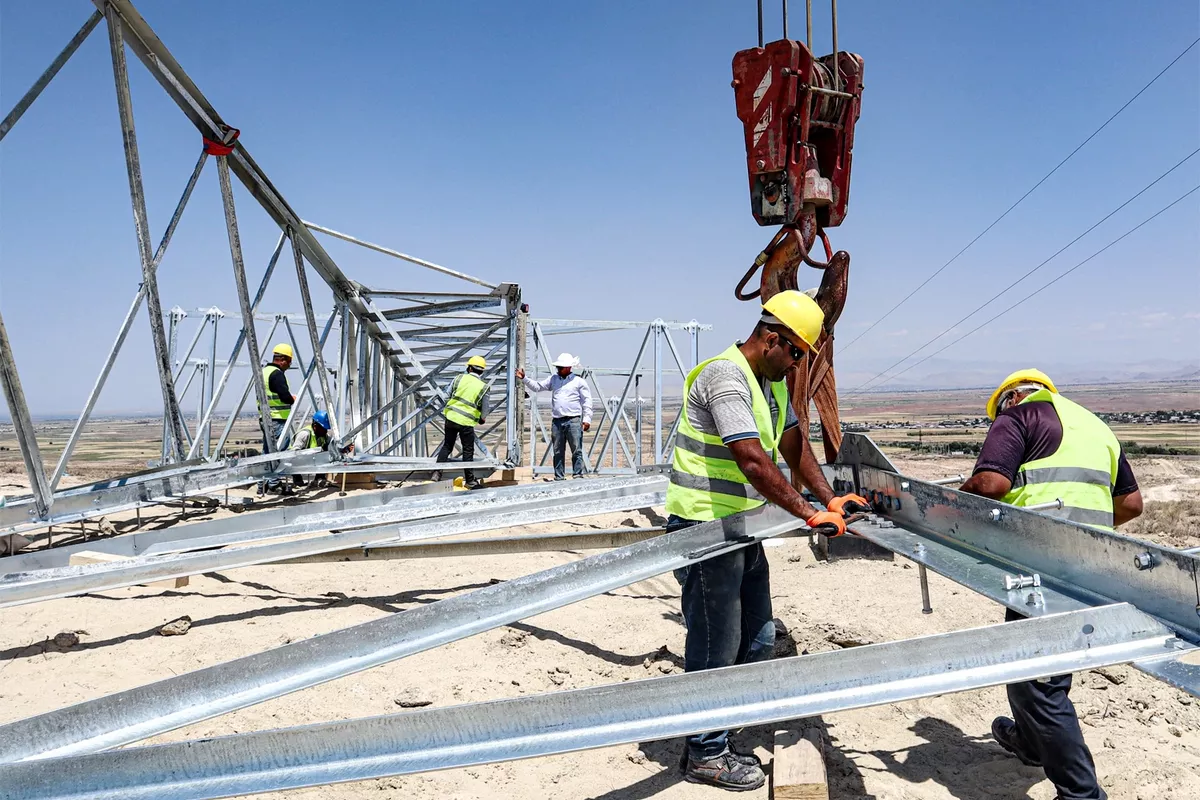
The power line received a green light under the TRIPP corridor agreement signed last summer in Washington. According to AzerEnergy, work has started both on a 74-kilometer section of line inside Azerbaijan and a 105-kilometer-long section inside the country’s Nakhchivan enclave.
Both lines are rated at 330 kilovolt (kV), capable of carrying up to 1,000 Megawatts of power and are “double circuit,” meaning that they can maximize transmission capacity, while providing a back-up if one circuit fails. Both lines are being constructed in hazardous terrain, along Azerbaijan’s sections of the Aras river valley, which marks the border with Iran. The same river valley also passes through just over 40 kilometers of Armenia, and is set to become TRIPP, or the Trump Route for Peace and Prosperity.
The Armenian government and Armenia’s transmission grid operator have confirmed plans to modernize the country’s existing 220 kV and 110 kV transmission grid but have yet to announce any specific plans on a 330kV TRIPP line that would link up with the Azerbaijani lines under construction.
The decision to start work may not be Yerevan’s alone, however.
According to The TRIPP Implementation Framework signed in January by the United States and Armenia, all development work inside the TRIPP corridor, including electrical transmission lines, is to be conducted by a US-Armenian joint venture company which has yet to be established.

photo: Trend
Dubbed "The TRIPP Development Company,” Washington will hold a 74 percent controlling stake in the venture, with Yerevan possessing the remaining share. The JV will enjoy a monopoly on all development work in the corridor for 49 years. The company has yet to be established and it is unclear yet how exactly it plans to operate. The implementation framework agreement itself is non-binding.
The framework mentions that it will establish separate Special Purpose Vehicles (SPVs) for different infrastructure components, each responsible for governance, financing, and operational models best suited to each project. All of this means it may be a while before work begins on a TRIPP power line inside Armenia.
Once in place, the power line will enable power transmission from the Caspian Basin to Türkiye, and from there to Europe. Azerbaijan is now working with Kazakhstan and Uzbekistan to facilitate the transmission of electricity generated by renewable sources in Central Asia to Europe.
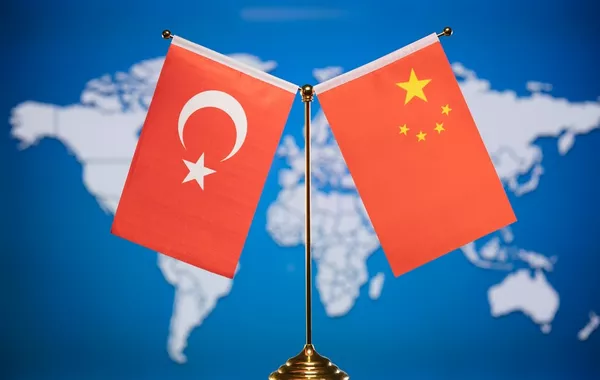
In addition to its two new power lines, AzerEnergy has also announced plans to build a 230-kilometer-long 400 kV transmission line from Nakhchivan to Türkiye. Türkiye and Azerbaijan last year announced an intent for a new interconnection although Türkiye’s grid operator TEIAS, but the two countries have yet to finalize details of any planned expansion or upgrade of the two existing single-line 154 kV transmission links.
Once constructed, the 400kV line would form the backbone of power transmission infrastructure for Central Asia exports to Europe. Azerbaijan is also working with Georgia, Romania and Hungary on a trans-Black Sea power transmission project, in addition to the EU route via Türkiye.