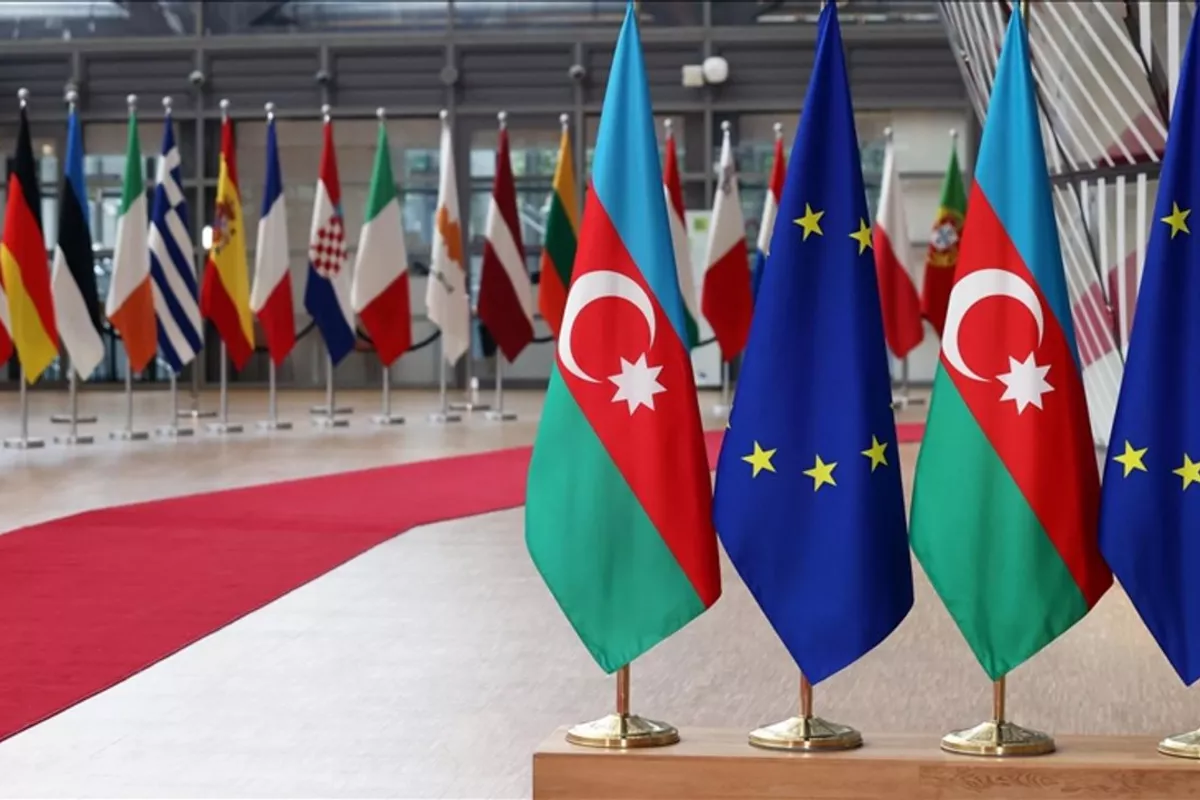
Relations between Azerbaijan and the European Parliament have in recent years moved definitively from latent tension into open political confrontation. Statements by President Ilham Aliyev at the summit of the European Political Community in Yerevan were not merely a reaction to yet another resolution, but rather a culmination of accumulated contradictions.
Baku’s key grievance is the systemic nature of the bias. The European Parliament’s criticism of Azerbaijan does indeed display a consistent pattern. According to the head of state, from 2021 to 2026 the European Parliament adopted 14 resolutions that the Azerbaijani side views as one-sided and detached from the real situation. Such frequency and orientation of decisions are perceived in Baku not as coincidence, but as a sustained political line - as Ilham Aliyev described it, an “obsession”.
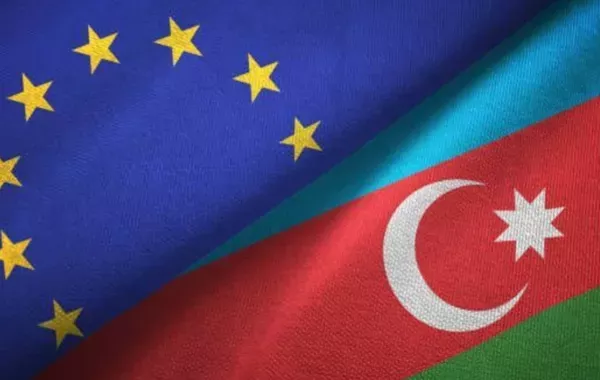
At the same time, Azerbaijan does not question cooperation with European institutions as a whole. On the contrary, official Baku emphasizes constructive engagement with the European Commission. This distinction shows that the issue is not an anti-European course, but rather a conflict specifically with the parliamentary wing of the EU, which, in Azerbaijan’s view, is increasingly influenced by politicised groups.
A separate line of criticism concerns the Parliamentary Assembly of the Council of Europe (PACE). Azerbaijan has been a member of the Council of Europe since 2001, and until 2024 no restrictions had been applied to its delegation, although anti-Azerbaijani resolutions were adopted annually. However, following the events of September 2023 - namely, Azerbaijan’s restoration of sovereignty over all its territories in accordance with the requirements of the 1993 United Nations Security Council resolutions - sanctions followed.
At the same time, no measures had ever been taken against Armenia, which had previously occupied the territories of a neighbouring country.
Source: Trend
President Aliyev has repeatedly stated in meetings with European counterparts and on international platforms that Azerbaijan’s territorial integrity is no less valuable than that of any other country. This was a signal about the inadmissibility of double standards on issues of sovereignty. In his speeches, the president emphasised the equality of international law principles for all states, noting that Azerbaijan’s territorial integrity cannot be a subject of negotiation. However, in both the European Parliament and PACE, Azerbaijan’s territorial integrity has been consistently called into question - not directly, but through adopted resolutions and the broader context of statements.
For these structures, Armenia’s interests serve merely as a pretext to maintain pressure on Azerbaijan. Meanwhile, putting pressure on Baku is by no means synonymous with helping Armenia - rather the opposite. The more noise, threats, and blackmail there are, the more rigid Azerbaijan’s position becomes.
Within the European Parliament, the Armenian lobby is not an isolated group. This was indirectly confirmed by European Parliament President Roberta Metsola, who attempted to respond to President Aliyev’s statements. In her “rapid response”, she said that the European Parliament is “a democratic body elected by direct vote, and its resolutions are adopted by a majority”.
The fact that this majority consistently appears ready to vote against Azerbaijan’s interests suggests a deep penetration of Armenian lobbying into the institution. It is difficult to believe that among hundreds of Members of the European Parliament all are independently and sincerely hostile towards Azerbaijan and ready to support sanctions against Baku. This instead points to the effectiveness of diaspora activity in influencing European lawmaking.
However, this activity has produced no practical results. Those 14 resolutions over five years have brought no tangible dividends for Armenians in terms of resolving issues in their favour. Everything adopted has remained on paper.
For example, a year ago the European Parliament almost unanimously adopted an “urgent” resolution titled “Illegal arrests and sham trials by Azerbaijan of Armenian prisoners, including senior political representatives of Nagorno-Karabakh.” The resolution was supported by 523 MEPs, opposed by three, with 84 abstentions. Yet this near-unanimous demand produced no outcome. Armenian individuals convicted of crimes received sentences, and EU governing structures did not treat the resolution as a directive for action.
There has also been no success in efforts to secure the mass and unconditional return of Armenians to Karabakh, which they left voluntarily. On this issue, the European Parliament has adopted numerous resolutions, statements, and appeals. These documents called for punishing Azerbaijan for “ethnic cleansing”, halting energy cooperation, and so on. By attempting to pressure Baku in this way, the European Parliament demanded the return of Armenians without their fulfilling conditions deemed “contrary to their will”. In the EP, such conditions include requirements to accept Azerbaijani citizenship and other stipulations set by the Azerbaijani side.
The European Parliament not only adopts resolutions but also, according to the Azerbaijani perspective, hampers the peace process between Azerbaijan and Armenia. The Azerbaijani side points to a paradox: against the backdrop of advancing negotiations, including the initialling of a peace agreement brokered by the White House, the European Parliament continues to adopt accusatory resolutions.
Another argument raised by Azerbaijan concerns the mine threat in the liberated territories. Despite repeated appeals by Baku, this issue has not received comparable attention in European resolutions. As a result, there is a perception of a selective approach: some humanitarian issues are emphasised, while others are openly ignored.
The latest EP resolution became the final straw. The Azerbaijani parliament’s decision to suspend cooperation with the European Parliament, withdraw from the Parliamentary Cooperation Committee, and initiate the termination of participation in the Euronest Parliamentary Assembly represents not merely diplomatic signals, but concrete steps.
The situation did not deteriorate overnight. As early as January, in an interview with Euronews, Ilham Aliyev stated that Azerbaijan had effectively stopped responding to European Parliament statements. This marks a transition to a new model - ignoring rather than engaging. In diplomatic practice, such an approach signals a deep crisis of trust.
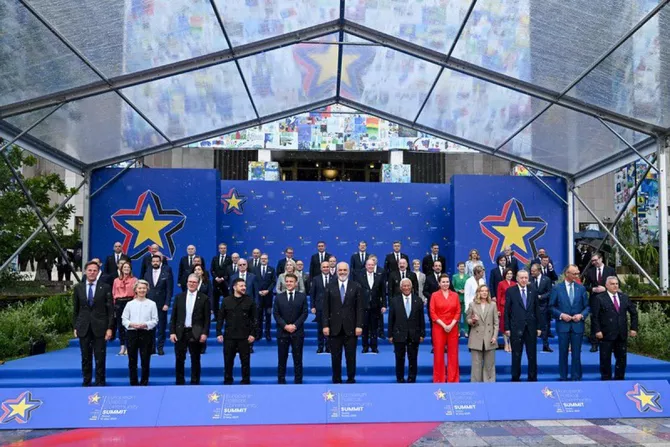
Against this backdrop, it is particularly symbolic that the 2028 summit of the European Political Community is planned to be held in Azerbaijan.
Source: ArmenPress
On the one hand, this confirms that the country remains an important partner for Europe at a strategic level - in energy, security, and regional stability. On the other hand, it highlights a divide between different European institutions: EU executive structures continue engagement with Baku, while parliamentary bodies demonstrate a confrontational line. This applies to PACE as well.
Having joined the Council of Europe in 2001, Azerbaijan had hoped this would contribute to a fair resolution of the Karabakh conflict. However, the Council’s parliamentary structure took a different stance. Over the years, it was the country that had been a victim of occupation and ethnic cleansing that became the target of criticism, attacks, and double standards. Azerbaijan’s delegation in PACE had to constantly repel criticism, counter pro-Armenian narratives, and demonstrate that facts are facts.
Following the anti-terrorist operation of September 2023, PACE’s position became even more radicalised. The stripping of the Azerbaijani delegation’s mandate in January 2024 was a predictable outcome of the evolving situation.
Speaking via video link at the European Political Community summit in Yerevan, Ilham Aliyev stated that double standards have, unfortunately, become a kind of modus operandi for PACE. At the same time, he stressed that Azerbaijan’s territorial integrity holds the same value as that of any other country, and that double standards on this issue are unacceptable.
It should be emphasised once again that the current situation does not represent a complete rupture in relations, but rather a profound transformation. Azerbaijan clearly distinguishes between Europe as a partner and certain institutions as sources of pressure.
The conflict with the European Parliament and the withdrawal from PACE reflect a broader issue - differences in approaches to international politics. For Baku, the priority remains sovereignty, territorial integrity, and pragmatic cooperation. For parts of the European political elite, as even European experts note, the values agenda is often interpreted through the prism of the EU’s internal politics, without sufficient regard for the policies and interests of its partners.
It is precisely at this intersection of interests that the current crisis has formed. It is serious, and it cannot be said to be final.
By Tural Heybatov