The geopolitics of the 21st century are increasingly shaped not only by who controls territory, but also by who can secure, regulate, or disrupt the movement of goods across seas, straits, and strategic corridors. This transformation is particularly significant for China. As the world’s largest trading nation and one of the world’s largest energy importers, it remains heavily dependent on maritime routes that pass through strategically exposed chokepoints.
This dependence has long shaped Beijing's efforts to diversify its connectivity and reduce its exposure to maritime chokepoints. Yet China's evolving maritime strategy suggests that bypassing one chokepoint does not necessarily eliminate vulnerability. Instead, it may simply shift that vulnerability to another geographical, political, or infrastructural node. As Beijing expands its presence across the Arctic, Indian Ocean, and Eurasian land corridors, it is not escaping the geopolitics of chokepoints so much as navigating an increasingly complex network of them.
From the Malacca dilemma to a multiplication of routes
The traditional “Malacca dilemma” captures China’s exposure to a narrow maritime passage through which substantial volumes of its energy supplies and commercial traffic transit. In the event of a major geopolitical crisis, disruption in Southeast Asia’s Strait of Malacca, the Strait of Hormuz, or Bab el-Mandeb could impose high economic costs on Beijing and expose the vulnerabilities of China’s maritime-dependent economy.
China has therefore pursued a broad diversification strategy to reduce its reliance on vulnerable maritime routes. Pipelines from continental Eurasia, investments in ports, railways, and logistics infrastructure, and the development of overland corridors have all expanded Beijing’s strategic options. The Belt and Road Initiative (BRI) in this context represents more than an infrastructure and connectivity program. It also serves as a mechanism to reduce exposure to individual maritime chokepoints and enhance the resilience of China’s trade and energy networks.
The Arctic has emerged as an increasingly important component of this strategy. China’s 2018 Arctic Policy formally introduced the concept of the “Polar Silk Road” and identified Arctic shipping routes as potential international trade routes. Beijing has subsequently sought a greater role in Arctic infrastructure, navigation, resource development, and scientific cooperation.
The Northern Sea Route (NSR), in particular, offers the potential to shorten some Asia-Europe maritime journeys and reduce reliance on the Suez Canal and, indirectly, the maritime routes connecting East Asia with the Indian Ocean. Yet the Arctic is far from being a frictionless alternative. Navigation remains constrained by seasonal conditions, specialized infrastructure, limited port capacity, and dependence on icebreaking capabilities. Moreover, China’s growing involvement in the Arctic is increasingly intertwined with its relationship with Russia, creating a different form of strategic dependence.
China’s geographical diversification, therefore, does not eliminate the chokepoint problems. By developing alternative routes, Beijing can reduce its exposure to any single maritime passage, but each alternative introduces its own political, geographical, infrastructural, and strategic vulnerabilities. This broader pattern highlights a fundamental shift in maritime power. The strategic importance of a route increasingly depends not only on who controls the territory surrounding it, but also on who can influence access to it.
When control of passage matters more than territory
The significance of contemporary maritime competition lies precisely in this transformation. A state does not necessarily need to occupy territory to exercise strategic influence over it. The ability to make a maritime route secure, vulnerable, costly, or politically uncertain can generate significant geopolitical leverage.
The Red Sea demonstrates this dynamic clearly. Attacks on commercial vessels since late 2023 have forced shipping companies to reassess the security and economic viability of one of the world’s principal maritime corridors. The International Maritime Organization (IMO) has recorded dozens of attacks on international shipping linked to wider Mideast conflicts, while renewed attacks in July 2026 once again raised concerns about the implications for global supply chains and freedom of navigation.
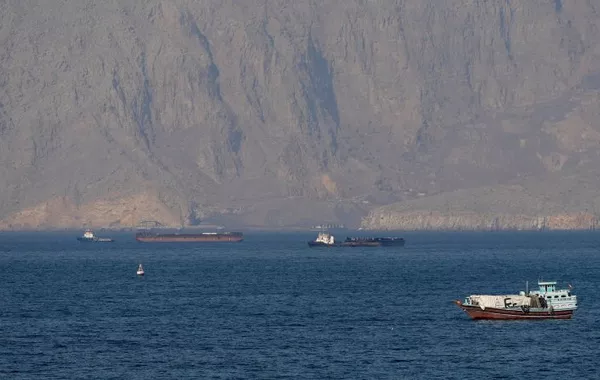
The Strait of Hormuz presents an even more consequential example because of its central role in global energy markets. According to the US Energy Information Administration (EIA), approximately 14.6 million barrels of oil and petroleum liquids per day passed through the strait in the first quarter of 2026 despite disruptions during the period.
These developments demonstrate that maritime power increasingly rests on the ability to control or threaten access. Even relatively small actors can impose high costs on major trading economies without possessing conventional blue water navies. At the same time, major powers are being compelled to devote greater resources to protecting commercial shipping, securing alternative routes, and maintaining freedom of navigation.
Shadow fleets and the erosion of maritime transparency
The emergence of so-called shadow or dark fleets adds another dimension to this changing maritime order. The term generally refers to vessels operating through opaque ownership structures and often relying on complex registration, insurance, and ship-to-ship transfer arrangements to transport sanctioned or politically sensitive commodities.
This phenomenon illustrates how maritime competition is extending beyond conventional naval confrontation. Shadow fleets can complicate sanctions enforcement, obscure the origins and destinations of cargoes, and create additional safety and environmental risks. The IMO has identified substandard and dark-fleet shipping as a growing maritime concern, particularly because some vessels may operate without adequate insurance or in violation of established safety standards.
China’s alleged reliance on or involvement in trade involving shadow fleet vessels should therefore be understood within the broader transformation of maritime governance. The issue is not simply whether Beijing uses particular vessels to circumvent restrictions, but whether the growing opacity of maritime transportation is weakening the ability of states and international institutions to monitor and regulate strategic flows.
A more contested maritime order
The simultaneous contestation of multiple chokepoints presents China with a complex strategic challenge. The Indo-Pacific, Middle East, Arctic, and Eurasian land corridors are increasingly interconnected, meaning that instability in one region can alter the strategic and economic value of routes elsewhere. This dynamic is reshaping the maritime policies of not only China and the US but also India, Japan, Europe, and other regional powers. Naval deployments, port-access agreements, maritime partnerships, coastal infrastructure, and logistics hubs increasingly serve both economic and strategic purposes. As a result, the distinction between commercial connectivity and military security is becoming increasingly difficult to maintain.
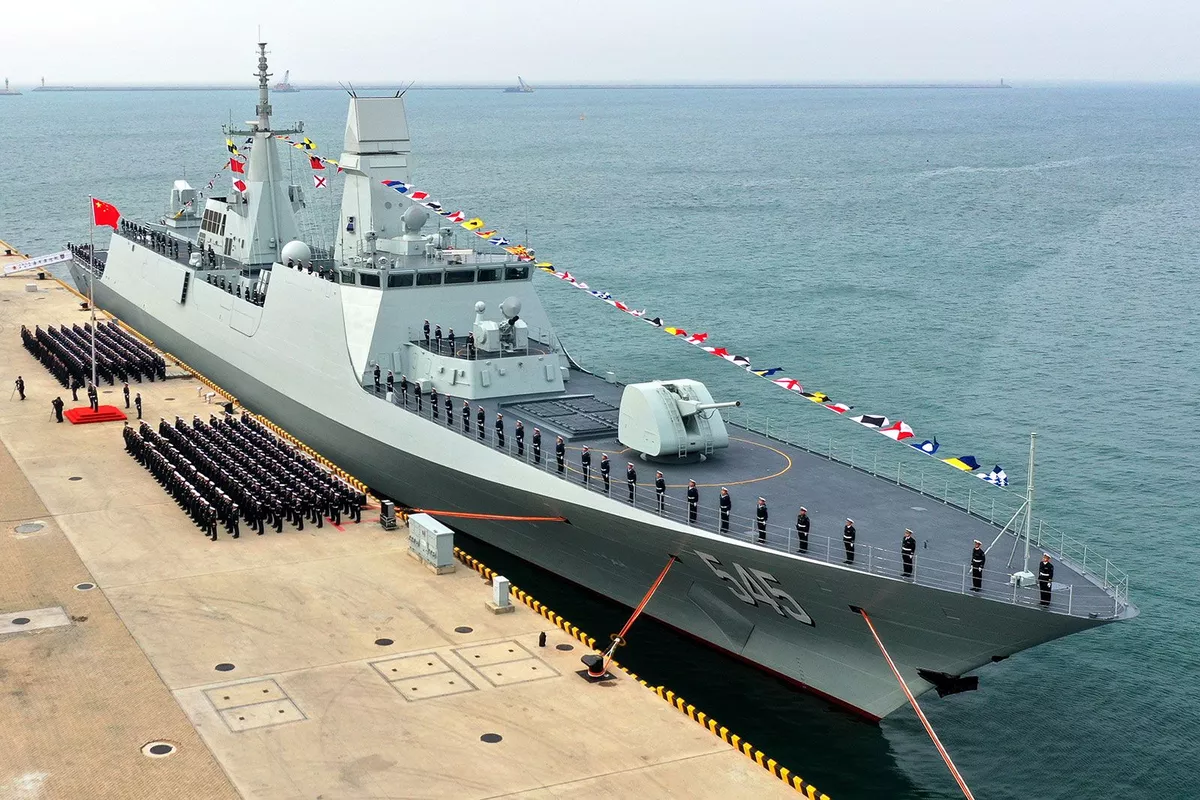
China is responding by strengthening its maritime capabilities while simultaneously developing alternatives to maritime dependence. The result is a strategy built around redundancy, involving the expansion of ports, pipelines, rail connections, naval capabilities, and alternative geographic routes. Yet redundancy has clear limits. Every alternative corridor carries its own political and strategic vulnerabilities. Arctic routes depend on a contested northern environment, land corridors depend on the stability and sovereignty of transit states, and maritime routes remain exposed to naval competition and conflict. China’s expanding connectivity network therefore provides greater strategic flexibility without eliminating strategic exposure.
The emerging maritime order is consequently not one in which China is simply becoming more powerful or more vulnerable. Rather, it is one in which power and vulnerability are increasingly produced by the same networks. China’s efforts to overcome the Malacca dilemma are creating a broader geography of strategic connectivity in which the central question is no longer simply who controls territory, but who can keep the world’s critical passages open. The challenge is therefore not simply to build a stronger navy or find an alternative to every chokepoint. It is to ensure that no single disruption, whether military, political, economic, or infrastructural, can simultaneously threaten the networks on which China’s global power depends.
Find the original article here