The escalating conflict in the Middle East has produced immediate and far-reaching consequences for global aviation, tourism demand and international travel flows. According to an analytical assessment provided by Oxford Economics to The Caspian Post, the crisis has triggered significant operational disruptions across regional airspace while simultaneously undermining traveller confidence in one of the world’s most important aviation and tourism hubs.
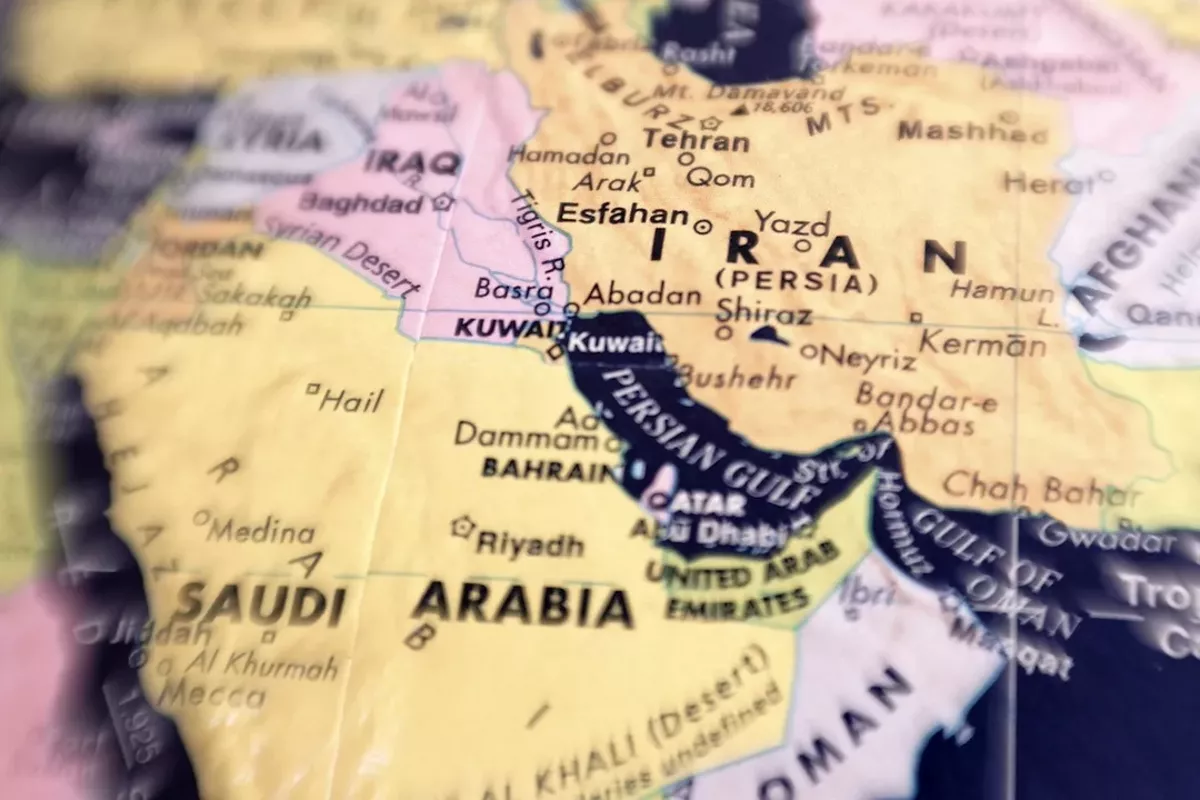
Within the first days of the conflict, the aviation sector experienced an immediate shock. Oxford Economics told The Caspian Post that more than five thousand flights were cancelled during the first two days of the escalation, as several countries closed their airspace. Iran, Israel, Iraq, Qatar, Bahrain, Kuwait and Syria fully suspended civilian air traffic, while the United Arab Emirates and Saudi Arabia introduced partial restrictions.
These closures created a chain reaction across international aviation networks. Thousands of passengers were stranded at airports across the Middle East and in global transit hubs. Aircraft and airline crews were displaced as a result of cancellations and rerouted flights, making the restoration of regular schedules significantly more complicated even after airspace restrictions begin to ease.
Two possible conflict scenarios
Oxford Economics outlined to The Caspian Post two main scenarios to assess the economic implications of the crisis for tourism and aviation markets.
The first scenario assumes an early resolution within one to three weeks. Analysts consider this the most likely outcome, given that the United States administration has indicated a preference for a short military campaign. The conflict also appears to lack strong domestic support within the United States, while Iran may face internal constraints limiting its ability to sustain a prolonged confrontation.
The second scenario assumes a longer conflict lasting up to two months. According to the assessment, this timeframe reflects expectations that Iran’s military and economic capacity may not allow it to sustain the conflict beyond several weeks.
Both scenarios examine two central drivers affecting tourism demand: operational disruptions caused by airspace closures and the psychological impact on international travellers.
Tourism demand expected to decline sharply
The conflict is expected to significantly alter previous projections for tourism growth in the Middle East. Before the escalation, the region had been forecast to record around 13% growth in international visitor arrivals in 2026.
However, Oxford Economics told The Caspian Post that the current geopolitical crisis could reverse that trajectory. Under the early resolution scenario, inbound tourism to the Middle East could decline by approximately 11% year on year in 2026.
In practical terms, this would represent a loss of roughly 23 million international visitors compared with earlier baseline projections. The reduction in tourism activity would translate into an estimated $34 billion decline in visitor spending.
If the conflict extends towards the two-month scenario, the economic impact would deepen considerably. International tourist arrivals could fall by up to 27% compared with previous forecasts, representing a loss of about 38 million visitors. Under this scenario, tourism-related spending losses could reach approximately $56 billion.
Different levels of impact across the region
The economic consequences are expected to vary significantly across Middle Eastern countries.
The Gulf Cooperation Council states are likely to experience the largest absolute losses in visitor numbers. Countries such as the United Arab Emirates and Saudi Arabia have developed sizeable tourism sectors that rely heavily on international air connectivity and high volumes of global travellers.
However, the steepest relative declines are projected in Israel and Iran, where the conflict is concentrated. Inbound tourism to Israel could fall by about 57% compared with previous forecasts, while Iran could see declines of around 49%.
These reductions are particularly notable, as both countries had previously been expected to experience a modest recovery in tourism following earlier regional tensions.
Global aviation hub under pressure
The Middle East’s role as a global aviation hub means the consequences extend far beyond regional tourism markets. Airports in the region account for roughly 14% of global international transit passenger flows.
Major carriers based in the region, including Emirates, Qatar Airways and Etihad Airways, connect Europe, Asia and Oceania through hub airports in Dubai, Doha and Abu Dhabi. Disruptions to these networks therefore affect global long-haul connectivity.
Passengers have already been stranded at airports across several continents as flights were cancelled or rerouted due to airspace closures.
Spillover effects on international travel
The disruption has also begun to reshape global aviation routes. Flights operating between Europe and the Asia-Pacific region are increasingly being rerouted to avoid restricted airspace.
These alternative routes are longer and more expensive to operate, increasing fuel consumption and operational costs for airlines. As a result, some carriers may reduce flight frequencies or cancel certain routes entirely if the disruptions persist.
The situation is further complicated by the fact that global aviation corridors have already been constrained by previous geopolitical conflicts. Airlines had earlier been forced to avoid Russian airspace due to the Russia-Ukraine war, reducing the number of available routes between Europe and Asia.
The Middle East crisis therefore places additional pressure on an already constrained global aviation network.
Broader economic implications
The impact of the conflict extends beyond tourism flows. Longer travel times, higher operational costs for airlines and reduced connectivity between major global regions could have wider economic consequences.
Although Europe and Asia are expected to experience the largest indirect effects, North America will also be affected. Several airlines have already suspended routes between the United States and Israel due to security concerns.
These route suspensions affect both tourism and business travel, while also disrupting cargo logistics.
Conclusion
The current conflict in the Middle East illustrates how geopolitical instability can rapidly disrupt global aviation and tourism markets. Flight cancellations, airspace closures and weakened traveller confidence are already generating measurable economic consequences.
Depending on the duration of the conflict, the Middle East could lose between 23 and 38 million international visitors in 2026, with tourism revenue losses estimated at between $34 and $56 billion.
Given the region’s central role in global aviation connectivity, these disruptions are likely to affect travel flows, airline operations and tourism demand across multiple continents.