A War Without a Breakthrough: Why the Front Is Locked in Strategic Paralysis
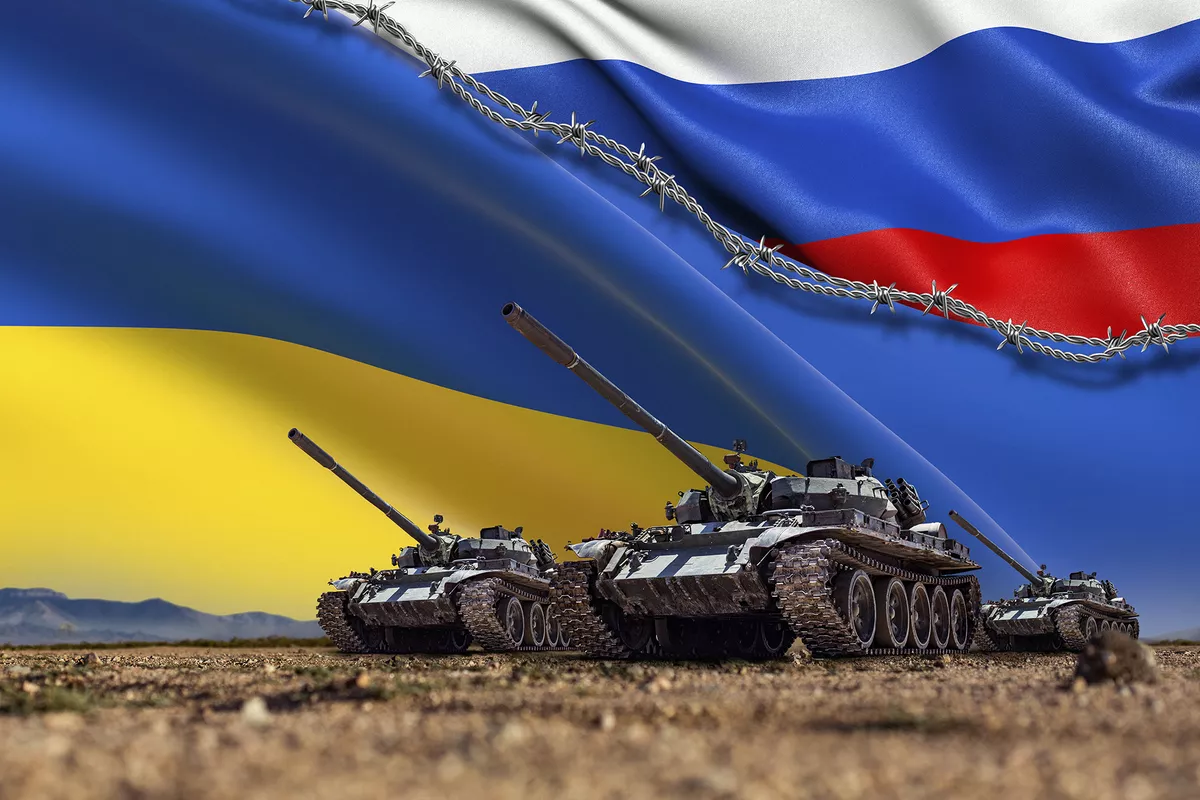
The current operational situation along the front line of the Russia-Ukraine war is increasingly difficult to describe using traditional military categories.
On the surface, fighting remains intense, and Russian forces continue to apply pressure across several directions. Yet behind the visible movement of attacks and counterattacks lies a far more troubling reality: neither side is capable of achieving a decisive strategic breakthrough. The war has entered a phase of strategic paralysis, in which the cost of every tactical gain continues to rise while its overall significance steadily declines.
Russia has indeed managed to secure limited tactical advances on certain sections of the front, particularly in the Donetsk and Zaporizhzhia directions. These developments are actively amplified in the information space, creating the impression of momentum. However, the underlying trend is deeply unfavorable for Moscow. According to Ukrainian analysts, Russian losses in manpower in some months already match or exceed the country’s recruitment capacity. This suggests that Russia’s advances are being sustained not by a renewable mobilization reserve, but by the accelerated depletion of human resources.
The situation around Kupyansk illustrates this dynamic particularly well. The city, whose capture was publicly claimed by Vladimir Putin, ultimately failed to become a symbol of strategic success. Ukrainian counterattacks restored significant control over the area, demonstrating the fragility of Russia’s battlefield gains. Even when territorial progress is achieved, it often proves unstable and requires constant reinforcement, further increasing losses and logistical strain.
At this stage of the war, Russia’s ability to escalate has effectively reached its limits. The only option capable of fundamentally altering the balance of forces would be a new wave of large-scale mobilization. Yet the Kremlin has refrained from taking this step, even as the conflict drags on. The reasons are not merely political. Russia’s economy is showing clear signs of systemic stress, and another mobilization would intensify social tensions, reduce the civilian labor force, and place additional pressure on an already strained budget.
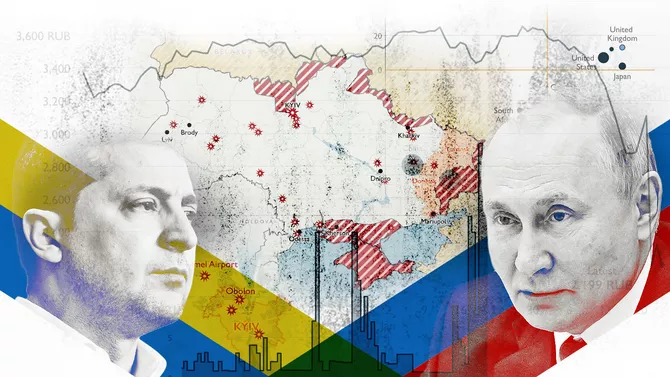
Photo credit: thetimes.com
Compounding these challenges is Russia’s critical dependence on Western technologies. Episodes involving restrictions on access to satellite communication systems, including disruptions linked to Starlink, have underscored a structural vulnerability: despite years of confrontation with the West, Russia remains embedded in a global technological ecosystem it does not control. This dependency cannot be neutralized by increasing troop numbers or by intensifying propaganda - it is a fundamental constraint on Russia’s military sustainability.
Ukraine, for its part, faces a different but no less complex set of limitations. Allied support remains stable, yet insufficient to enable a rapid shift in the military balance. The most acute shortages concern weapons and ammunition, particularly air defense systems. The oft-repeated Ukrainian phrase that “there is never enough weapons” has become a stark reflection of reality rather than a rhetorical device.
Crucially, this shortage is not driven solely by political hesitation in the West. It is also the result of objective production constraints. Expanding supplies requires a substantial increase in defense manufacturing capacity in Europe, the United States, and Ukraine itself. The launch of a new Rheinmetall facility in Germany, expected to produce up to 150,000 artillery shells annually, as well as plans to build a similar plant in Ukraine, indicate a strategic understanding of the problem. Yet industrial expansion cannot be rushed. New factories require time, investment, and stable supply chains before they can make a tangible impact on the battlefield.
Domestic political debates within Western countries also influence the pace and scale of military assistance to Kyiv. Hungary’s obstruction of EU mechanisms for financing weapons deliveries has highlighted how individual national interests can slow collective decisions. Nevertheless, Europe has gradually developed alternative solutions. The decision to allocate approximately €90 billion for Ukraine in 2026-2027 reflects a strategic commitment and signals that the EU is preparing for long-term involvement rather than short-term crisis management.
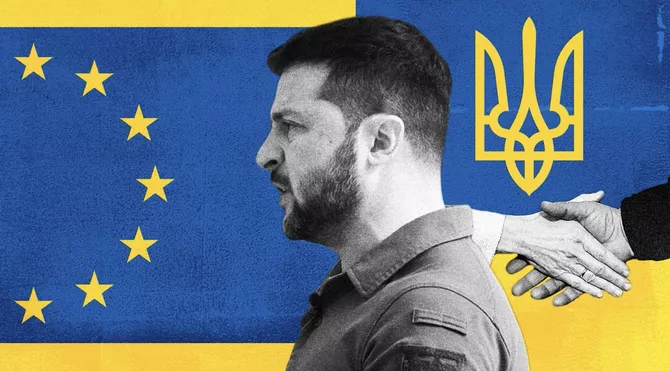
Photo credit: The Financial Times
The role of the United States is also undergoing a notable transformation. Washington has largely stepped back from direct economic support for Ukraine and has significantly reduced direct military assistance. Increasingly, U.S.-made weapons reach Kyiv through European procurement programs. Even in the intelligence sphere, responsibilities are being redistributed. According to statements by French President Emmanuel Macron, European partners already provide a substantial share of intelligence support, and within months Europe is expected to fully cover Ukraine’s needs in this area independently. This shift points to a broader reconfiguration of the transatlantic support architecture.
Looking ahead, several variables will shape the situation on the front in the coming months. One is the possibility of intensified mobilization in Ukraine or, conversely, the declaration of full mobilization in Russia. Another is the tightening of sanctions, particularly against Russia’s shadow tanker fleet and channels supplying dual-use components. Ukrainian strikes on Russian oil and gas infrastructure have already exposed vulnerabilities in an economic model heavily reliant on energy exports.
Finally, a potential game-changer would be Ukraine’s acquisition of long-range cruise or ballistic missiles - either domestically produced or supplied by Western partners. Systems such as Tomahawk, JASSM, or Taurus would not guarantee immediate victory, but they would allow Ukraine to exert sustained, systemic pressure on Russia’s economic and military foundations.
In the end, the war has settled into a state of strategic stalemate without symmetry. Neither side possesses the resources for a decisive blow. Yet it is precisely under such conditions that long-term factors - economic resilience, technological capacity, and the durability of alliances - become decisive. Time, contrary to popular assumptions, does not automatically favor Moscow. It favors the side capable of enduring a prolonged confrontation without undermining the foundations of its own system.