As the balance of power across Eurasia shifts, a new strategic situation is coming into focus - one where Russia’s influence is waning while the United States is steadily expanding its footprint. In The Great Eurasian Realignment: Russia Weakens, America Advances, Kamran Bokhari lays out this transformation in an article published by Forbes, arguing that geopolitical, economic, and security dynamics from Eastern Europe to Central Asia are being fundamentally reshaped.
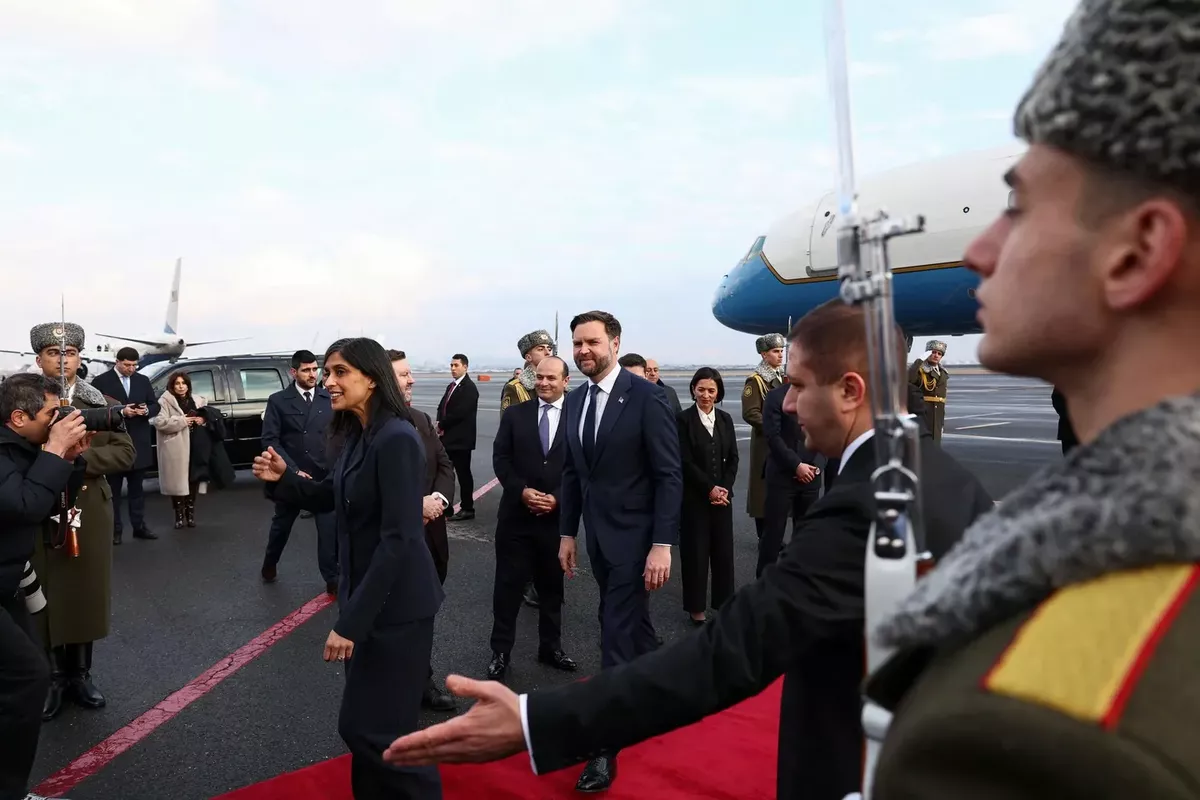
U.S. Vice President J.D. Vance arrived in Armenia February 9 and is due in Azerbaijan on February 11-12 as part of a trip aimed at advancing the U.S.-brokered peace agreement between the two countries announced last August at the White House. His visit is intended to accelerate development of the Trump Route for International Peace & Prosperity - a 27-mile strategic transit corridor running through southern Armenia along the Iranian border and linking Azerbaijan to its Nakhchivan, The Caspian Post republishes the article.
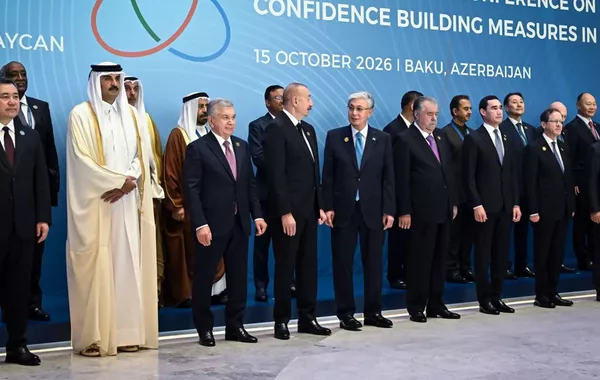
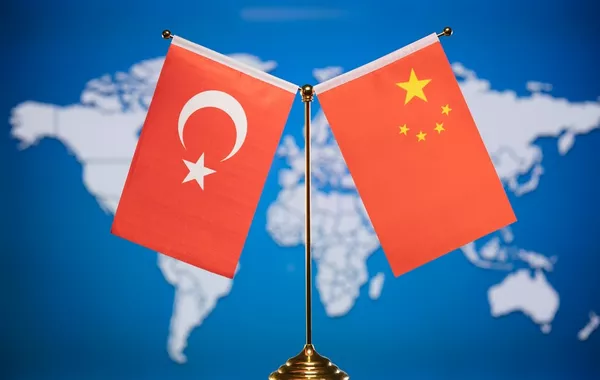
Vance’s tour follows recent outreach by Kazakhstan’s President Kassym-Jomart Tokayev (February 3-4) and Uzbekistan’s President Shavkat Mirziyoyev (February 5-6) to Pakistan to strengthen strategic ties, expand trade, and advance transit routes connecting Central Asia to Pakistani ports and global markets. Elsewhere, the EU’s enlargement chief and Türkiye’s foreign minister agreed on February 6 to modernize the EU-Türkiye customs union, enhance competitiveness, and support regional projects through the gradual resumption of European Investment Bank operations.
Unprecedented Shift in Eurasia
A major geopolitical realignment is unfolding across Eurasia as Russia and Iran face weakening influence. As a result, the post-Cold War framework that has constrained the South Caucasus and Central Asia since the 1991 Soviet collapse is rapidly unraveling. At the same time, the United States is advancing a global strategy focused on redistributing burdens and recalibrating commitments. Together, these trends are prompting regional actors to diversify their external partnerships and reduce dependence on Moscow.
These forces are creating a new geo-economic space stretching from Eastern Europe and the Black Sea through Türkiye, the South Caucasus, the Caspian, Central Asia, South Asia, and the Arabian Sea. Historically, this vast landmass has been a contested arena for rival empires - Greek, Persian, Roman, Byzantine, Arab, Turkic, Mongol, and Russian. In today’s emerging trans-Eurasian network, Azerbaijan occupies a pivotal role, serving as a strategic bridge linking European, Eurasian, and Indo-Pacific economic and security systems. Consequently, deeper U.S. engagement with Baku has become a critical lever for influencing the region’s evolving balance of power.
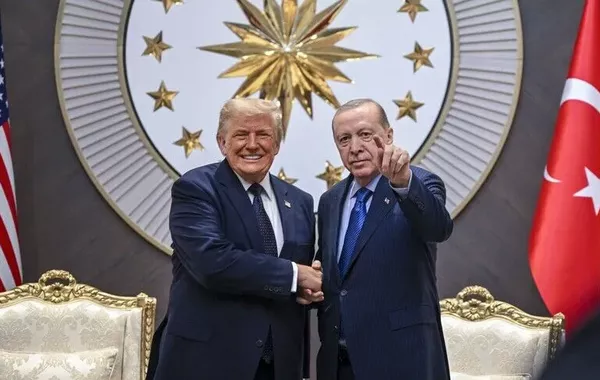
Against this backdrop of emerging connectivity and American engagement, Section 907 of the 1992 Freedom Support Act - a Cold War-era policy relic - continues to restrict U.S. assistance to Azerbaijan. Originally enacted to pressure Baku to lift its blockade of Armenia and the territories in Karabakh formerly under Yerevan’s control, the law became obsolete following the 2023 end of hostilities and the August 2025 peace agreement brokered by President Donald Trump and thus needs to be repealed. That the Armenian National Committee of America (ANCA) continues to advocate for its continuation illustrates the persistence of partisan and diaspora-driven lobbying. ANCA’s efforts are increasingly at odds with Armenia’s own behavior and foreign policy, which has shifted toward reconciliation with Azerbaijan, and they undermine American interests in the South Caucasus - threatening the Trump Route project and the strategic dividends it promises for Washington.
For the first time in history, the United States has a genuine opportunity to establish lasting influence in a region long dominated by the Kremlin and threatened by Iran. At the founding of the United States, the South Caucasus and Central Asia were already coming under Russian imperial control. By the time America emerged as a global superpower, these lands lay firmly behind the Soviet Iron Curtain. Even after the USSR’s collapse, Moscow retained substantial political and economic leverage, keeping the region within its orbit.
Russia’s Southern Periphery
The Soviet Union’s successor, the Russian Federation maintained influence over former Soviet republics through elite networks, economic dependencies, security partnerships, and institutions such as the: Commonwealth of Independent States (CIS); Collective Security Treaty Organization; and Eurasian Economic Union. Yet Moscow’s control along its southern frontier was always uneven, constrained by local rivalries and complex geopolitics. Persistent instability and recurring regional conflicts exposed a growing gap between the Kremlin’s ambitions and its actual capacity to project power. As a result, these neighboring states have increasingly pursued independent strategies, testing the limits of Kremlin authority.
By the early 2000s, Vladimir Putin’s consolidation of power allowed Moscow to reassert a measure of control across the Caucasus and rebuild its regional clout. NATO’s intervention in Afghanistan eased Russia’s security burden in Central Asia, freeing resources to refocus on Europe. From the early 2000s through the mid-2010s, Moscow systematically intensified its western strategy. During that 10-year period, Russia rolled back Ukraine’s 2004 Orange Revolution, invaded Georgia in 2008, and grappled with the seismic upheaval of Ukraine’s 2014 Maidan uprising.
In response to the ouster of the pro-Kremlin government in Kyiv, Moscow annexed Crimea and invaded the Donbas. These actions locked Russia into a prolonged confrontation with the West, diverting attention and resources from its southern flank. As Russia’s strategic focus shifted westward, China expanded its presence in Central Asia through security cooperation, infrastructure projects, and energy investments - accelerating after the launch of the Belt and Road Initiative in 2013. Beijing has since emerged as the region’s dominant external economic power, even as Moscow retains limited political and security influence.
Moscow’s Waning Influence
Russian influence along its southern periphery eroded sharply after 2020 amid economic strain, pandemic disruption, and mounting military constraints. Moscow’s weakening grip was compounded by regional actors testing the limits of its authority and pursuing independent strategies. Türkiye’s decisive support for Azerbaijan during the Second Karabakh War upended the long-standing Russian-managed equilibrium, empowering Baku to assert greater strategic autonomy. Recent reporting from Azerbaijani outlets www.minval.az and www.caliber.az suggests Baku is even weighing withdrawal from the Russian-led CIS.
Azerbaijan now views the bloc as largely irrelevant, actively cultivating partnerships with the U.S., Türkiye, the EU, and other global players. Armenia has similarly sought to diversify its alliances beyond Moscow, signaling a shift in traditional dependencies. At the same time, Central Asian states have embraced multi-vector foreign policies to hedge against Russian dominance. They have deepened engagement with the United States through forums like the C5+1 summits, advanced connectivity projects that bypass Moscow, and reinforced national identities as Kremlin influence steadily declines.
Kazakhstan and Uzbekistan are advancing both the East-West Middle Corridor and a complementary southern trade axis linking Afghanistan and Pakistan. Their outreach to Islamabad highlights a strategic push for export diversification, maritime access, and deeper integration with South Asian and Middle Eastern markets. Despite the challenges posed by Taliban-ruled Afghanistan, both governments are pursuing pragmatic, results-oriented approaches to regional economic engagement. Astana and Tashkent are leveraging the Taliban’s urgent need for a functioning economy to position themselves as gatekeepers of new trade flows, investment opportunities, and critical regional connectivity.
These shifts have created room for Trans-Caspian nations states to diversify their global partnerships. For Washington, this creates a strategic opening to expand geoeconomic leverage in a region where U.S. influence has historically been limited. Coordinated initiatives involving Türkiye, Azerbaijan, Kazakhstan, Uzbekistan, and Pakistan - amid Russian pullback, Chinese overextension, and Iranian instability - are reshaping Eurasia’s power dynamics and reinforcing a U.S. approach centered on burden-sharing rather than unilateral intervention. Within this emerging architecture, Azerbaijan serves as the principal connector linking the South Caucasus, Central Asia, and the broader Indo-Pacific basin.