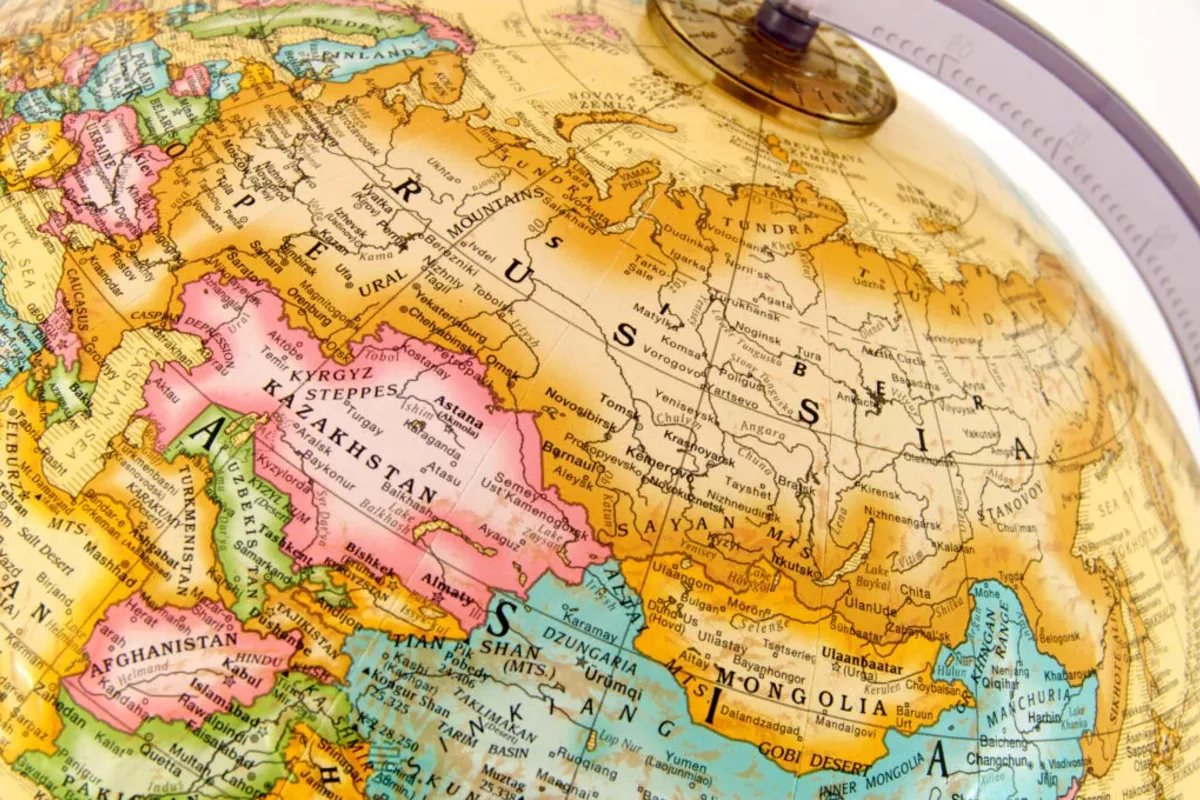
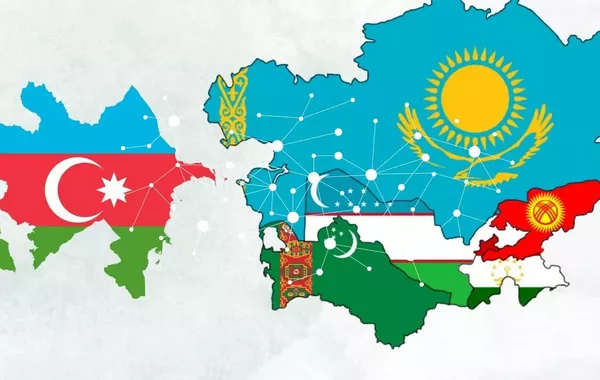
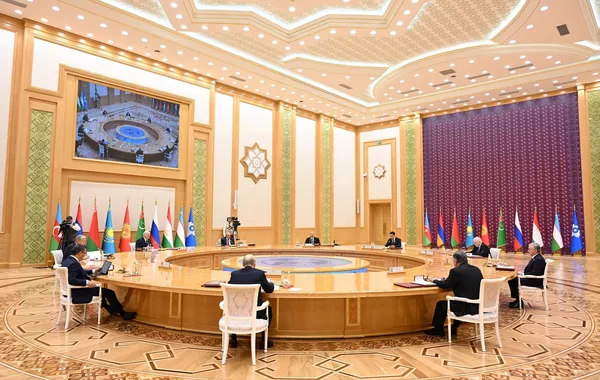
The Russian propagandist and ideologue of the “Russian world” concept, Alexander Dugin, recently stated in a video on the Infocelina YouTube channel that Moscow should not “accept the existence of a sovereign Armenia, Georgia, Azerbaijan, Kazakhstan, Uzbekistan, Tajikistan, and Kyrgyzstan.” According to him, the former Soviet republics should become part of Russia.
“Either they will be in our camp, part of our unified union, or they will become a foothold for the West, the European Union, America, or, under certain circumstances, China,” Dugin said, without specifying how Russia intends to assert dominance - economically, diplomatically, or by military means.
Given Dugin’s proximity to the inner circle of Russian leader Vladimir Putin, his remarks have raised concern among experts, as they directly challenge the principle of state sovereignty enshrined in international law and cast doubt on the independence of a number of post-Soviet states.
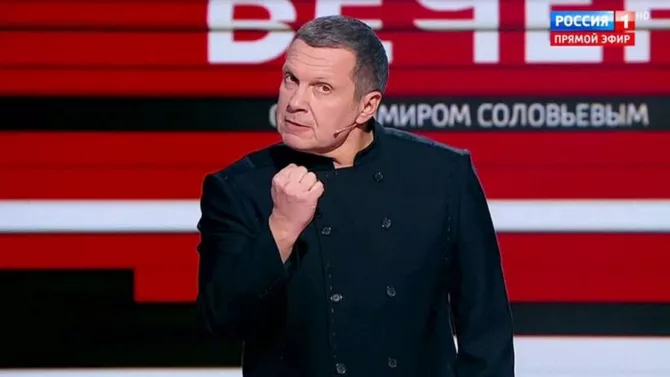
Photo: Russian propagandist and television host Vladimir Solovyov
Against the backdrop of Dugin’s statement, controversy was earlier sparked by comments from Russian propagandist and television host Vladimir Solovyov, who suggested on his Solovyov Live podcast that Russia could conduct a “special military operation” in Central Asia.
According to him, “the loss of Armenia is more painful for Russia than events in Venezuela,” and the situation in “our Central Asia” could become a “giant problem.” He also proposed defining zones of Russian influence and hinted that, if necessary, an “SMO like in Ukraine” could be carried out in the region in the interests of national security.
Russian Foreign Ministry spokesperson Maria Zakharova stated that Solovyov’s remarks do not reflect Moscow’s official position. She emphasised that this was the journalist’s personal opinion, expressed on a private channel and framed as a question rather than a statement. At the same time, she recalled that Russia’s official position towards Central Asian countries has been repeatedly articulated at the highest level and, according to her, is based on the principles of good neighbourliness, alliance, and friendship.
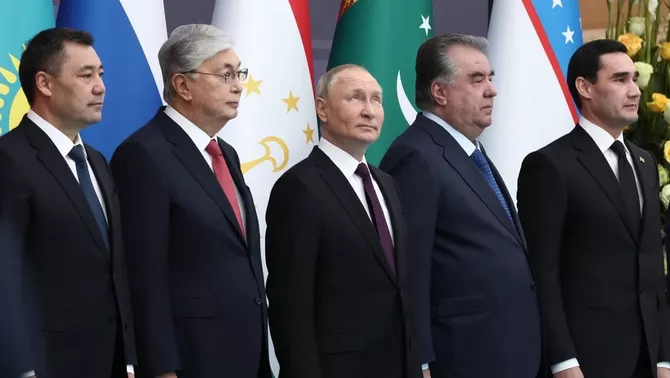
Pho0to credit: ras-nsa.ca
Such attacks by Russian propagandists against former Soviet republics have become regular. Given that Dugin and Solovyov are close to the Kremlin, experts interpret these attacks as an attempt to project strength amid strategic weakness and to prepare the ground for possible future interference, arguing that such statements would never be made without coordination with the Kremlin. In other words, these propagandists openly voice what a significant part of the Russian elite prefers to express in veiled terms.
At the same time, Azerbaijan causes particular irritation among many Russian propagandists, especially amid tensions in bilateral relations. Azerbaijan’s independent foreign policy and its demands for equal treatment in relations with Russia anger Russian commentators.
They are especially hostile to the process of a peaceful settlement between Azerbaijan and Armenia, particularly the text of the peace treaty initialled on August 8 last year in Washington in the presence of U.S. President Donald Trump. Commenting on this event, Dugin called it a “failure of Russian policy in the South Caucasus.”
“The conclusion of a peace treaty between Azerbaijan and Armenia in Washington is a failure of Russian policy in the South Caucasus. Russia has lost influence in the region, and those responsible remain unpunished. It is time to acknowledge mistakes and restore great power status,” Dugin said, emphasising that the document testifies to Russia’s impotence.
“This treaty is proof of our powerlessness. We no longer control even the post-Soviet space. If we are not respected here, who will take us into account on the world stage? It is not just a defeat - it is a slap in the face for every Russian,” the Kremlin ideologue lamented.
It is evident that the successes of Azerbaijan and other post-Soviet countries pursuing independent foreign policies based on national interests provoke an extremely painful reaction in the Kremlin. Threats and pressure detached from reality are increasingly deployed. The reality, however, is that Russia, mired in a fourth year of war against Ukraine, is steadily losing ground.
Russia is showing signs of weakening due to recession, military strain, and the loss of foreign policy influence. Oil production in Russia in 2025 amounted to 512 million tonnes. Output has been declining for three consecutive years: 516 million tonnes were produced in 2024, 530 million tonnes in 2023, and 535 million tonnes in 2022. As a result, oil production has fallen to its lowest level since 2009, when Russia produced 494.2 million tonnes. The oil industry, which accounts for a quarter of state budget revenues and nearly half of export earnings, is gradually sliding into crisis.
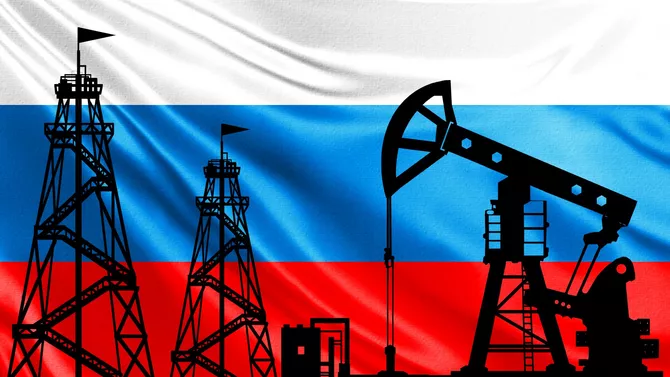
Photo credit: socialistsanddemocrats.eu
The price of Russian oil in 2025 fell from 63 dollars per barrel at the beginning of January to 36 dollars by the end of the year. The Russian state budget assumes an oil price of 59 dollars per barrel. In January, Russia’s oil and gas revenues may fall by 46 percent compared with January 2025 due to lower oil prices and a stronger rouble, according to calculations cited by Reuters.
In an attempt to offset losses, the Russian government has been selling gold from the National Wealth Fund for three years in a row to fill the federal budget, finance state banks, and pay for megaprojects. From 2022 to 2025, the volume of gold on the fund’s balance sheet decreased by 71 percent, according to data from Russia’s Finance Ministry.
According to NATO estimates, Russia’s total military losses in nearly four years of war against Ukraine reached 1.15 million people by December 2025. About 400,000 of those wounded became disabled. Russia has lost more than 11,000 tanks, nearly 24,000 armoured vehicles, 434 aircraft, and 347 helicopters.
Given such colossal economic and military losses, talk of a new “special military operation” is unrealistic and absurd. Experts familiar with the real state of affairs in Russia would not issue loud threats towards post-Soviet states without directives from above. Statements by Dugin, Solovyov, and others like them demonstrate that they are voicing the Kremlin’s intentions rather than their own opinions. Instead of being a guarantor of security for existing political regimes in the region, Russia is increasingly becoming a threat to them.
It should also be recognised that China views Central Asia as a zone of its economic interests and will not allow chaos in the region. Türkiye is likewise unlikely to permit this, as its growing influence - against the backdrop of a weakening Russia - is creating a powerful alternative in military, political, and cultural terms for countries in the South Caucasus and Central Asia.
It is also worth recalling that Central Asian countries have begun independently resolving border disputes, including the conflict between Kyrgyzstan and Tajikistan, without Russia’s mediation. Gradually, albeit with difficulty, the region is shifting from the role of an object of international politics to that of a subject. States, above all Kazakhstan and Uzbekistan, are coordinating their own foreign policies and avoiding rivalries that previously made them vulnerable to external pressure. Kremlin threats voiced through Russian propagandists are therefore likely to accelerate integration processes among Central Asian countries, strengthening sovereignty, defence capability, and security, while further eroding trust among regional elites towards Russia.