Central Asia Is Reducing Dependence on Russian Transit
A significant shift is underway across Eurasia, and it is happening with little fanfare. Uzbekistan and Türkiye have agreed to launch regular container trains via Turkmenistan and Iran, creating another logistics corridor that bypasses Russia. The decision, reached at the end of January during a high-level strategic meeting in Ankara, is more than a technical transport arrangement. It is a geopolitical signal.
At first glance, the project appears pragmatic: a faster railway route connecting Central Asia to European markets, reducing costs, shortening delivery times, and increasing the resilience of regional trade. Experts note that for Uzbek exporters, this route is currently the quickest and most convenient way to move goods to Türkiye. Compared with maritime transport through the Suez Canal, delivery times are expected to be almost halved. For businesses, the appeal is clear.
But the broader implications extend far beyond logistics.
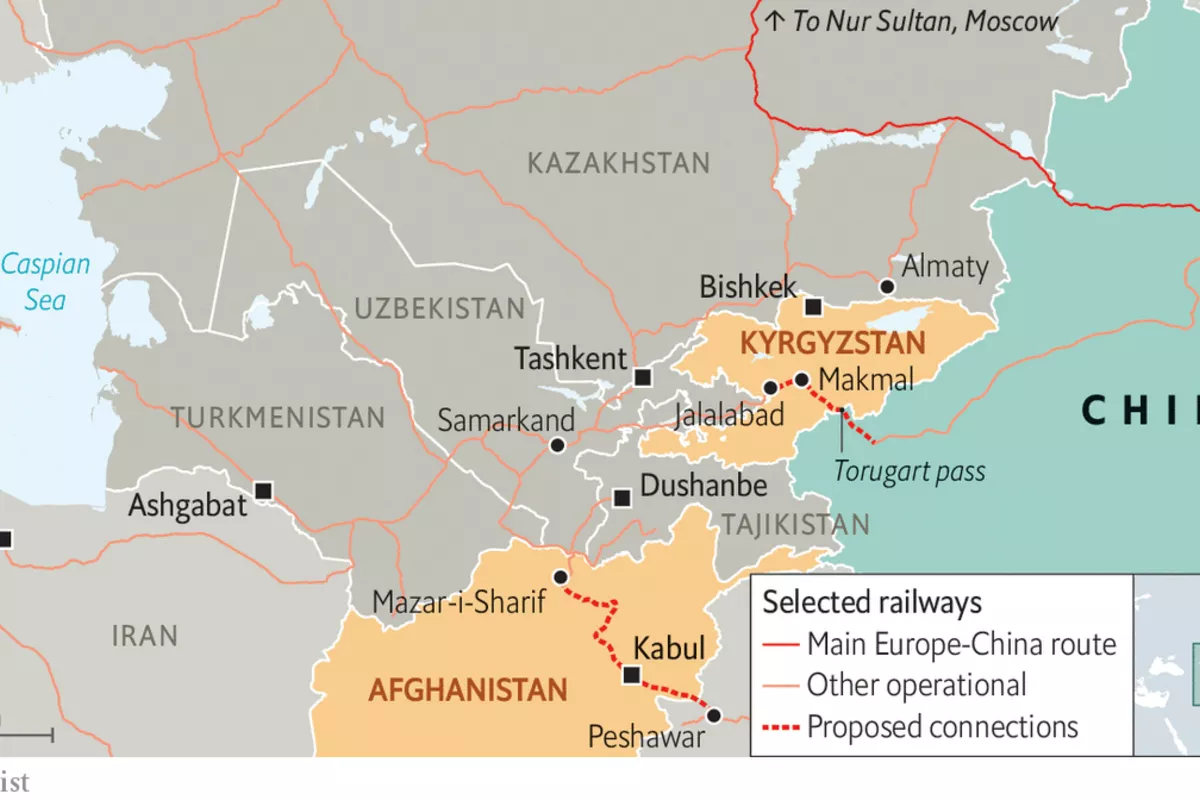
This corridor is part of a growing network of transport routes that deliberately avoid Russian territory. Alongside earlier initiatives such as the Middle Corridor and new agreements involving Pakistan, China, Kyrgyzstan, and Uzbekistan, it reflects a strategic reorientation by Central Asian states. These countries are no longer willing to depend on a single transit power or accept inherited constraints from the post-Soviet era.
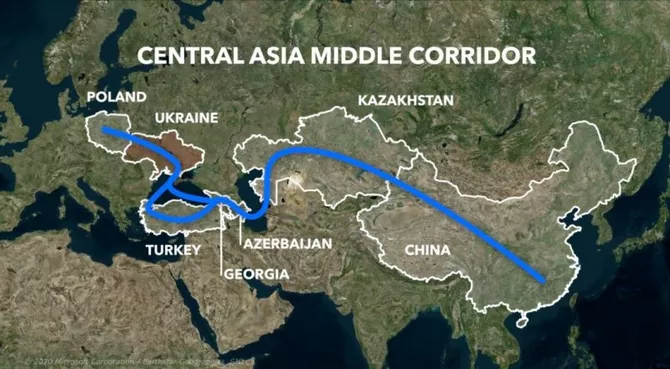
photo: middlecorridor.com
For decades, Russia effectively held a monopoly over transit routes for Central Asia. Moscow closely guarded this position, ensuring that alternative corridors did not emerge without its consent. Independent initiatives were discouraged, if not outright blocked.
Azerbaijan was the first to openly challenge this arrangement by developing energy pipelines and transport routes that bypassed Russia. Central Asia is now following a similar path.
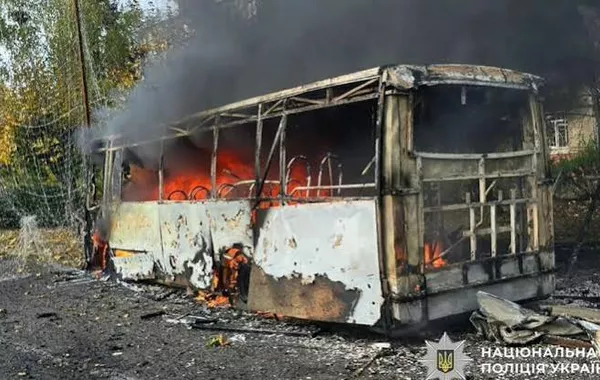
The reasons are not difficult to identify. Russia’s war in Ukraine and the resulting sanctions have made traditional routes less reliable, more expensive, and politically risky.
At the same time, Central Asian states have become more confident, more integrated into global markets, and more determined to pursue their own economic interests. Transport diversification has become a matter of strategic autonomy.
The institutional groundwork for the Uzbekistan-Türkiye corridor has been carefully laid. In November 2023, transport authorities from Turkmenistan, Uzbekistan, Iran, and Türkiye signed a protocol committing to the creation of a multimodal corridor linking China and the Asia-Pacific region with Europe. The project includes harmonization of technical standards, regulatory frameworks, and customs procedures - an essential but often overlooked aspect of making such corridors viable.
The route itself has already been tested. In December 2022, the first freight train from Türkiye arrived in Uzbekistan, delivering household appliances via Iran and Turkmenistan. The corridor spans roughly 4,500 kilometers, and its gradual institutionalization since 2023 suggests that the participating states view it as a long-term asset rather than a symbolic gesture.
Crucially, Uzbekistan is now seeking to bring China into the project. Talks in Beijing between railway officials from both countries focused on connecting Chinese state railways to the corridor and expanding freight volumes. If realized, this would further integrate the route into Eurasia’s emerging logistics architecture - again, without Russia at its center.
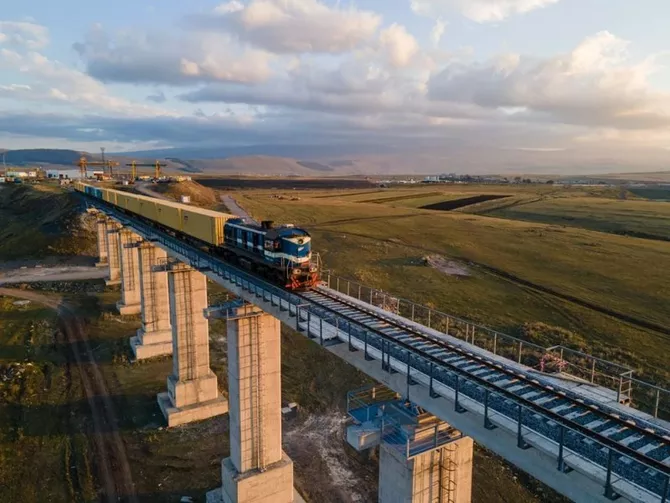
photo: Azerbaijan Railways
Some observers have raised concerns that these new corridors could undermine the relevance of the Baku-Tbilisi-Kars (BTK) railway. Such fears are misplaced. The Uzbekistan-Türkiye route is primarily suited for trade among its participating countries. When it comes to large-scale freight flows to Europe, BTK remains unmatched. Its direct access to Georgia’s Black Sea ports, particularly the deep-water port of Poti and the planned Anaklia port, gives it structural advantages that alternative routes cannot easily replicate. Turkish ports such as Trabzon and Rize are smaller and lack direct railway connections.
The real story, therefore, is not competition between corridors, but multiplication. Eurasia is entering an era in which redundancy in transport has become a strategic necessity. The more routes that exist, the less vulnerable trade becomes to political shocks, sanctions, or armed conflict.
In a region shaped by war, sanctions, and shifting power balances, Central Asia is making a quiet but consequential choice. It is building roads, rails, and partnerships that reduce dependence, expand options, and redefine its place in the Eurasian order. As long as the war in Ukraine shows no sign of ending, this trend is likely to accelerate.
By Tural Heybatov