As Armenia prepares for parliamentary elections on June 7, political debates within the country are intensifying amid ongoing shifts in the South Caucasus. At the same time, recent diplomatic developments, including the awarding of the Zayed Award to the leaders of Azerbaijan and Armenia and discussions over new regional transport initiatives, have added fresh momentum to conversations about peace, security, and economic cooperation.
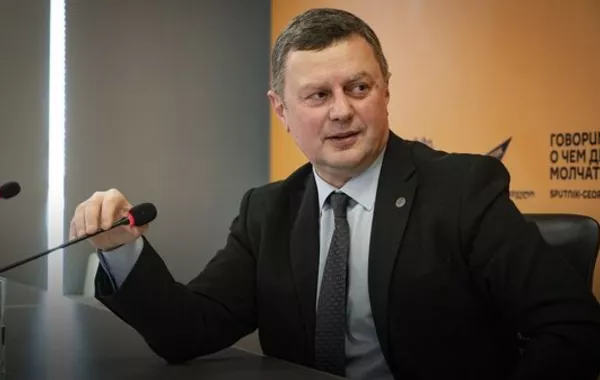
In an interview with The Caspian Post, Armenian activist Ishkhan Verdyan assesses the current political landscape in Armenia, evaluates Prime Minister Nikol Pashinyan’s electoral prospects, and reflects on the wider implications of regional reconciliation efforts.
Verdyan also discusses the potential impact of major infrastructure projects and offers his perspective on recent judicial decisions involving former leaders of the Karabakh junta.
- How do you assess the decision to award the Zayed Award to the leaders of Azerbaijan and Armenia in Abu Dhabi?
- The decision to award the Zayed Award to the leaders of Armenia and Azerbaijan in Abu Dhabi can be viewed as a multilayered and highly symbolic event. First of all, its symbolism stands out very clearly. It is important to recall that Ilham Aliyev and Nikol Pashinyan led their respective countries during the 44-day war, a real and bloody armed confrontation in which the two sides were directly opposed to one another.
However, once the war ended, both leaders demonstrated the political will necessary to guide their countries toward a peace process. Peace that follows such an intense and violent conflict has a particular character of its own - it inevitably carries a sense of responsibility and obligation. This brings us to the second important dimension of the award: to a certain extent, it commits its recipients to remain symbols of a peaceful course. It serves as a constant reminder to the international community that even the most brutal hostility can eventually give way to dialogue and peace.
At this stage, we are speaking more about peace as a factual outcome rather than a fully developed or sustainable peace. Nevertheless, I am convinced that reaching such a stage is entirely possible. In this context, awarding the Zayed Prize to Ilham Aliyev and Nikol Pashinyan can be interpreted as international recognition of the conclusion of one of the longest, bloodiest, and most destructive conflicts in the post-Soviet space - the Armenian-Azerbaijani conflict.
Shutterstock photo
- Parliamentary elections in Armenia are officially scheduled for June 7. How do you assess the chances of the various political forces?
- Given the current timeframe and the existing political situation, if elections were held “tomorrow,” Nikol Pashinyan would secure an unconditional majority, including a constitutional one. At present, there is virtually no doubt about this outcome. Pashinyan continues to enjoy a high level of popularity among Armenian citizens and his core electorate, and this support is being consistently confirmed.
It is unfortunate that the Armenian government’s media system has not yet managed to communicate its achievements effectively to an international audience. That said, these achievements undeniably exist - they are real, visible, and tangible. Armenian citizens experience these changes in their everyday lives, and they affect almost every sphere of society.
On the other end of the spectrum stands the opposition, whose credibility is steadily eroding. New facts and circumstances emerge regularly, further undermining its already fragile reputation. In practice, the opposition today is largely personified by a single figure - Robert Kocharyan. Other political structures and individuals operate, to varying degrees, as his satellites.
The so-called Karabakh clan is closely associated with Kocharyan, and in the public consciousness, it is linked with war, plunder, violence, and a heavy legacy from the past.
Armenian society understands the nature of the current political period very clearly. There is serious doubt that citizens, having freed themselves from the Karabakh clan in 2018, would be willing to allow its return to power. If present trends continue - if Nikol Pashinyan maintains his constructive political line, including his peace agenda, which also enjoys public support, and if the opposition persists in its destructive behavior - then no fundamental changes should be expected by election day.
On the contrary, the balance of power may tilt even more decisively in Pashinyan’s favor.
Therefore, if we set aside the media noise generated by structures linked to Robert Kocharyan and assess the situation realistically, Nikol Pashinyan emerges as the confident winner of these elections.
- What specific benefits could the implementation of the Trump Route project bring to Armenia?
- The Trump Route project has the potential to become a truly unique development for Armenia, significantly strengthening the country’s position in several key areas.
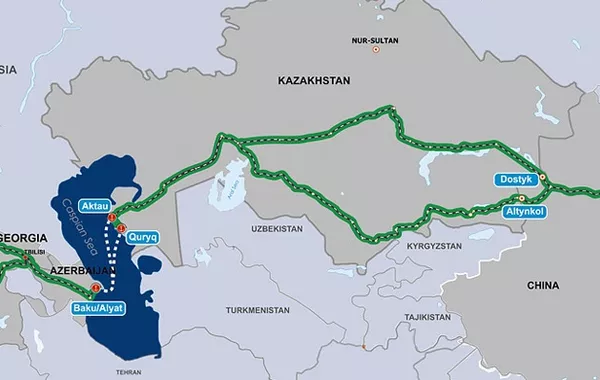
First and foremost, there is the security dimension. Although the route bears the name of U.S. President Donald Trump, the infrastructure it envisions would have continental significance. It would establish a stable link between the eastern and western parts of Eurasia. A glance at the map shows that this relatively short stretch, running through Azerbaijan, then Armenia, and then Azerbaijan again, could effectively become the only reliable land corridor connecting Europe with the Far East.
The northern route runs through Russia, which is unlikely to be perceived as a stable transit option in the foreseeable future. The southern route passes through Iran, where serious logistical and political limitations persist. As a result, a narrow but strategically vital corridor in the South Caucasus remains.
The fact that this corridor would pass through Armenia would significantly enhance the country’s political weight, naturally in close coordination with Azerbaijan.
The second major aspect is economic. At present, it is difficult to provide precise or even approximate forecasts, as Armenia has never before taken part in large-scale transit projects of this magnitude. This would represent an entirely new role for the country. Nonetheless, it is clear that integration into major transport and logistics chains could have an extremely positive impact and, over time, substantially improve Armenia’s economic development and overall prosperity.
Finally, there is a symbolic dimension. This route could become a genuine bridge - a “road of peace” and a “road of cooperation.” Its very existence would demonstrate a simple but fundamental truth to the world: good-neighborly relations and partnership are far more beneficial and promising than prolonged hostility.
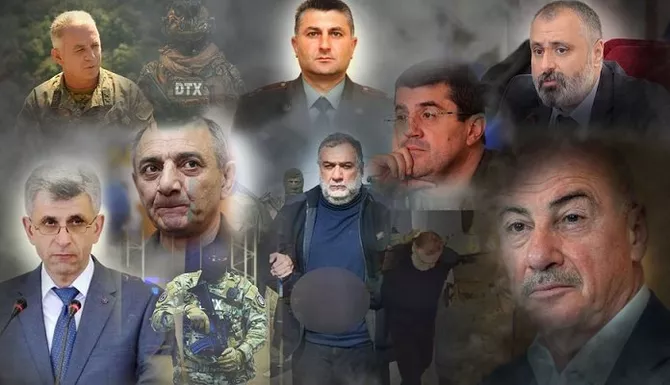
Photo credit: Trend
- What is your view on the sentences handed down in Baku to the leaders of the Karabakh junta?
- My attitude toward the Karabakh clan has always been unequivocal and has not changed over the years. Even before 2023, when this junta held power in Karabakh and Azerbaijani media diplomatically referred to its members as “separatists,” I openly described them as bandits and terrorists. I witnessed their actions firsthand - not through documents or secondhand accounts, but with my own eyes. I saw what they did, what they were capable of, and the trap into which they drove the Armenian population of Karabakh.
I observed the policies they pursued, the propaganda they spread, and the methods they used, which included the mass killing of people. These events are directly tied to my personal fate, which is why my assessments are based on direct experience. I do not need archives or analytical reports to understand who Bako Sahakyan, Arkady Ghukasyan, or Arayik Harutyunyan truly are.
For this reason, I believe the sentences handed down to them are deserved. Those who commit such crimes must inevitably be held accountable - always and in any jurisdiction. The paradox is that had these individuals, for whatever reason, ended up in Yerevan, they would likely not only have avoided punishment but might even have led electoral lists, publicly asserting their claims to power in Armenia.
Moreover, their political allies and supporters are currently active in Yerevan and are attempting - by various means, including those that fall outside the constitutional framework - to bring about a change of power and remove Nikol Pashinyan.
Had it not been for the actions taken in Baku, these figures would also have entered Armenia’s political arena, further aggravating the country’s internal problems. In this sense, it is possible to speak of just retribution: punishment has reached those who, in my deep conviction, are hardened criminals responsible for grave crimes against humanity.