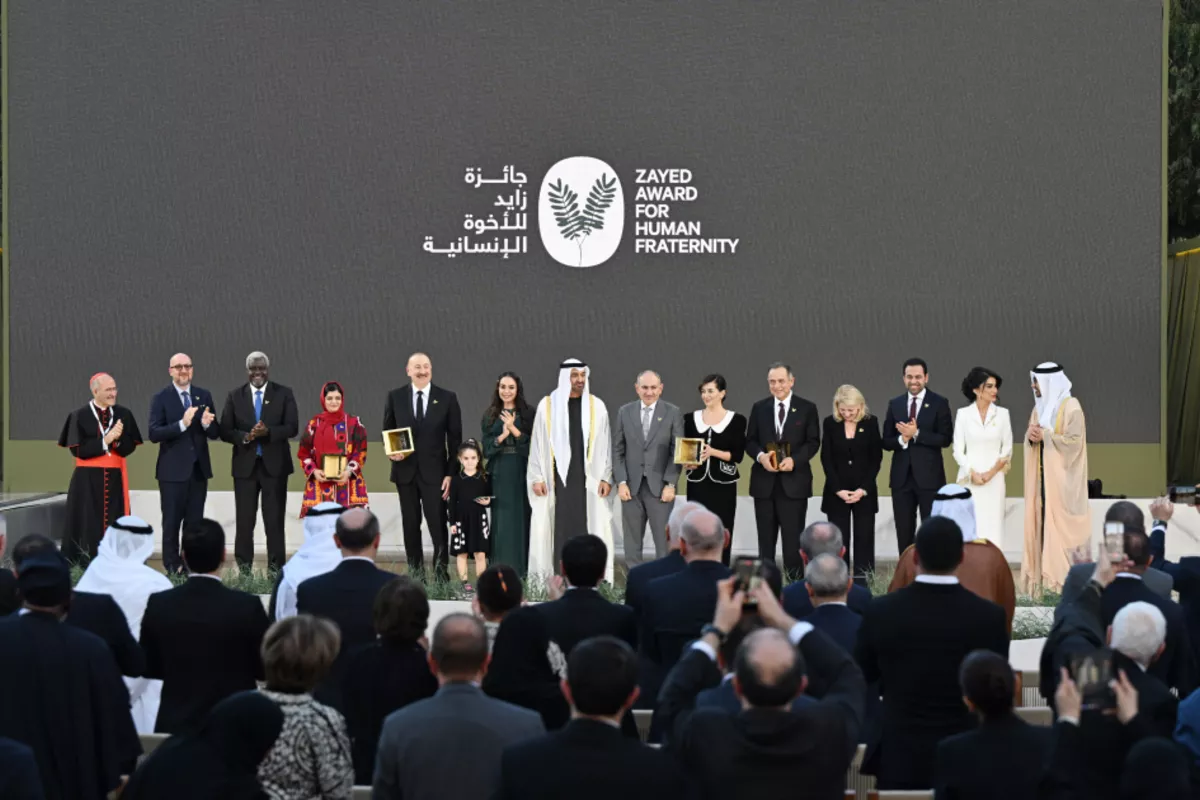
When the laureates of the Sheikh Zayed Foundation’s Human Fraternity Award for 2026 were announced, the choice came as no surprise. Azerbaijan and Armenia are the only two countries to have endured a decades-long, bloody conflict and yet found within themselves the strength and wisdom to embark on a path toward peace. Baku and Yerevan are pursuing this path without international mediations, without endless and fruitless debates, and without meaningless meetings.
The Sheikh Zayed Foundation was established as an institutional continuation of the ideas and values of the founder of the United Arab Emirates, Sheikh Zayed bin Sultan Al Nahyan. Its mission is to support universal humanistic principles by strengthening intercultural dialogue, promoting tolerance, protecting the environment, and fostering sustainable peace among nations. One of the Foundation’s flagship initiatives is the Zayed Award for Human Fraternity, an influential international prize honoring outstanding individuals and organizations that have made significant contributions to advancing solidarity, peaceful coexistence, and mutual respect at the global level.
The 2026 laureates were selected by an independent international jury composed of renowned figures and experts in the field of dialogue and coexistence. Jury member and Secretary-General of the Award Mohammed Abdulsalam noted that this year the panel chose to honor the historic peace agreement process between Azerbaijan and Armenia. According to him, this agreement embodies the mission and objectives of the Award and is regarded as an important milestone in the promotion of global peace, as well as a major diplomatic achievement.
Although a formal peace treaty has not yet been signed, its initialing in Washington and the steps taken by the parties in recent months, above all by Azerbaijan, can indeed be considered a significant diplomatic success. The President of the Award did not exaggerate.
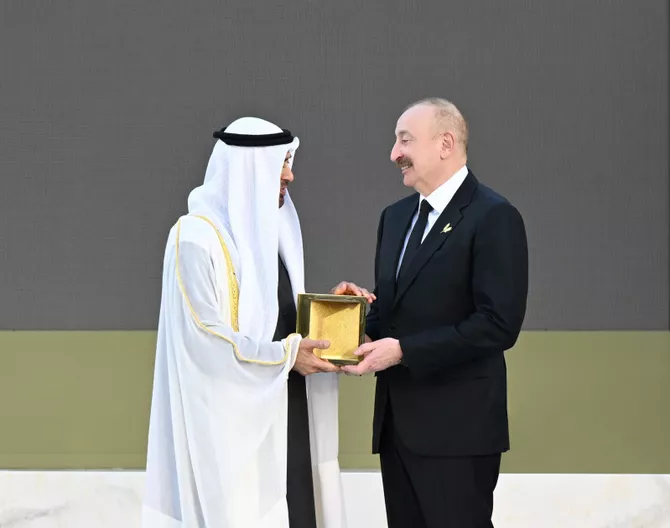
Photo: Azertac
The normalization of relations between the two countries, driven by Baku’s persistence, has for several years been carried out exclusively in a bilateral format and without mediators. Azerbaijan has, of course, applied certain pressure to steer its neighbor in the right direction, but official Yerevan also deserves recognition - it is making an effort. Following the Washington talks in August last year, the process accelerated, and the presence of U.S. interest added an element of security. This has reduced the space for external actors to interfere or dictate to the weaker side, namely, Armenia, how it should coexist with its neighbors.
The Armenian-Azerbaijani settlement is one of the most successful peace processes of our time. It is also unique: after everything Azerbaijan has endured, few countries that have won a war and liberated their territories would extend a hand to a defeated aggressor. This is a rare case in modern history. By liberating its occupied territories and shaping a new geopolitical reality in the South Caucasus, Azerbaijan laid the groundwork for long-term stability and peace.
In the post-conflict period, under the leadership of President Ilham Aliyev, Azerbaijan made a deliberate choice in favor of a policy of “peace for regional development,” rejecting the logic of humiliation and destruction of the defeated side. This approach represents a rare example of political will and humanism on the part of a victorious state.
The peace agenda proposed by Baku has become the foundation for a new regional economic architecture oriented toward shared prosperity. Replacing confrontational rhetoric with cooperation has opened tangible prospects for the region. Azerbaijan has demonstrated to the world not only its defensive strength but also its strategic vision. Its peace initiatives are closing a tragic chapter of enmity and opening the door to a new era based on respect and cooperation - an outcome visible to the entire international community.
It is also important to acknowledge the contribution of Armenian Prime Minister Nikol Pashinyan to this process. Without his sober approach, his understanding of political realities, and his determination to lead his country out of the dead end of primitive nationalism, Azerbaijan and Armenia would hardly have been able to find common ground. At the same time, Pashinyan faces strong resistance from revanchist circles and counters attempts at external pressure, including from segments of the diaspora that advocate renewed confrontation. Unlike Azerbaijanis around the world, who unequivocally support their national state and its leader, Yerevan faces numerous opponents within the global Armenian community. Under these conditions, Nikol Pashinyan has been tasked with an extremely difficult mission - to transform an illusory Armenia into a functioning state, regardless of the cost.
That the process is moving forward was clearly demonstrated by the meeting between the Azerbaijani and Armenian leaders in Abu Dhabi. Footage from the talks showed just how dramatically the atmosphere has changed. Distrust has faded, and the Armenian side has also shed much of its tension and fear. Historically, Armenian leaders feared meetings with Ilham Aliyev, even at times when they considered themselves “victors.”
In Abu Dhabi, Ilham Aliyev and Nikol Pashinyan discussed issues typical of relations between neighbors. The normalization process is showing positive momentum. Recently, another train carrying wheat arrived in Armenia via Azerbaijan in transit, and on Wednesday an additional shipment of grain was sent from Russia. Azerbaijani gasoline is being successfully sold in Armenia, helping to lower fuel prices there. Both countries, and the entire region, are already experiencing tangible benefits from peace. While first attempts are often imperfect, in this case it was immediately clear that the process is moving in the right direction.
At the meeting in the UAE, the parties agreed to continue exploring opportunities to expand bilateral trade and economic cooperation, reaffirmed their readiness to keep working toward strengthening peace and stability between their countries, and agreed to maintain contacts to facilitate the bilateral normalization process.
Today, Baku and Yerevan are discussing a broad range of goods of mutual interest. The sides are exchanging preliminary lists and studying market opportunities. For now, this process is proceeding without excessive publicity. The most important thing is that it is underway. Armenia has already identified several potential export items. According to Armenian media, the country is ready to supply Azerbaijan with aluminum foil and raw materials for its production, ferromolybdenum, tobacco and textile products, as well as cognac raw materials. Armenia can also offer a range of agricultural products.
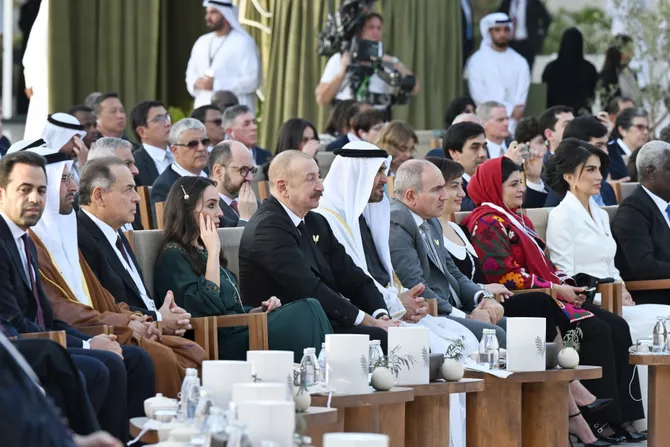
Photo: Azertac
The leaders also discussed the most important issue - the implementation of the TRIPP project and other transport connectivity initiatives. The opening of communications is an integral part of TRIPP, also known as the Zangezur Corridor. The sequence of steps taken by Baku indicates that Azerbaijan views TRIPP as the starting point for all other transport and logistics projects between the two former adversaries.
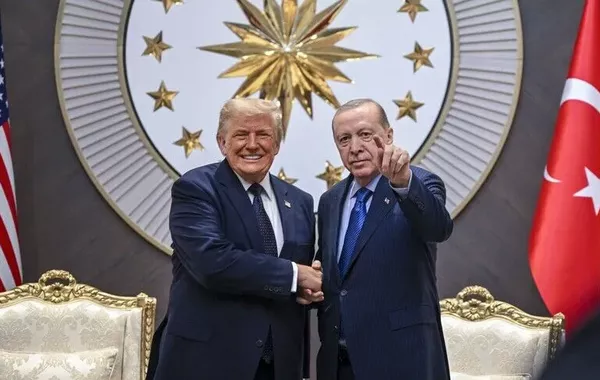
This issue moved off dead center only after the Washington meeting and the transformation of the Zangezur Corridor into what is now referred to as the “Trump Route.” Armenia sought to develop the communications agenda in a different sequence, but Azerbaijan remained firm. President Ilham Aliyev does not abandon his ideas - he searches for and finds ways to implement them, regardless of opposition. Many actors opposed the Zangezur Corridor, but Baku found a partner whose involvement compelled them to step aside. The United States is not acting as a mediator, but as a partner. American companies will build the Zangezur Corridor, whatever name it ultimately carries, while simultaneously insuring the project against external interference.
It is evident that this policy pursued by Baku has also influenced Yerevan. Nikol Pashinyan was prepared to take the necessary steps several years ago, but his government faced excessive pressure - from within the country, from the north, from the south, and from the west. Resisting both internal and external pressure proved difficult. The figure of Donald Trump shielded Armenia from those who oppose peace in the South Caucasus and deterred local political opportunists, giving Nikol Pashinyan the space to pursue the right course without constantly looking over his shoulder at revanchist forces.
Over the past five years, the two countries have traveled a difficult path from hostility to mutual understanding. That understanding, it appears, has already been established between the leaders. Achieving the same level of consensus within society will be more challenging, but this path can also be completed, provided Armenia does not change its strategic orientation.
Thus, the Human Fraternity Award has rightly found its heroes.
By Tural Heybatov