Azerbaijan and the concept of ‘strategic partnership’
Strategic partnerships as a framework for inter-state relations have gained considerable importance in Azerbaijan’s foreign policy. The country is a strategic partner of the international system’s two leading global powers, the United States and China, but also a broad range of influential middle powers. Strategic partnerships are in force with four of the seven G7 members, among which are Italy and Germany, two leading European states. In fact, 2026 served as a crucial year for Azerbaijan’s relations with both countries.
With Italy, Prime Minister Giorgia Meloni’s trip to Azerbaijan in May 2026 was a particularly significant moment, reinforcing both the political and practical dimensions of the relationship. The sides are major energy partners, with Azerbaijan exporting around 9.5 billion cubic meters of gas to Italy in 2025. Latest figures suggest that in the first half of 2026, Azerbaijan supplied 16% of Italy’s gas imports and 13% of its oil imports. Azerbaijan is also rapidly widening its direct investment portfolio in Italy, with SOCAR completing the acquisition of a 99.82% stake in Italiana Petroli in May 2026. Italian Foreign Minister Antonio Tajani’s visit to Azerbaijan in November 2026 was another important step. Through joint initiatives such as the Azerbaijan-Italy business forum, in which 240 Italian and Azerbaijani business representatives took part, the relationship is becoming increasingly institutionalized and forward-looking. Moreover, a memorandum of understanding on critical minerals cooperation was signed, with the sides committing to exploration works in this increasingly important area. The Italian Foreign Minister also suggested that the Alat Free Economic Zone is viewed as a potential platform for Italian businesses seeking to expand their regional presence. In turn, Azerbaijan’s Minister of Economy Mikayil Jabbarov noted that the sides are actively exploring the signing of an investment promotion and protection agreement, a step which would further enhance an already advanced business relationship. This reflects the partnership’s growing multidimensional nature, with enhanced political coordination determined to ensure that existing potential in bilateral relations is maximized.
With Germany, high-level political coordination has resulted in a highly productive year, with President Ilham Aliyev’s visit to Berlin in July 2026 helping elevate ties to a new level. The adoption of the Joint Declaration on a Strategic Agenda for the Bilateral Partnership in Berlin was particularly noteworthy, with the German side openly recognizing the strategic value of its partnership with Azerbaijan. A strong trading relationship forms the basis of economic cooperation, with the bilateral trade volume reaching 1 billion USD between January and September of 2026. Energy is also an important element, with Azerbaijani gas first reaching Germany in January 2026 through the Southern Gas Corridor. Mutual direct investment also contributes to the economic relationship, with a ‘significant share’ of German investment into Azerbaijan directed at the country’s non-oil sector.
Germany’s consistently voiced desire to further deepen the relationship carries particular significance for Azerbaijan and its growing global reputation of a reliable economic partner. Germany’s economy is the third largest in the world by nominal GDP and, in fact, the largest in the European Union. Together with Azerbaijan’s strengthening regional influence, which has earned it the status of a middle power, and the opportunities unveiled by its unique geographic location, the relationship has the potential to acquire a significant regional dimension. The most recent visit by German Foreign Minister Johann Wadephul to Azerbaijan in November 2026 was another important step in this mutually chosen direction, with the two sides taking concrete steps to ensure their cooperation results in practical outcomes both in bilateral relations and from a regional perspective. Whilst visiting the country, the Foreign Minister described the South Caucasus as a “region of opportunity” for both Germany and Europe more broadly. This emphasizes the acknowledgment in critical European capitals of the opportunities at hand and, most importantly, Azerbaijan’s role in their potential realization.
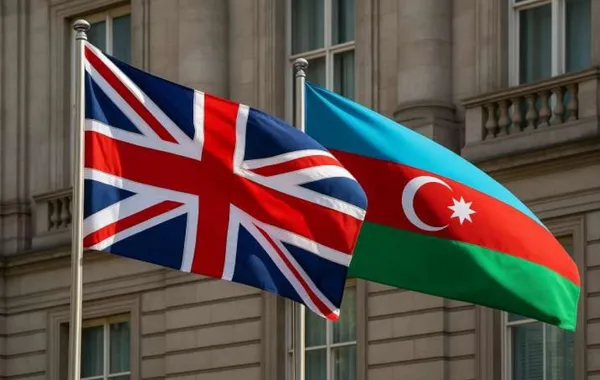
Another crucial moment in the European vector of Azerbaijan’s foreign policy was the announcement of a strategic partnership with the United Kingdom in November 2026. Although this particular bilateral relationship has been of a strategic nature for a considerable period of time, the time of the announcement reflects the recognition by both sides of the existing potential to transform the status quo into a deeper, mutually beneficial partnership. As Azerbaijan’s consistently largest foreign direct investor, the United Kingdom possesses the necessary skills, resources and expertise to contribute to regional processes in both the South Caucasus and Central Asia. As the UK highlights its interest in supporting the development of the Middle Corridor, a common pattern is becoming increasingly clear. European actors across the continent, including both EU and non-EU states, are voicing their recognition of Azerbaijan’s role in enabling the connection between Central Asia and European markets. Most significantly, an increasing number of states emphasize their view of Azerbaijan as a core partner, and not through the traditional “buyer-seller” prism. This logic was advanced by Slovakia’s President Peter Pellegrini during his visit to Azerbaijan in July 2026, demonstrating that European actors now treat Azerbaijan as a long-term, rather than ad hoc partner.
EU-level cooperation
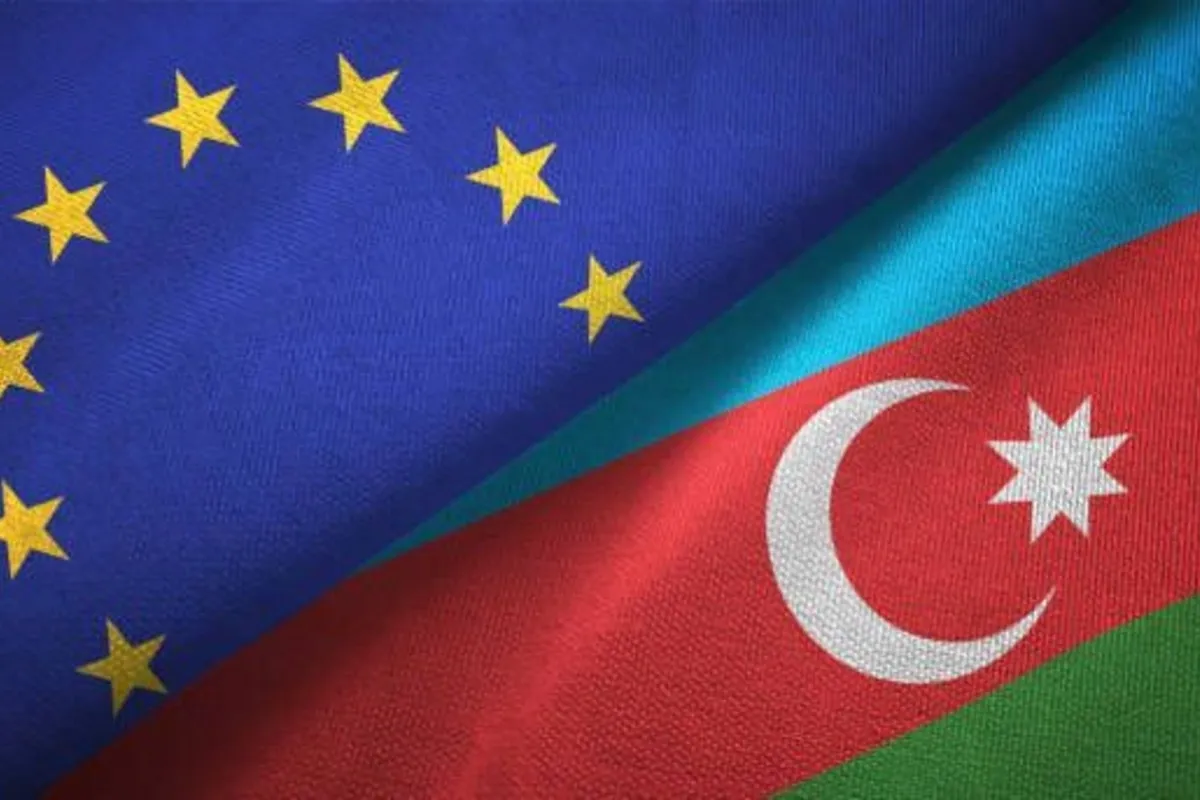
Bilateral relations with individual states are arguably the most comprehensive and effective mechanisms implemented by Azerbaijan in its European agenda. However, its cooperation with institutions of the European Union, including the European Commission, has also experienced important change. This relationship has suffered from setbacks at important junctures in the past, in great part due to the clearly anti-Azerbaijani position adopted by Josep Borrell, the former High Representative for Foreign Affairs and Security Policy. However, as with many relationships, political will has the capacity to fundamentally alter the broader dynamic. This intent was observed on behalf of the European Commission, with the visit by Kaja Kallas, the successor to Josep Borrel, to Azerbaijan in April 2025 having initiated a period of political momentum and dynamism.
Since then, the European Commission has been much clearer in its vision for the South Caucasus and its interpretation of Azerbaijan’s role within the EU’s external engagement strategy. Consecutive trips to Azerbaijan by European Council President Antonio Costa in March 2026 and European Commission President Ursula von der Leyen in July 2026 served to identify the priority areas of cooperation in the upcoming period. Negotiations on a new and updated cooperation framework are also advancing, an essential process given that the existing framework has been in force since July 1999. Closer institutional and political coordination can further enhance what is already a comprehensive practical relationship. The EU is still Azerbaijan’s largest trading partner, with the volume of gas supplies from Azerbaijan to European markets expected to continue increasing beyond the roughly 13 billion cubic meters delivered annually at the present moment. Moreover, as with bilateral frameworks, the relationship also has opportunities to develop through a regional dimension. The European Commission is determined to support regional connectivity processes, with its newly introduced Cross-Regional Connectivity Agenda treating the Black Sea, the South Caucasus and Central Asia as a single geographic space. Through the Global Gateway programme, the Commission has already committed to financing a range of projects in all three regions. Azerbaijan’s role within this, facilitated by its deepening cooperation with Central Asian states, is indispensable and is being recognized more regularly by politicians in Brussels.
However, this particular relationship is not without its challenges. The European Union’s political leadership must ensure that its engagement in the South Caucasus does not interfere with the ongoing normalization process between Armenia and Azerbaijan, a process most effective if left alone. Moreover, on the one hand, the European Commission has noticeably stepped up its support of regional infrastructure projects. However, if the EU wishes to consolidate itself as a long-term contributor to economic development in the region, it must step up both the scale and effectiveness of its financial support. The feasibility study currently underway for the Nakhchivan railway is a step in the right direction, but momentum must continue through regular consultation and investment. The more than 130 million euros mobilized for Azerbaijan under Global Gateway are an important signal and must serve as the basis of further multidimensional cooperation. Nevertheless, to remain an active, rather than sporadic, participant in regional projects, it must ensure its investment commitments translate into swifter implementation.
Expert-level dialogue: helping sustain momentum
Another important dimension which must not be overlooked in the broader ‘Azerbaijan-Europe’ relationship is expert-level cooperation and dialogue. The role of think tanks is particularly important, especially given the attempts by various groups to hinder the current momentum and diminish Azerbaijan’s value as a partner. Regular dialogue helps bring experts, analysts and even policymakers together to discuss new prospects for cooperation, formulate concrete policy recommendations and undertake joint research. 2026 was also a highly significant year in this respect, with the first-ever Azerbaijan-EU think tank forum held in Brussels in October 2026. This event was jointly organized by Azerbaijan’s Center for Analysis of International Relations and Multiculturalism (AIR Center) and Belgium’s Egmont - The Royal Institute for International Relations. The forum brought representatives of think tanks from several European countries and explored the Azerbaijan-EU relationship but also prospects for regional normalization in the South Caucasus.
Think tank cooperation in 2026 also spanned several of the country’s leading bilateral relationships. In November 2026, the AIR Center and Italy’s Machiavelli Foundation organized a high-level international conference, titled “Italy-Azerbaijan Strategic Relationship: Cooperation in the Energy Sector”. The event, held at the Chamber of Deputies of the Italian Republic in Rome, convened policymakers, diplomats, parliamentarians and energy experts to discuss the strategic nature of the Azerbaijan-Italy relationship and the opportunities to further strengthen political and economic dialogue. The event also focused on Azerbaijan’s unique role in European energy security, with energy forming a crucial part of the bilateral relationship. As with the inaugural Azerbaijan-EU Think Tank Forum, the breadth of the discussions highlights the multidimensional agenda of Azerbaijan-Europe relations.
The regular organization of such events is crucial for the broader relationship as they provide an opportunity for representatives across various sectors to convene and engage in productive and forward-looking dialogue. In addition to coming up with new ideas, these events help ensure that participants are fully informed of reality on the ground and the opportunities at hand. In the current context of global uncertainty and even disinformation, the conversion of this practice into a permanent mechanism is invaluable for any relationship.
Looking ahead
Developments in 2026 reflect the recognition by leading European actors of Azerbaijan’s growing influence, both for the European continent and on a transregional level. President Ilham Aliyev’s participation in the latest European Political Community Summit in Dublin and his highly active agenda, including up to ten bilateral engagements, highlight how wide-ranging Azerbaijan’s European portfolio has become. Having overcome significant hardship in the face of its conflict with Armenia, Azerbaijan is now able to divert more attention towards the building of sustainable partnerships. The EU, as well as individual European countries, continue to form a crucial part of this strategy. One could argue that the range of areas where the interests of Azerbaijan and those of European actors converge is the most significant in recent history. However, and perhaps inevitably, ‘spoilers’ remain aplenty, in both Azerbaijan-EU relations and the normalization process between Azerbaijan and Armenia. Azerbaijan’s response to these efforts has been unequivocal, with the country rejecting any attempt at disinformation and even proceeding to suspend its cooperation with the European Parliament across all directions in May 2026, which continues to pass anti-Azerbaijani resolutions. This is just one of several reasons why existing opportunities must be maximized for the relationship to be transformed into a new, long-term cooperation framework which is mutually beneficial and, above all, depoliticized.
At a time when the EU is stepping up its pursuit of strategic autonomy and working to stay competitive in an increasingly unpredictable global system, closer relations with Azerbaijan are no longer an opportunity Brussels can afford to waste. In Azerbaijan, the EU gains a reliable and time-tested partner that, over a short period of time, has developed a track record of practical implementation across various sectors and acquired an abundance of diplomatic experience. The hosting of the 2028 European Political Community Summit in Azerbaijan is an important recognition of this status and will serve to bring Azerbaijan and several of its European partners even closer. Until then, Azerbaijan’s European partnerships will continue to strengthen in line with the principles applied by the country in all of its international activities.
Find the original article here