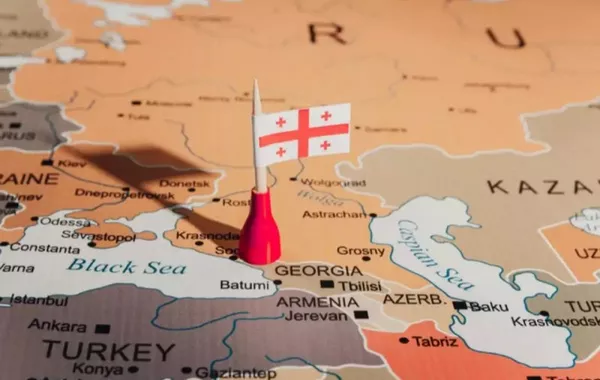
Georgia Seeks New Oil Sources Beyond Russia
Georgian company Black Sea Petroleum (BSP), which owns the country’s only oil refinery in Kulevi (Kulevi Oil Refinery), plans to fully phase out Russian crude and rely instead on Azerbaijan’s transit infrastructure to access alternative supplies. The announcement was made by BSP co-founder and CEO David Potskhveria in an interview with BMGTV.
He said the company’s strategic goal is to replace Russian oil, a move he said would open access for Georgian products to the European Union market, which is currently restricted for goods produced from Russian crude.
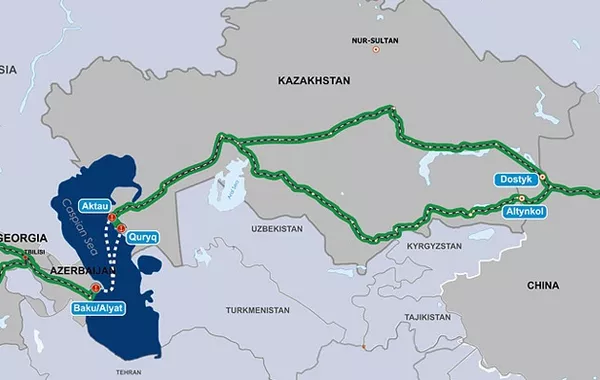
To diversify its feedstock base, BSP has already begun working with Turkmen oil and plans to expand imports from Kazakhstan and other alternative sources in the future. Azerbaijan is expected to play a key role, with Georgia seeking to secure supplies from Central Asia via Azerbaijani territory and its pipeline and rail infrastructure.
The Kulevi Oil Refinery currently produces semi-finished products used in the production of gasoline, diesel and aviation fuel. By 2027, it aims to begin producing Euro-5 standard gasoline, aviation fuel and bitumen. Capacity is also expected to increase from 1.2 million tonnes to 4.5 million tonnes.
According to Neftegaz.RU, the refinery currently produces naphtha, fuel oil and high-sulphur diesel, which is sold as a diesel blending component for further processing by other companies. In early 2026, BSP signed a licensing agreement with US-based Honeywell, which will provide engineering and technical solutions for a new refining line. This is expected to enable production of aviation kerosene, gasoline, diesel and marine fuels meeting international standards.
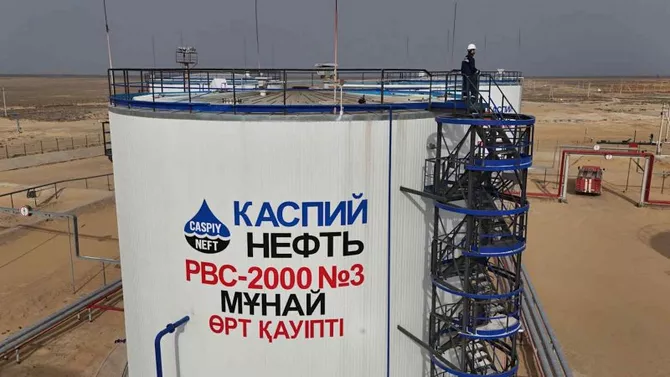
A storage tank at the Airankol oil field operated by Caspiy Neft in the Atyrau Region, Kazakhstan (Source: Reuters)
Negotiations are also under way with the US Export-Import Bank to finance the deployment of Honeywell technology in Georgia.
The decision to abandon Russian crude is linked to the European Union’s 18th sanctions package against Russia, which prohibits the import of refined petroleum products derived from Russian oil via third countries. These restrictions came into force at the end of January. As a result, the Kulevi refinery is seeking alternative feedstock sources to maintain its export ambitions.
The refinery originally began operations using Russian oil supplied by Rusneft. According to reports, operations ran smoothly until sanctions introduced new constraints. Even before the latest EU measures, however, the facility faced additional pressure. Media reports have suggested that in a proposed 20th sanctions package, the EU considered restricting the oil loading terminal of the State Oil Company of Azerbaijan (SOCAR) in the port of Kulevi. Such a move would have had implications for both Georgian and Azerbaijani operations. Georgian Prime Minister Irakli Kobakhidze previously moved to demonstrate that Georgian territory was not being used to circumvent sanctions against Russia.
It remains unclear whether such measures will ultimately be adopted. Hungary, together with Slovakia under the previous government, blocked progress on the EU’s 20th sanctions package pending agreement on Russian oil transit via the Druzhba pipeline through Ukraine. Following political changes in Hungary, the EU expects the new leadership will not oppose the package.
Azerbaijani media reports indicate that Baku is not currently planning to supply crude oil directly to the Kulevi refinery, but is prepared to facilitate transit of Kazakh oil.
“We know that this refinery in Georgia has refused Russian oil at the request of the European Union and is seeking alternative sources of raw materials in the region. Azerbaijan is not currently considering supplying oil to this refinery, as it must first meet the needs of its own Heydar Aliyev Oil Refinery in Baku. There are currently no surplus volumes available for other refineries in the Caspian and Black Sea regions,” two sources familiar with the situation told Vesti.az.
However, Azerbaijan is ready to facilitate transit of oil from Kazakhstan and Turkmenistan to Georgia, with logistical discussions ongoing. At the same time, certain challenges have emerged, particularly regarding Turkmenistan.
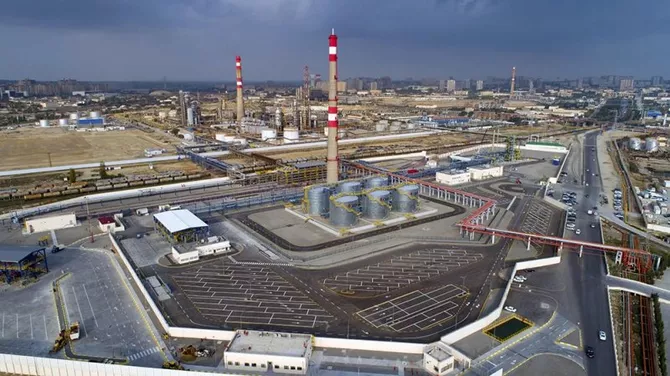
Heydar Aliyev Oil Refinery (Source: SOCAR)
“Unfortunately, and somewhat unexpectedly for us, rail transit through Azerbaijan in our direction has proven difficult. We already have an agreement on Turkmen oil - it was reached several months ago - but its transportation is being delayed,” Ekho Kavkaza quoted BSP’s Potskhveria as saying.
He expressed hope that the issue would be resolved and rail shipments would begin soon.
Turkmenistan is technically capable of supplying oil but is currently facing logistical difficulties in delivering shipments to Georgia, partly due to delays in coordinating rail transit through Azerbaijan. The need for multimodal transport further increases complexity and costs. In addition, Turkmen exporters often require buyers to arrange onward transport from the border, adding further logistical challenges. Ashgabat appears to be signalling that buyers need its oil more than it needs to sell it, a stance that is complicating export flows. The transit issues via Azerbaijan are primarily linked to the exporter’s logistical arrangements. Azerbaijan has the necessary transit infrastructure, but as a transit country it can only provide transportation services.
Experts say Georgia could consider swap arrangements with Russia involving non-sanctioned products until logistics are resolved, or alternatively purchase Azerbaijani crude.
However, Azerbaijani oil is of higher quality than Central Asian grades and therefore more expensive, which remains a key constraint. Despite this, Azerbaijan has other options for supplying Georgia’s refinery if required.
Following political developments in Hungary, a shift in its stance on Russia sanctions is expected, while Georgia is also closely monitoring the situation. Given its limited refining capacity, significant investments have already been made in the Kulevi facility aimed at reducing dependence and expanding access to alternative crude supplies.
By Tural Heybatov