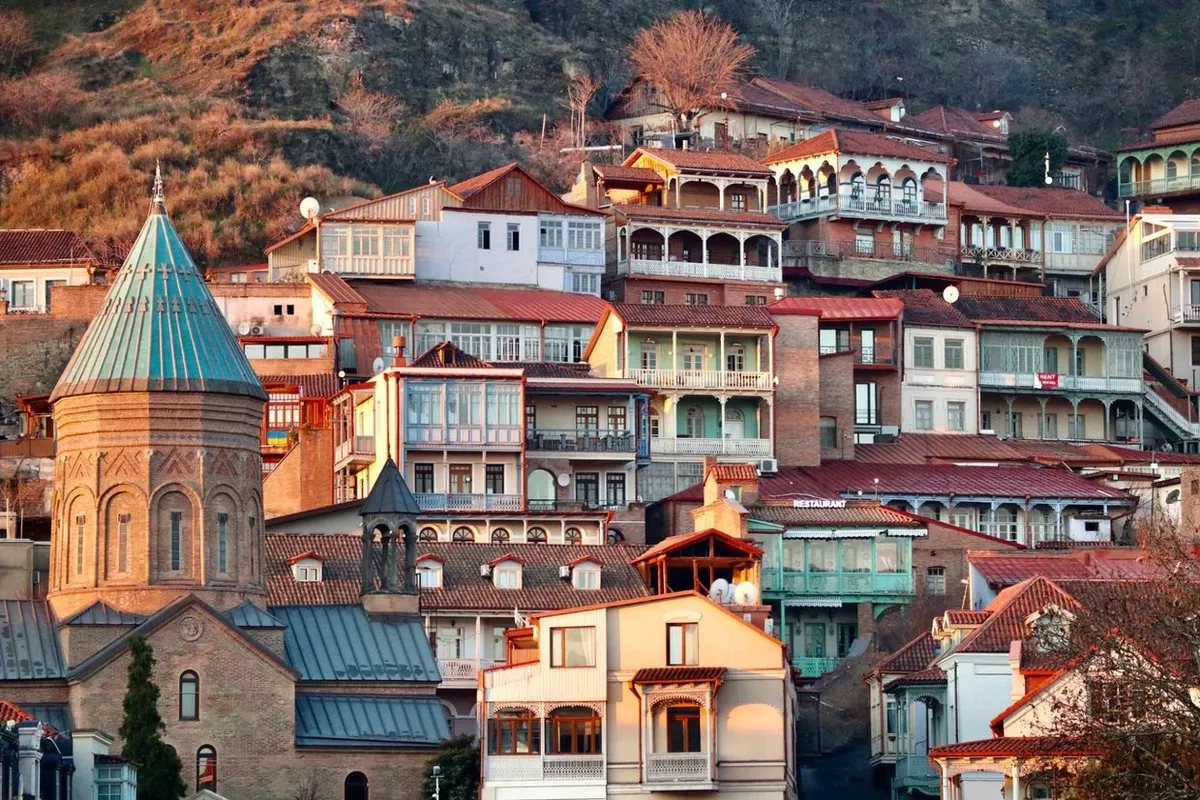
Over the last decade, Georgia’s tourism industry has flourished. Millions across the world are now aware of the country’s rich food and wine history, the picturesque, snow-capped mountains, and the crumbling Tbilisi balconies. Even the ongoing, daily anti-government protests do not seem to have affected the capital city’s attractiveness for visitors - backpackers and others replete with cameras continue to enjoy walks along Tbilisi’s central Rustaveli Avenue.
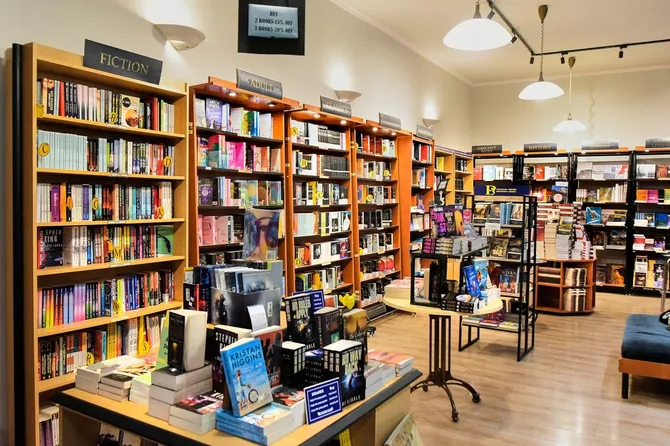
Yet, as Tamara Megrelishvili, the executive manager at Prospero’s, one of Tbilisi’s oldest English-language bookstores and coffee shops, tells OC Media, things now appear to be changing.
According to local business reports, visitor numbers have fallen by 30%-70% depending on the industry sector. Megrelishvili believes it is closer to the higher percentage at Prospero’s, noting that the tourists arriving now are ‘afraid to spend money’.
‘They will buy a book only if it is paperback - and only if it is tiny, almost notebook-sized. They do not even buy postcards. They simply do not want to spend money. They walk around with what may be their last ₾20 ($7.50), exchanged only so they do not return home still holding that note. Can you imagine what situation we are in?’, Megrelishvili says.
Prospero's bookshop. Photo via social media. While she notes the long-standing domestic pressures - including the growing presence of Russian-owned parallel business networks, labour shortages, and fewer local staff available for service jobs - she sees the latest factor as the war in Iran.
‘Nobody is here - where are the people?’
Galt & Taggart, an investment arm of Bank of Georgia, has lowered Georgia’s 2026 tourism revenue forecast from $5 billion to $4.9 billion, citing the war in Iran and disruptions to air travel and visitor flows across the Middle East. The revised estimate represents a $100 million reduction, while analysts warn that even if a fragile ceasefire holds up, a short conflict lasting between one and six months could still cut tourism revenues by approximately $220 million. In the event of a prolonged conflict, recovery in visitor flows from the Middle East is considered unlikely in the near term.
The revision reflects Georgia’s significant exposure to Middle Eastern tourism markets. The region accounts for 10%-11% of total international visits and roughly 20% of tourism income - a disproportionately high share because Gulf visitors typically spend more than average tourists. In 2025, Georgia earned approximately $4.7 billion from international tourism, with Russia remaining the single largest source market at $697 million.
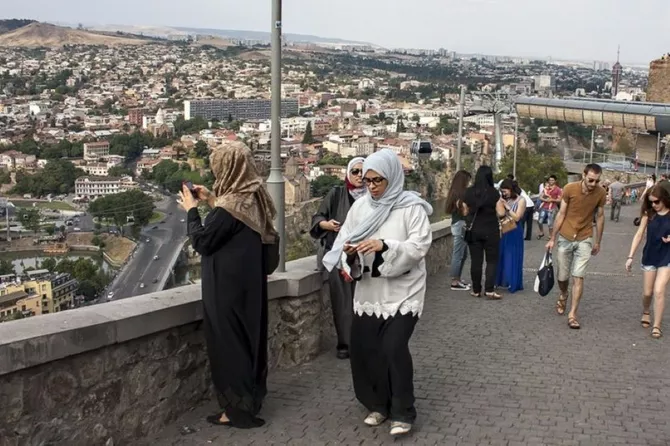
Tourists walking up around Narikala Fortress in Tbilisi. Photo: Kakha Mchedlidze/RFE/RL. The wider regional picture is severe. United Nations Tourism estimated that a one-month closure of Middle Eastern airspace could result in $18-20 billion in lost regional tourism spending in 2026, while Oxford Economics forecasts inbound visitor numbers to the region could decline by 11%-27% annually. The World Travel & Tourism Council estimates the regional tourism sector has been losing roughly $600 million per day, with more than 46,000 flights cancelled.
Yet behind the macroeconomic forecasts, businesses in Georgia’s tourism sector describe a sharper immediate shock.
‘Nobody is here - where are the people? We have had a huge number of cancellations’, Nina, a hotel manager in Georgia’s western Kakheti region, says.
‘Of course it is because of the war. Once the war started, many bookings were cancelled, and now cancellations are also coming from Korea’.
She adds that Russian operators are increasingly dominating certain parts of the market: ‘Russians have booked hotels and mostly bring Russian guests into their own properties. There are also Russian wedding companies organising weddings in Georgia, which has become very popular’.
According to her, official tourism figures published by the government do not reflect business reality.
‘The numbers the authorities publish are nowhere near reality. As for promotion, we would like much stronger support than we currently receive from the government’.
Another co-owner of a hotel in the wine-cradle region of Kakheti tells OC Media that the money invested in the hotel may not pay off. He chose to remain anonymous because he is worried his shareholder will react badly.
He is not alone; hotels in the capital are also feeling the pinch and struggling to return to pre-COVID levels, or even to those before Russia’s full-scale invasion of Ukraine. The founder of the Georgian Hotels Federation, Shalva Alaverdashvili, agrees, saying that the investment attractiveness of the sector has declined over recent years.
‘There are more hotel beds than there is demand’, he tells OC Media.
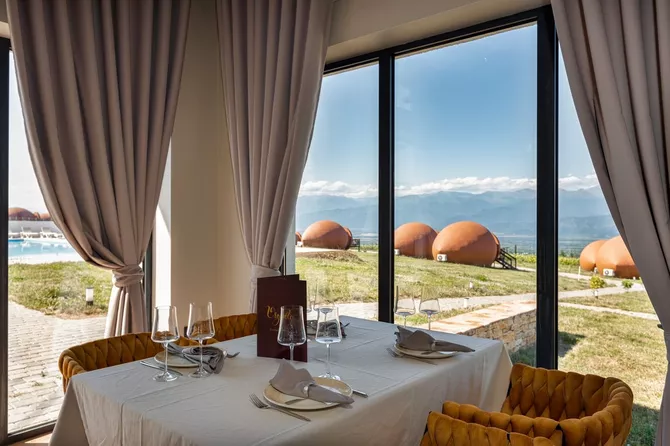
Hotel Qvevrebi in Kakheti. Photo via social media. According to Alaverdashvili, the events that have unfolded in the region and the country in recent years - including wars and instability - have had a primarily negative impact on the tourism sector. As a result, revenues from the hotel business are becoming increasingly unstable.
‘First of all, we should start with the fact that our surrounding region, our neighbourhood, and the global environment are currently unstable, and this affects the tourism sector more than anything else’, he says.
‘The clearest example is what is happening now in Dubai - this tourist “Mecca” has, at the moment, turned into a city of almost completely empty hotels. Quite a large number of Georgians work there, and I am in daily contact with these people, so I know exactly what is happening there’.
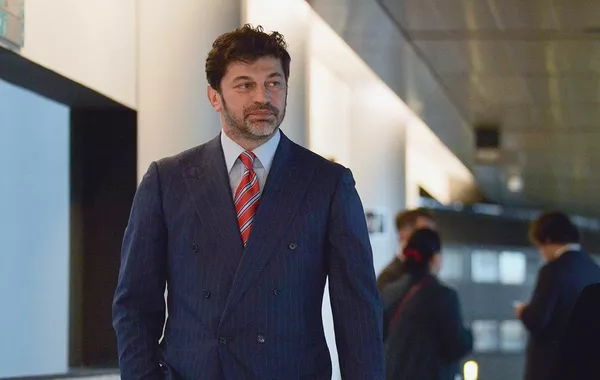
Restaurants are also taking a hit, with Kote Gabrichidze, the president of the Restaurant Association, telling OC Media that with summer approaching, many restaurants will struggle.
‘Hold the globe and see how close we are to the sensitive regions - obviously, tourists will get scared. India, Asian countries - we never expected to rely only on European tourists, but our hospitality business depends on all markets. With 620 flights cancelled, imagine what the government says’, Gabrichidze says.
‘Should this continue, the impact will be like during COVID times’.
Government attempts at diversification
At the same time, the Georgian government has been trying to diversify tourism markets.
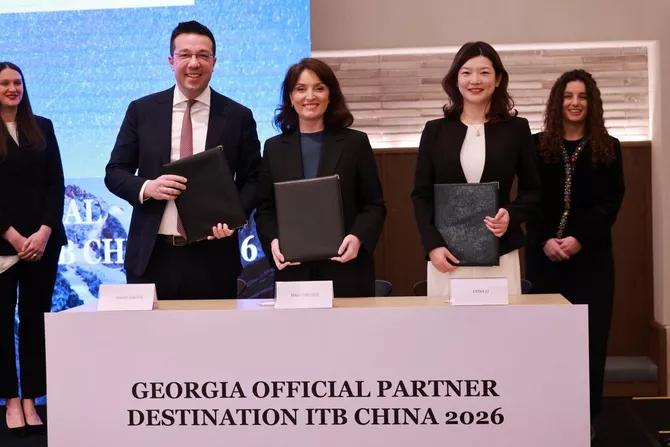
In early April, the Georgian National Tourism Administration signed a simplified procurement contract worth $1.48 million with Beijing Shi Dai Yi Feng Information Technology to run a tourism marketing campaign in China in 2026, according to Business Media Georgia. The campaign includes promotion on WeChat, Rednote, and Weibo, cooperation with Chinese influencers and magazines, roadshows, and other marketing activities.
China has become an increasingly important target market. In 2025, Georgia recorded 128,000 visits from China, a 44% annual increase. According to official statistics, Chinese visitors spent ₾220 million ($82 million), with average expenditure per visit reaching ₾1,700 ($640).
From left to right: David Axiotis, Vice President and Managing Director China at Messe Berlin GmbH; Maia Omiadze, Head of Georgian National Tourism Administration; Lydia Li, Deputy General Manager Messe Berlin (China)/Director ITB China. Official photo. Georgia’s direct exposure to Iran is limited, with Iran accounting for only 0.9% of foreign currency inflows in 2025, mainly through tourism and minor exports, making major macroeconomic disruption unlikely, according to Galt & Taggart. Israel is a more important partner, contributing 12.5% of tourism income and 8% of remittances, with total inflows equal to 2.5% of GDP. Gulf countries also have limited but diversified importance, with tourism and investment flows together equal to about 1.1% of GDP. Imports from Iran, Israel, and Gulf states make up roughly 4% of total imports, mostly goods that can be replaced through suppliers such as Turkey and China, limiting wider economic risk.
Yet some critics argue that the government may be less concerned about pressure on tourism or the difficulties faced by heavily invested local businesses because it already sees a fallback strategy in demographic and property policy: attracting wealthier foreign residents, long-term migrants, and those willing to relocate from unstable regions if geopolitical tensions deepen further.
This argument has resurfaced amid criticism surrounding the Eagle Hills project - a $6 billion Emirati investment deal - where opponents say legislation has been tailored to favour large-scale foreign-backed developments. Georgian leadership itself has stressed that large residential sales remain part of the long-term plan for Eagle Hills: 16,000 apartments are expected to be sold, with the first 257 already purchased.
Residence permit figures also suggest that Georgia’s migration profile is expanding rapidly, with more than 107,000 permit holders from 164 countries. According to still-unverified data from the National Statistics Office of Georgia, as many as 257,000 foreigners may currently be living in Georgia, including roughly 20,000 undocumented migrants, meaning foreigners now account for 6.6% of the country’s 3.9 million population.
Despite the regional instability and shifting statistics, not everyone is down. As Meriko Gubeladze, a long-time restaurateur and the chef at one of Tbilisi’s landmark restaurants, Shavi Lomi, notes, the Georgian tourism industry is in flux at the moment.
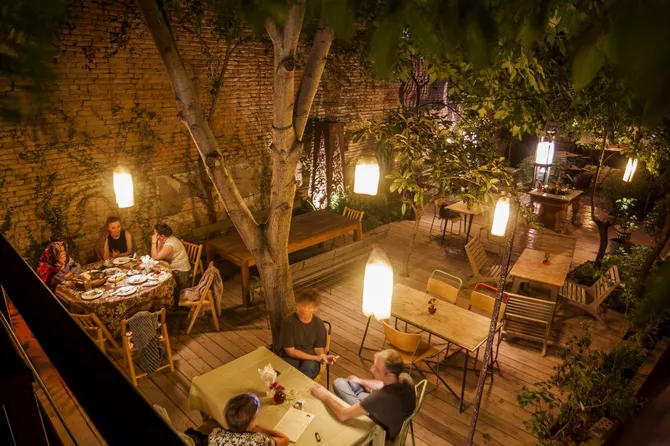
Shavi Lomi. Photo via social media. ‘Shavi Lomi is an indicator restaurant - you can see what kinds of tourists are coming. There are fewer Russians for some reason, but people are still arriving. I see Turks too, which I had never seen before, along with Israelis and Chinese visitors - very mixed, uneven and unpredictable. Tourism in Georgia is shifting, and maybe many are not prepared for it’, he says.
Georgia is likely not fully prepared for the scale of changes around it: shifting public mood, affordability pressures, and a weakening willingness to travel somewhere perceived as unstable. Whatever the reason, the country cannot afford to put all its eggs in one basket - something it has long been used to.
See the original article here