Ankara’s growing emphasis on Turkic cooperation is no longer just about shared identity - it is increasingly shaping a coherent regional strategy in Central Asia. In an article published in Türkiye Today, political analyst Andrii Buzarov argues that Türkiye is methodically transforming Turkic unity into a practical foreign policy tool, using multilateral formats to strengthen economic links, security dialogue, and political coordination across the Turkic world.
Once a far-fetched idea, a supranational organization that brings Turkic states together is increasingly gaining momentum in the region, The Caspian Post republishes the article.
In January 2026, Türkiye once again demonstrated its ability to practice diplomacy not “for protocol” but for results. This was evident even in the details: in the composition of delegations, in the topics discussed, and in the pace at which Ankara began to resemble a key hub of regional coordination.
This time, Central Asia entered into dialogue with Türkiye not as a distant vector of foreign policy but as a space where practical cooperation is being built, from security and personnel to logistics and the economy.
Türkiye-Uzbekistan: Security Coordination Takes Shape
A key moment came on Jan. 20: in Ankara, the fourth meeting of the Joint Strategic Planning Group between Türkiye and Uzbekistan took place, and this was one of those cases where a formal title concealed very lively substance.
The main news was not only the meeting itself but also the launch of the “4+4” mechanism, a format in which the foreign policy, defense, law enforcement and intelligence blocks of both countries coordinate around one table.
Such formats are not born for flashy press releases; they are created when both sides already view one another as long-term partners on matters that determine the resilience of states.
Nine days later, on Jan. 29, a meeting took place between President of Uzbekistan Shavkat Mirziyoyev and President Recep Tayyip Erdogan within the framework of the High-Level Strategic Cooperation Council.
And this is where diplomacy gained a “human” emotional dimension that was clearly visible: it’s a story of trust when countries stop speaking in generalities and start signing sets of documents that simultaneously advance both economic and security agendas.
In the public domain, strong messages were voiced, including an ambition to raise the bar of bilateral trade and an emphasis on transport connectivity.
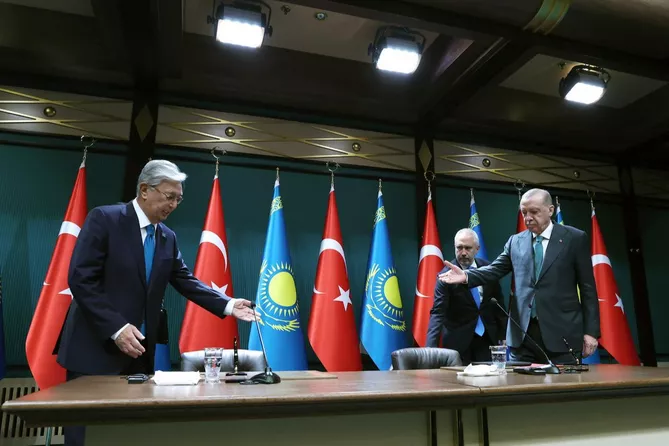
photo: Türkiye Today
Central Asia as Regional Wave, Not Single Track
In this context, it's important not to lose sight of the bigger picture: cooperation with Central Asia is not “one story about one country.” It is a wave that is steadily building.
Symptomatically, on Feb. 2, Ankara hosted the eighth meeting of the Joint Strategic Planning Group between Türkiye and Kazakhstan, co-chaired by Foreign Minister Hakan Fidan and his Kazakh counterpart, Yermek Kosherbayev.
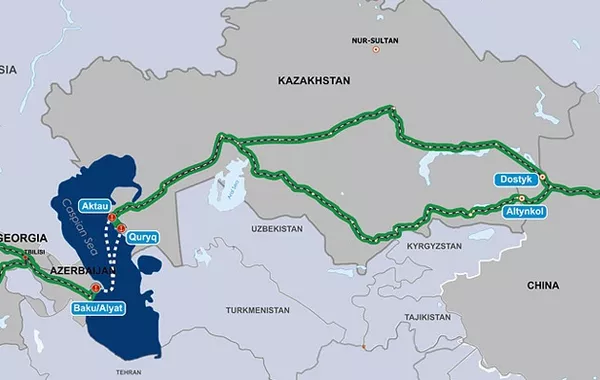
The agenda was highly pragmatic: trade, energy, the defense industry, as well as the “Middle Corridor,” a logistical artery connecting Central Asia with Türkiye and further with Europe.
It is precisely the “Middle Corridor” that today brings emotion even into the most academic diplomatic formats because it’s not about diagrams on paper but about how containers, capital, and technologies move along a route that countries can jointly control and develop.
It’s no coincidence that international reports and analytical reviews consistently link the growing interconnectedness between Türkiye and Central Asia to transport and energy corridors, particularly Trans-Caspian solutions and “green” energy projects, in which Kazakhstan, Uzbekistan, and Azerbaijan play key roles, and Türkiye serves as a gateway to European markets.
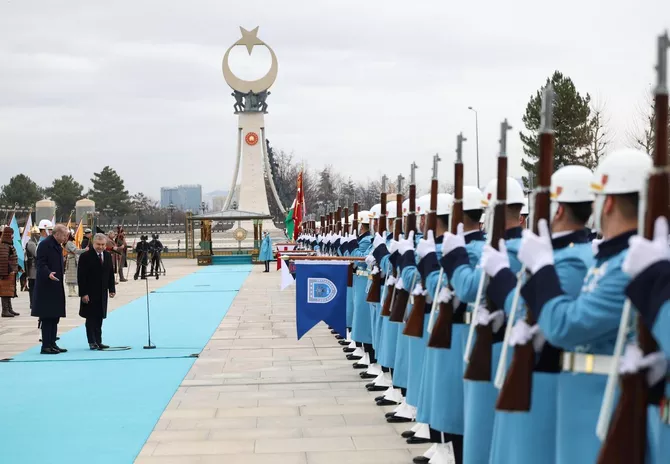
photo: Türkiye Today
Quiet Diplomacy Beyond Capitals
Another illustrative element: alongside “big politics,” mid-level contacts are also gaining momentum, those that weave a network of partnerships into everyday realities.
For instance, in January, representatives from Tajikistan held meetings in Ankara at both parliamentary and regional levels, seemingly ceremonial at first glance, but in practice, such channels often serve as “quiet corridors” for economic and humanitarian agreements (in tourism, trade, and cultural programs).
In the case of Turkmenistan, we see a rather traditional approach for the Turkish capital, with business and economic events facilitated by Ankara’s chambers of commerce and industry: conferences, trade chamber meetings, and presentations of cooperation opportunities.
These events rarely make headlines but often give rise to real cooperation and lasting partnerships between companies.
Gaining Institutional Weight
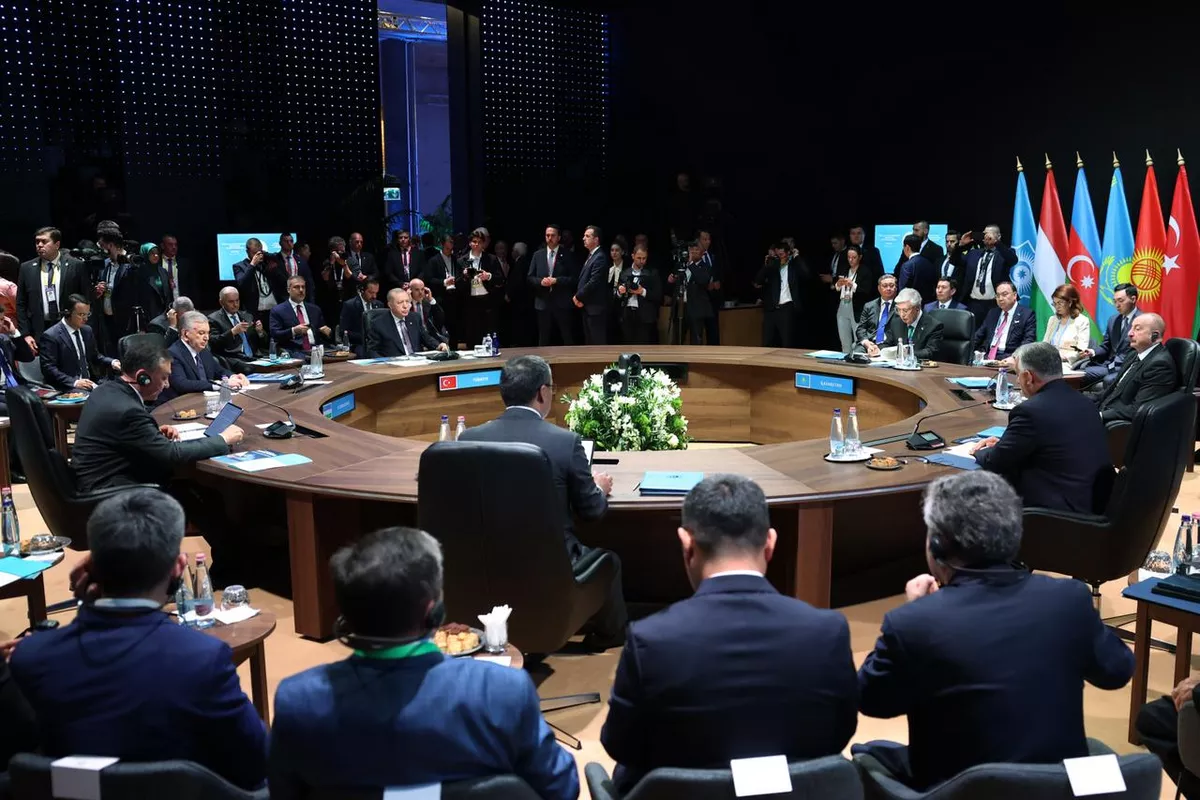
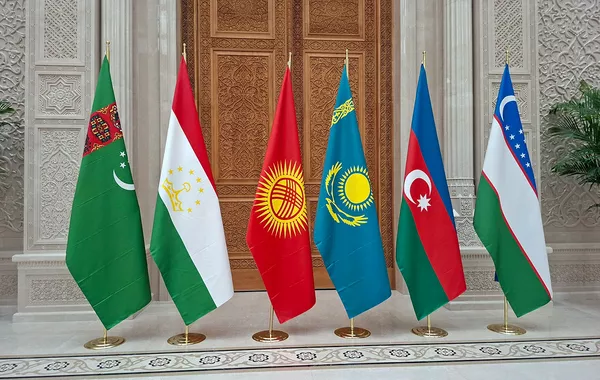
In this context, the role of the Organization of Turkic States (OTS) is becoming increasingly visible as an institutional framework through which Ankara builds a systematic presence in Central Asia.
For Türkiye, the OTS is gradually evolving from a symbol of cultural affinity into a practical coordination tool, with regular meetings, coordinated agendas, and shared approaches to security, economic, and logistical issues.
For the countries of the region, especially Uzbekistan, participation in Turkic formats opens a pathway to integrate into broader regional projects without abrupt geopolitical shifts, preserving both room for maneuver and national agency.
This “quiet” yet consistent institutionalization is where the strength of the Turkic vector lies, increasingly visible not in statements but in mechanisms.
Against this backdrop, the overall balance of power in Central Asia is naturally shifting. A region long perceived as dominated by post-Soviet formats and fixed security alignments is gradually entering a phase of multi-vector interaction.
This is not about displacement or confrontation but about the emergence of alternatives in logistics, economy, security standards, and political communication.
Russia remains an important factor in this configuration, but it is no longer the sole point of reference.
Türkiye, meanwhile, by acting through the OTS and bilateral formats, is steadily establishing itself as one of the key architects of a new regional logic, one where stability is built not on the inertia of the past, but on practical interests and mutual benefit.